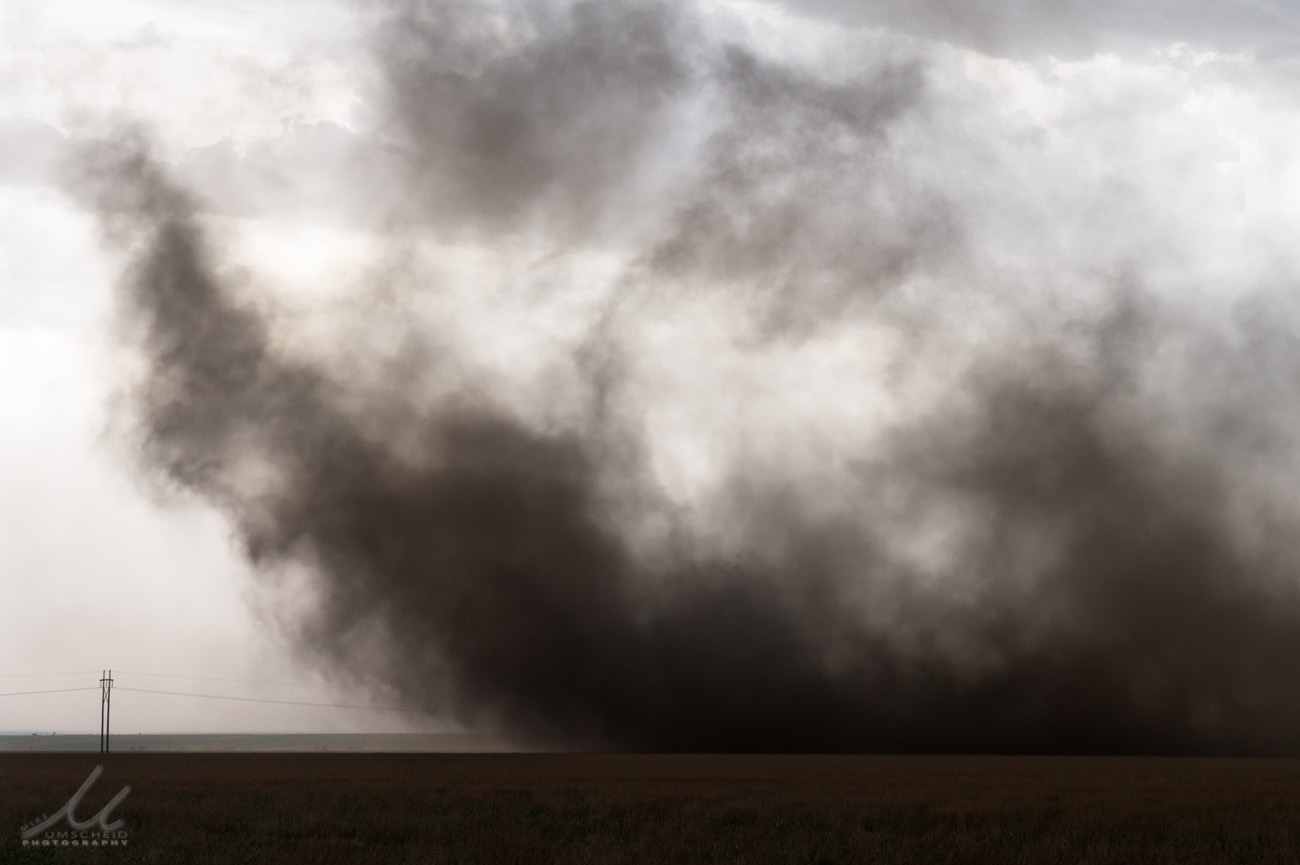
Looking off to the southeast a few miles southwest of Woodrow, CO when the
storm I was chasing and photographing become significantly
outflow-dominant, creating an environment for gustnado formation (not true
tornadoes), when the outflow winds from the storm interact with surface
inflow from the southeast.
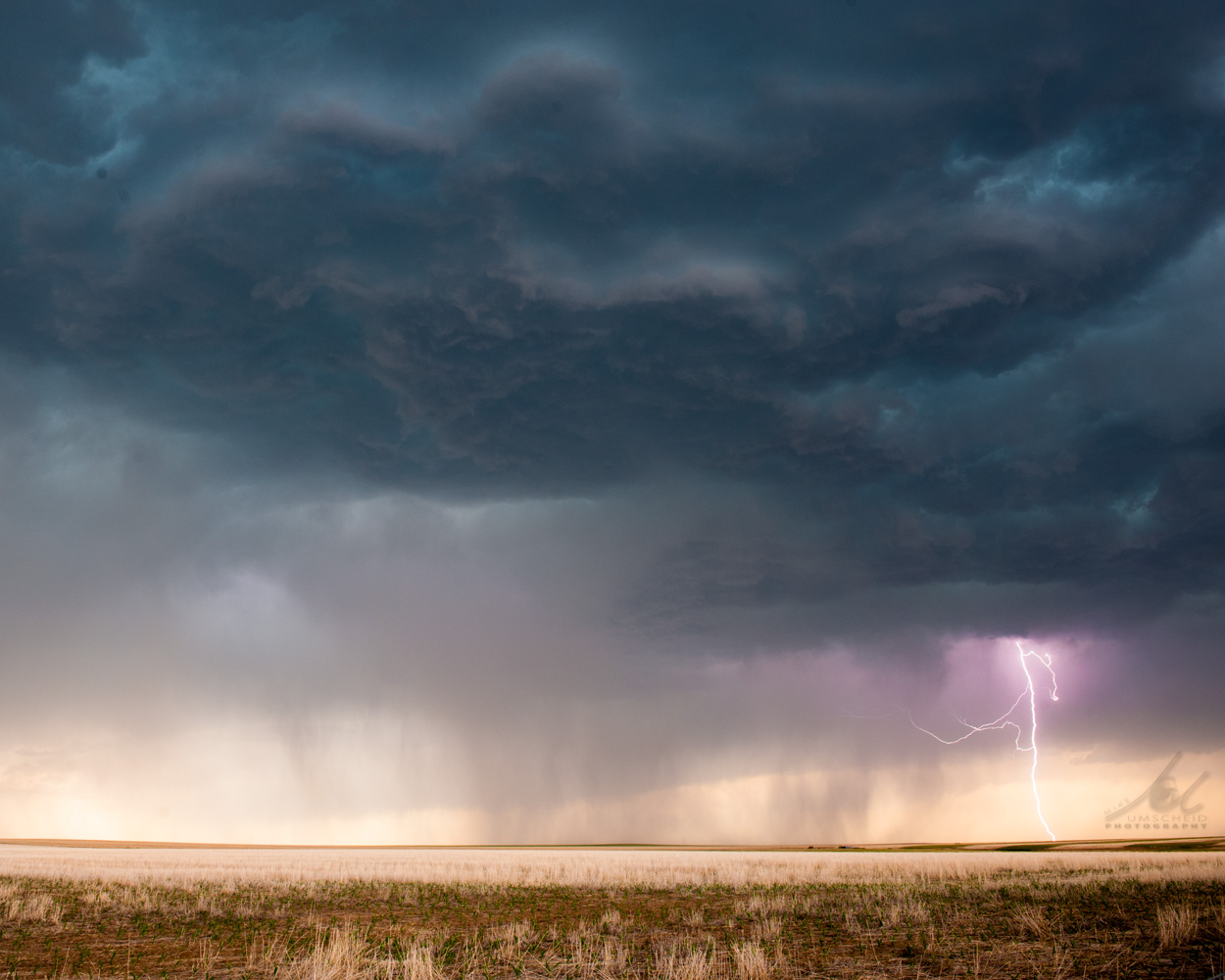
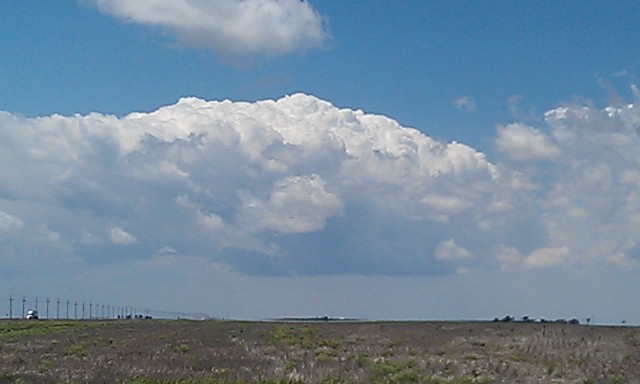
This image was looking west-northwest at the developing severe storm which
would ultimately become a substantial dust storm with a large number of
gustnadoes when the storm reached Hwy 71. The image posted here is of the
cleanest look I had of the storm before it became a mess with a bunch of
blowing dust everywhere.
June 13:
I will be departing Dodge City here in about an hour (around 7:00am)
heading for a general target region encompassing Northeast Colorado
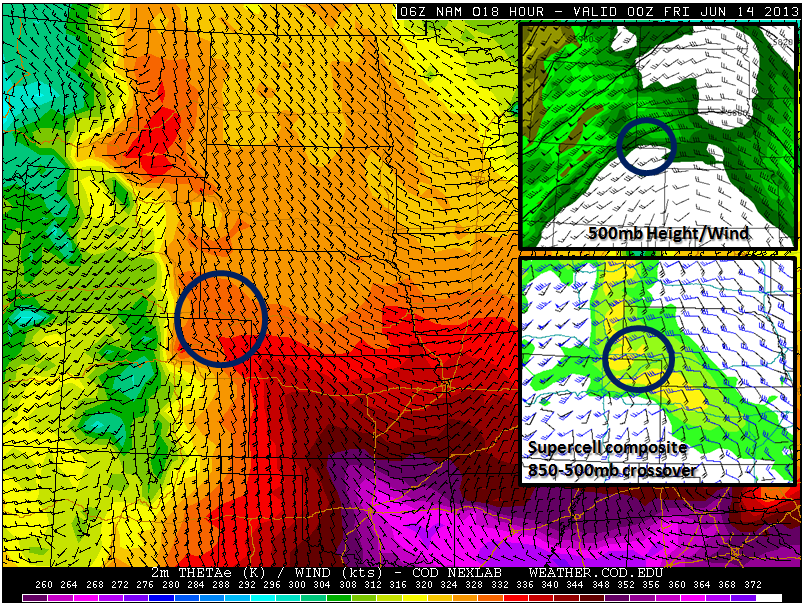
and the Nebraska Panhandle. There are two specific areas within
this region I have my eye on. The first is the corridor from
Sterling to Julesburg to Wray, CO where the NAM and GFS have been
most aggressive in convective development for several runs now. This
area will be right at the area ahead of an advancing warm front
north through eastern Colorado this afternoon. 1500-2200 J/kg SBCAPE
will develop in this area. Negatives in this region include: south
of the 588 decameter height line at 500mb (Good supercells are less
likely in environments with such high mid level heights) and also as
a result weaker 500mb winds around 20 to 25 knots. That being said,
the directional shear will be good with 850-500mb forecast crossover
supportive of supercell storms. The other area I have my eye on is
the Chugwater-Scottsbluff hotspot for something initiating off the
Laramie Range. Several of the high-resolution WRF models support a
supercell signal off the Laramies in this corridor in stronger 500mb
winds/lower heights (below 588 decameters). The one negative I see
is a bit less moisture, but lower to mid 50s could still result in
the Sidney-Scottsbluff, NE region which is certainly enough for a
high-based, photogenic supercell.
June 14:
This looks like a pretty good Central Nebraska day if the cap can be
broken. GFS and NAM have shown a consistent signal of enhanced
surface convergence amidst 4000-5000 J/kg CAPE... at the southern
edge of adequate 500mb flow. I will probably stay somewhere along
I-80 (Ogallala?) after this evenings chase.
June 15-16:
Upslope returns on the 15th favoring the northeastern
Colorado/adjacent southern Nebraska Panhandle region again. The
same goes for the 16th, to a certain degree, as zonal flow at 500mb
will be in place and 588 decameter line displaced south into
southwest Kansas. It looks like a broad region of interest on the
16th, but I need to be back to Dodge City by the morning of the 17th
to resume day shifts.