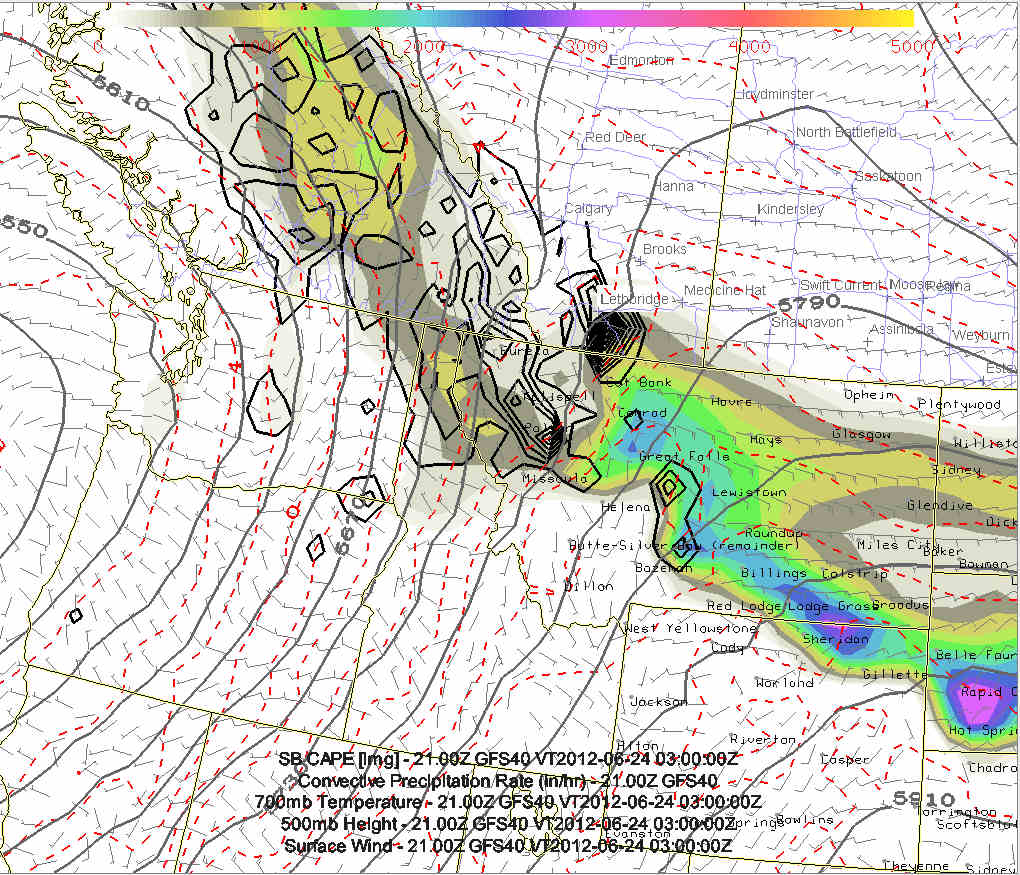
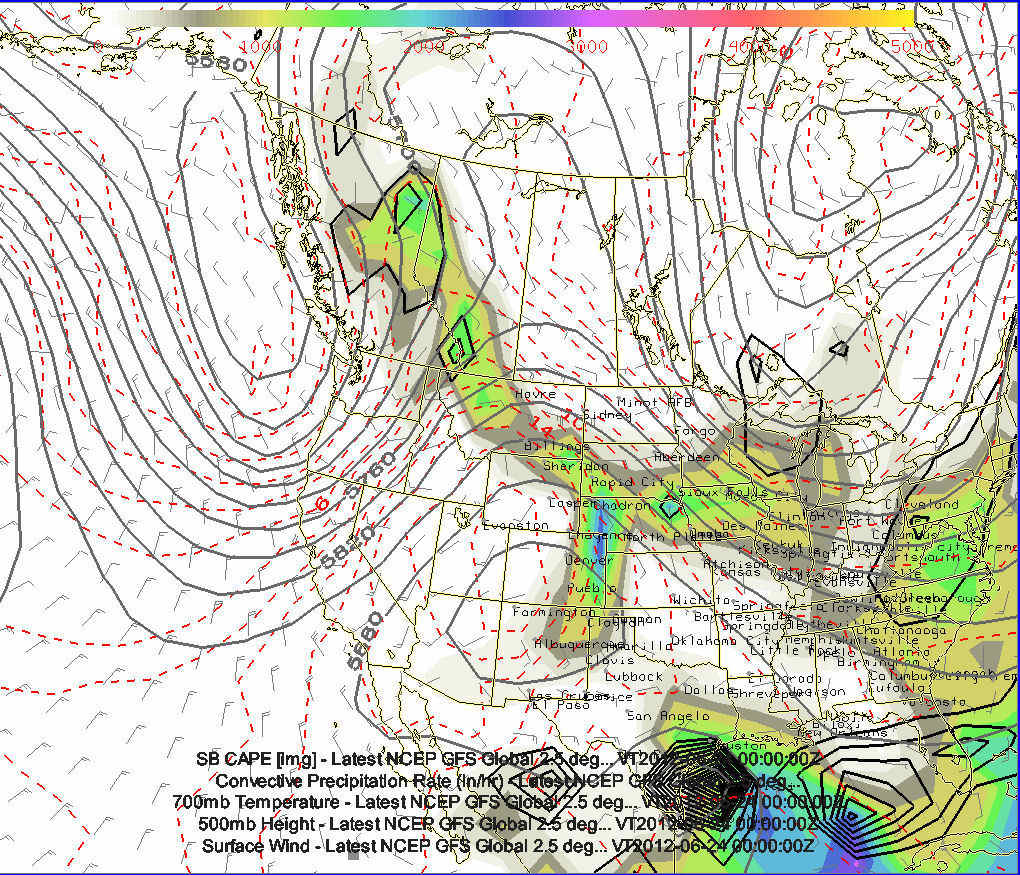
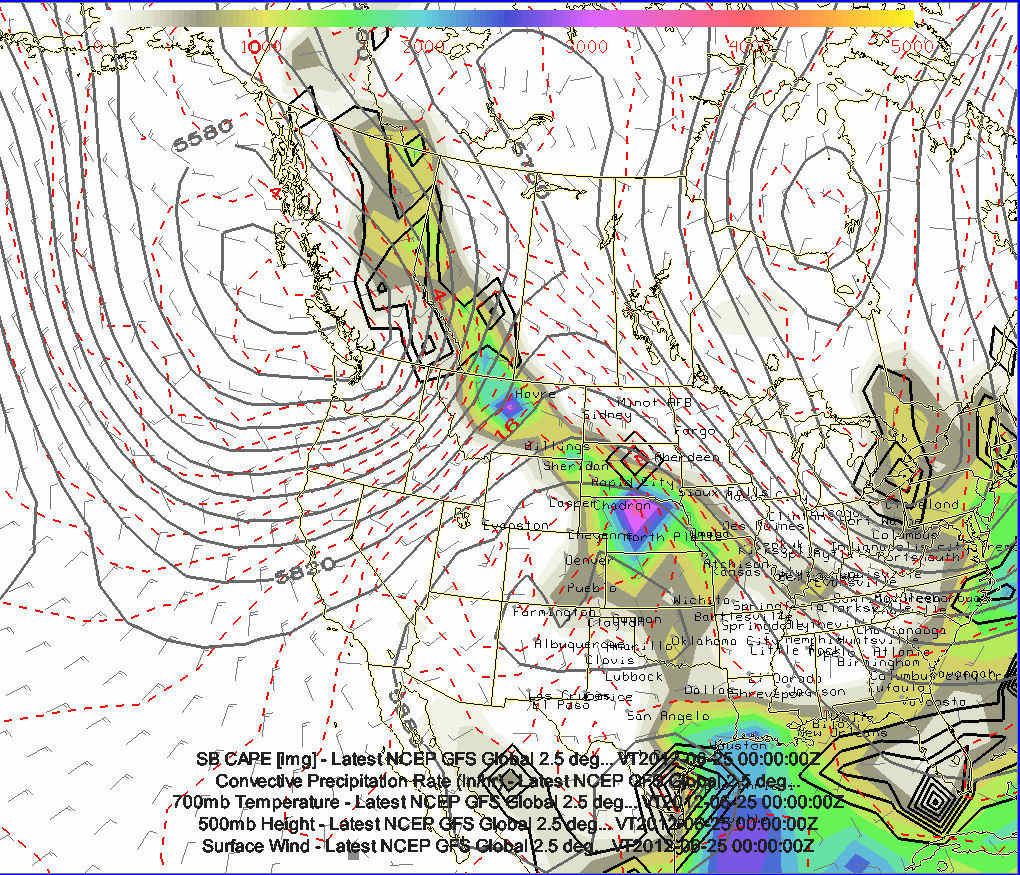
Day One (Sat, June 23): (GFS Composite Chart, See Fig. #1)
The BIG drive day. After a hopefully incredible night in the dugout
suites at the Royals vs. Cardinals baseball game in KC, Evan
Bookbinder and I will begin the big drive with an estimated time of
departure around midnight. I am fresh of my midnight shifts, so I
will be pulling the majority of the overnight driving. We plan to
make the 20-hour, nearly non-stop drive to Great Falls, MT with an
estimated time of arrival around 7:30 or 8pm MDT (0130-0200 UTC).
If we do indeed make it there by that time, we will still have
around two hours of photographic daylight to work with for any
storms that may be ongoing in the Great Falls-Conrad, MT vicinity.
If we do indeed manage to photograph a storm on Day One, it will be
quite the incredible feat after starting in Kansas City the night
before. Day One is largely a positioning day to get ready for what
looks to be a fairly impressive stretch of storms from far northern
Montana into southern Canada
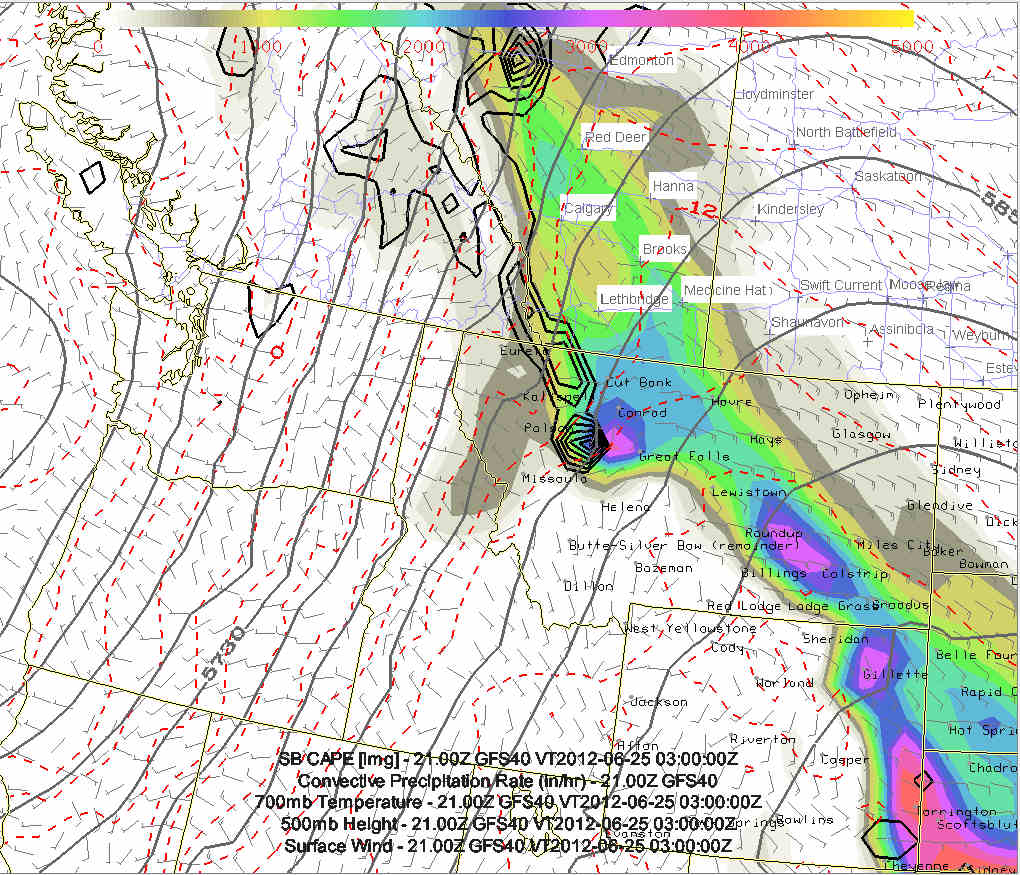
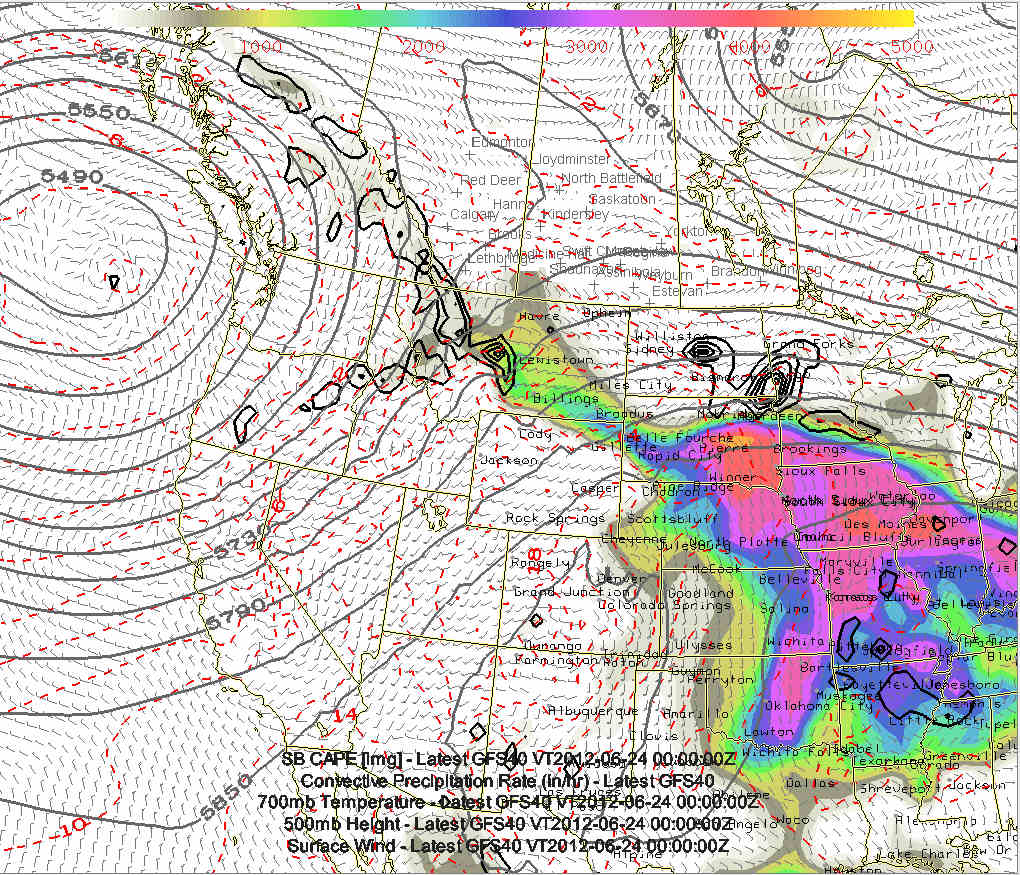
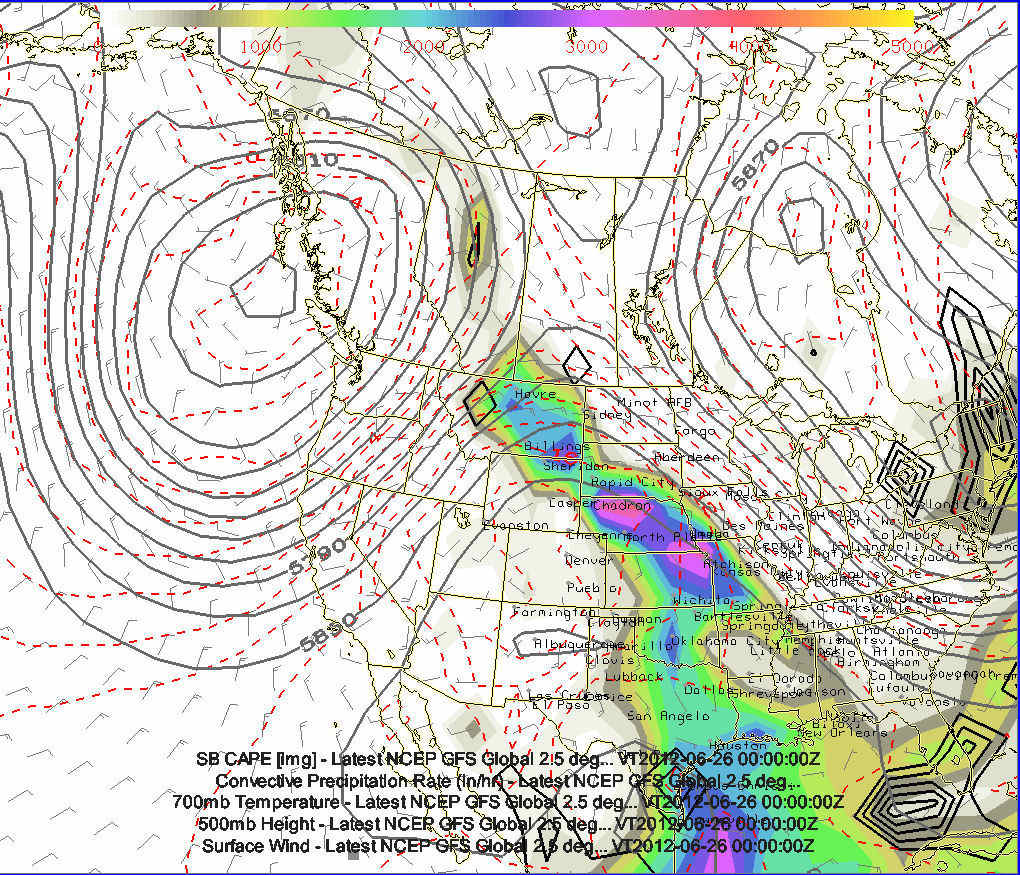
Day Two (Sun, June 24): (GFS Composite Chart, See Fig. #2)
We will likely begin this day in Great Falls, MT or something like
that. Day Two looks like the same area as Day One, so the driving
may be kept to a minimum... which would be good! The main upper low
will still be sitting off the coast of Oregon-Washington with
south-southwest mid level flow over the Montana and Alberta
Rockies. Good dewpoint air in the upper 50s to lower 60s will yield
1800-2200 J/kg CAPE with both the GFS and ECMWF suggesting supercell
storms from west of Great Falls off the mountains northward to west
of Lethbridge, AB.
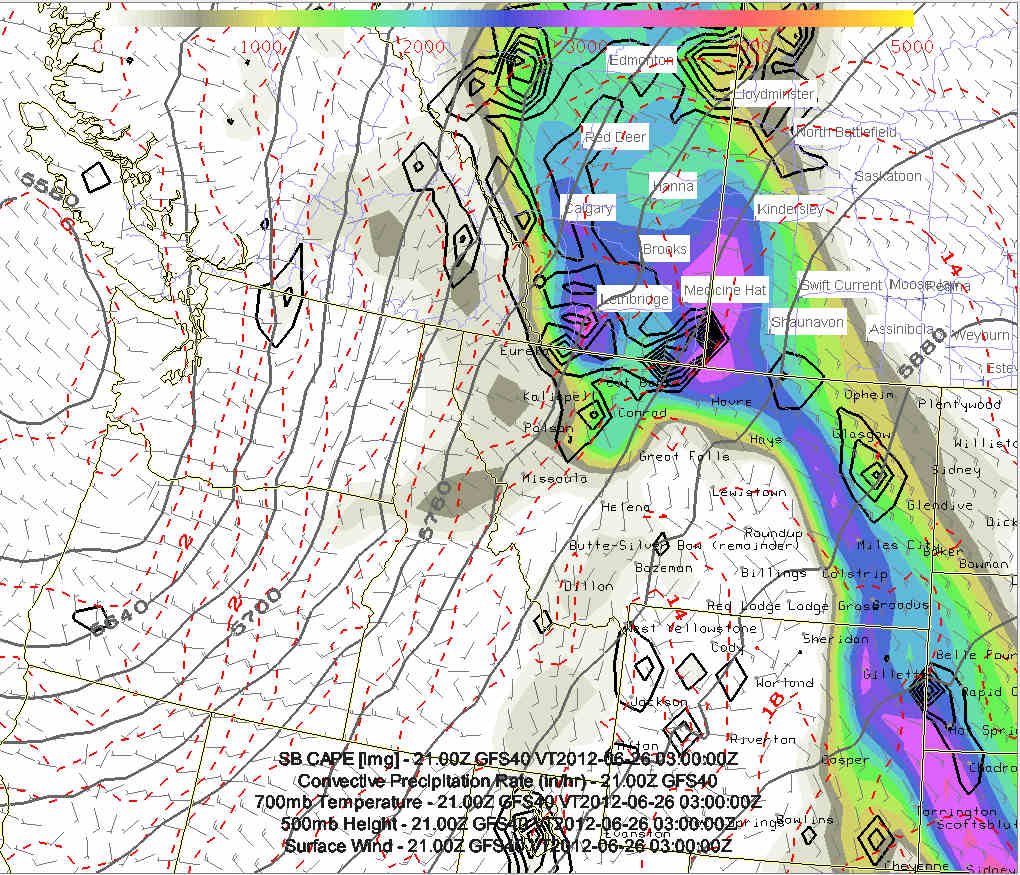
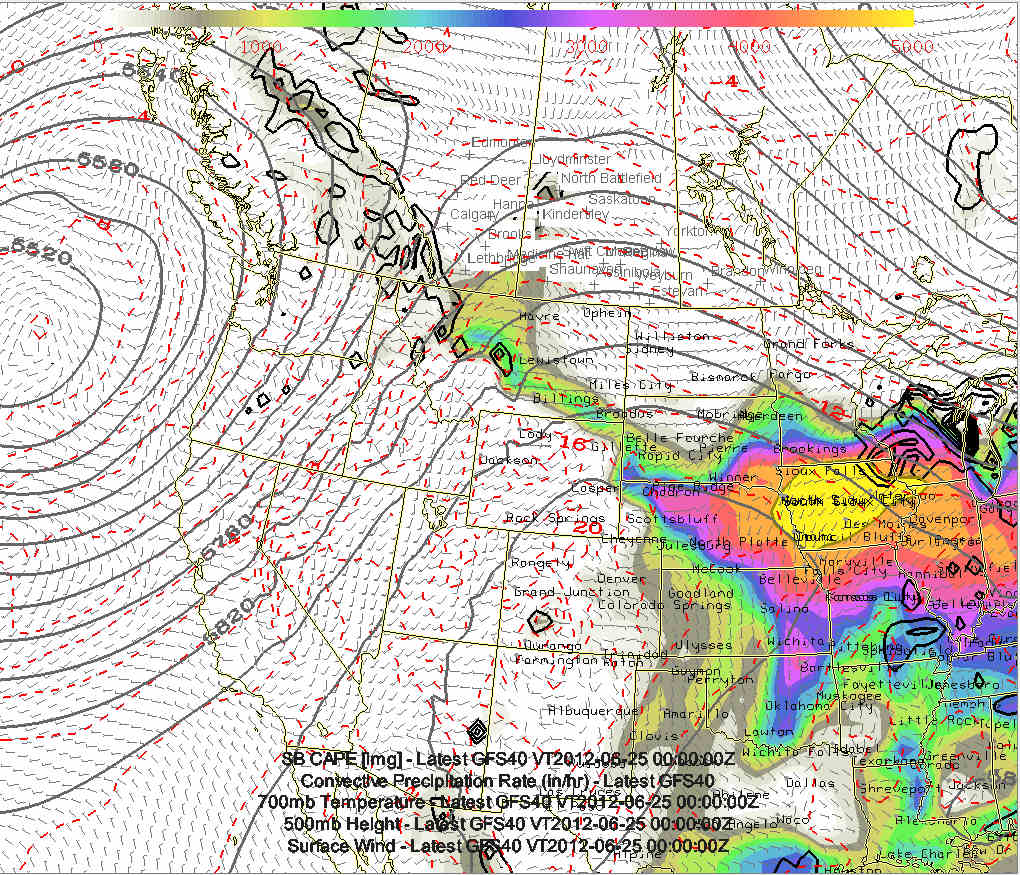
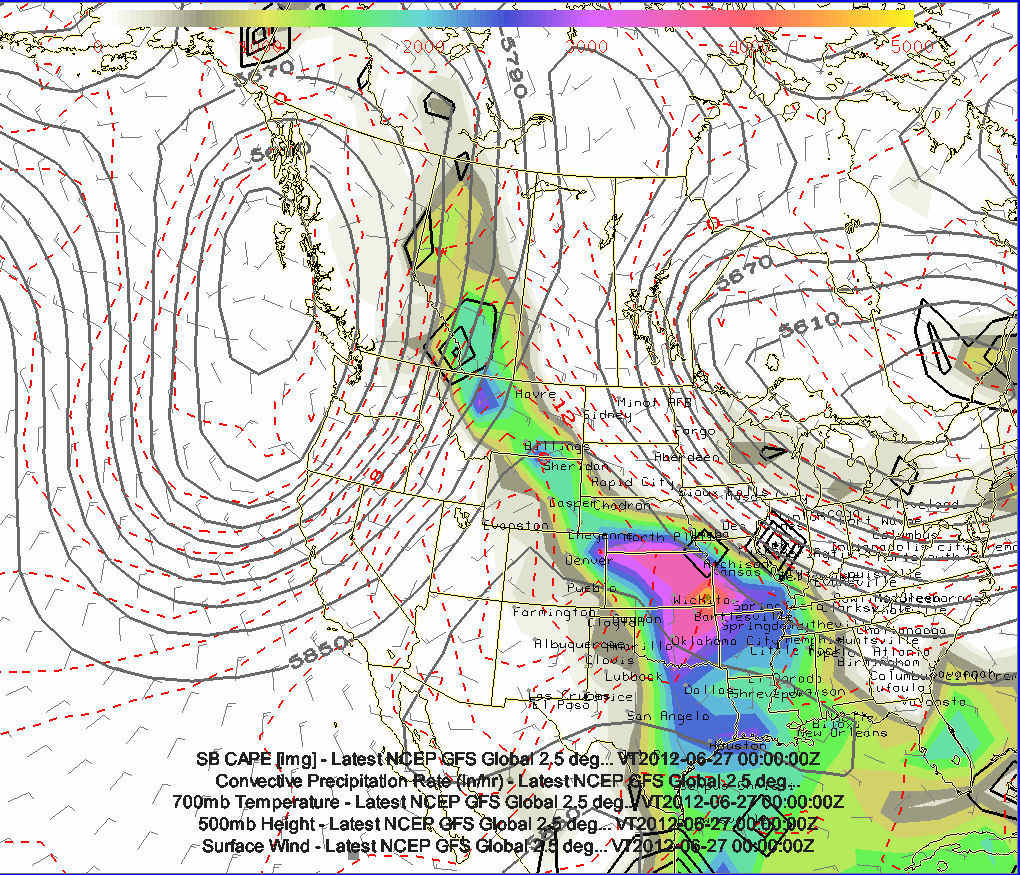
Day Three (Mon, June 25): (GFS Composite Chart, See Fig. #3)
More storms are expected in the same general vicinity as the
mentioned upper low inches very slowly toward the Oregon-Washington
coast. The GFS model suggests even higher moisture and CAPE
spreading northward into Alberta. This may be the first day to
chase in Canada from Lethbridge to Medicine Hat.
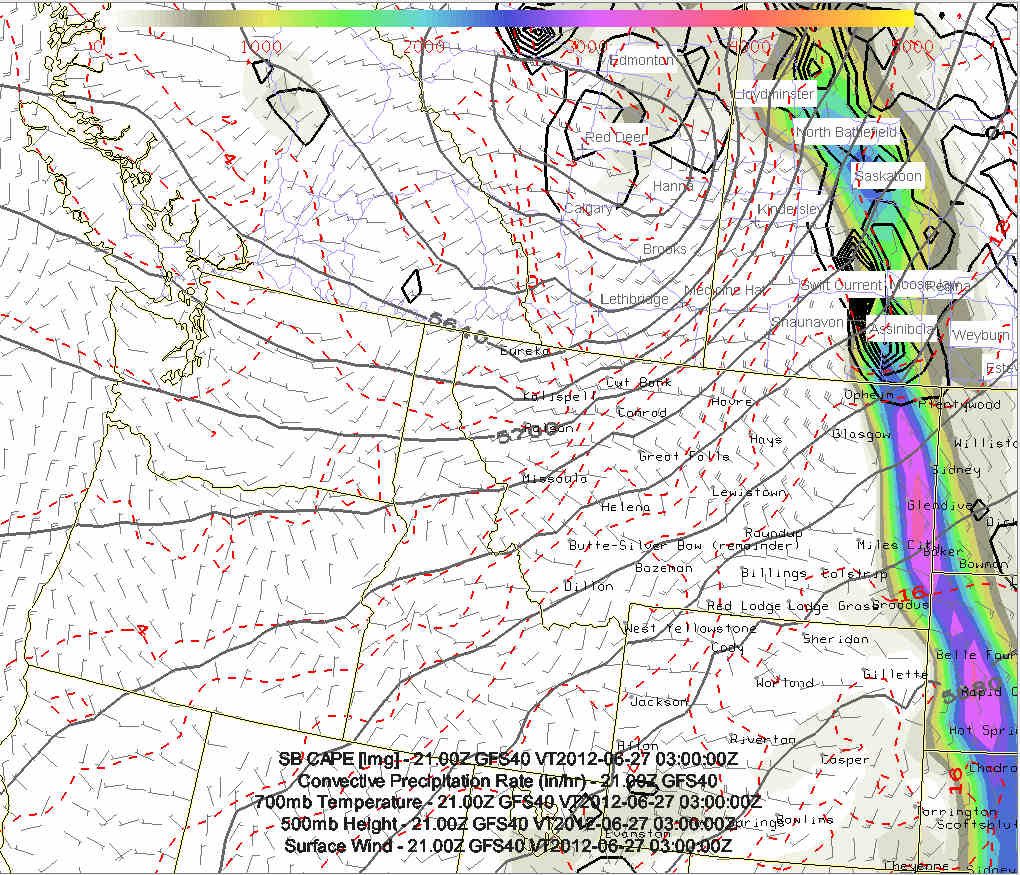
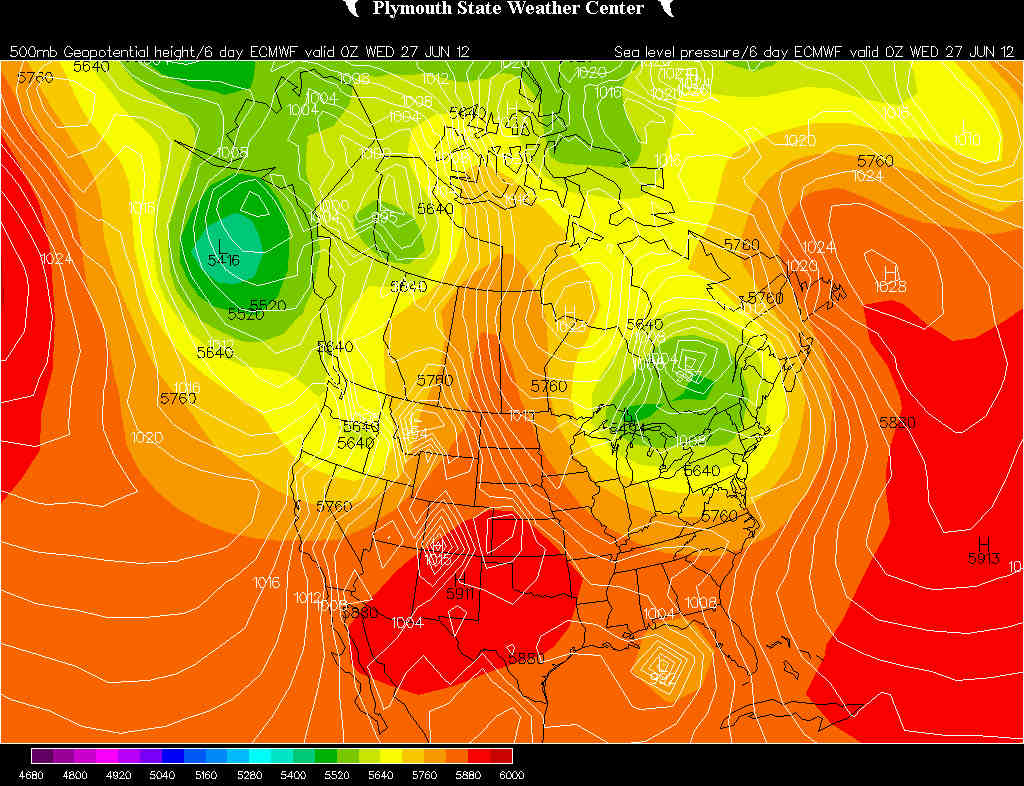
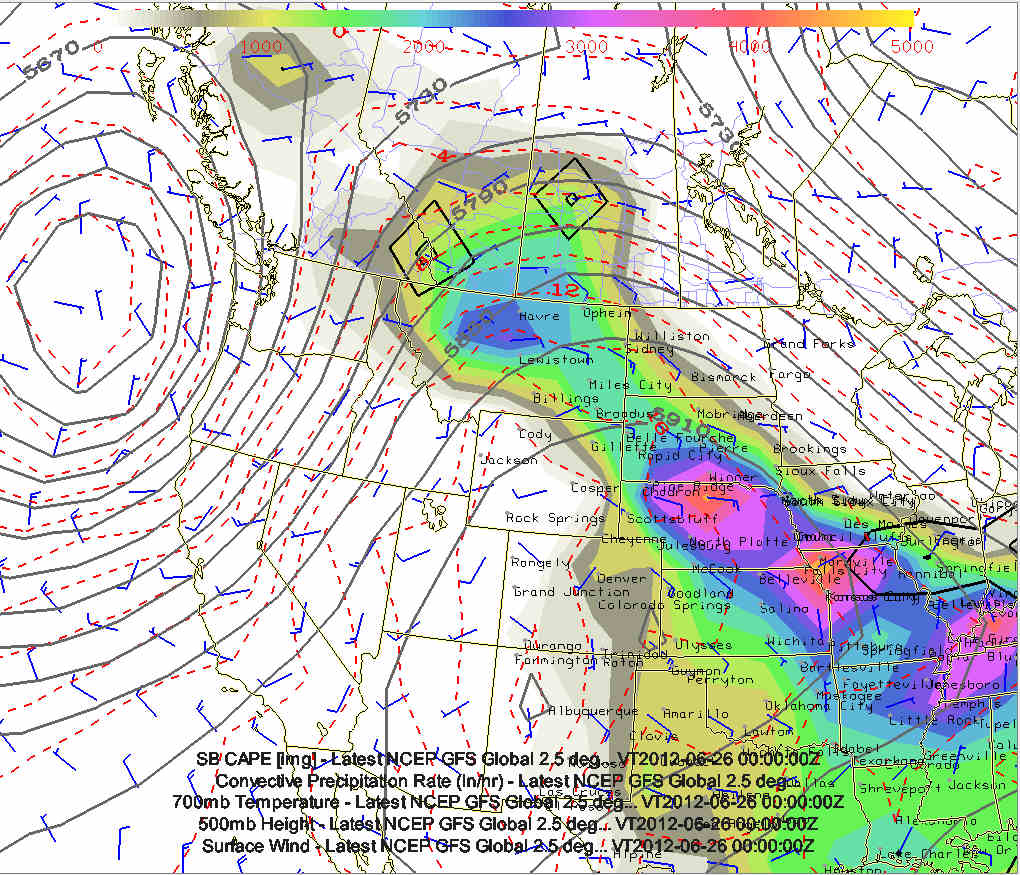
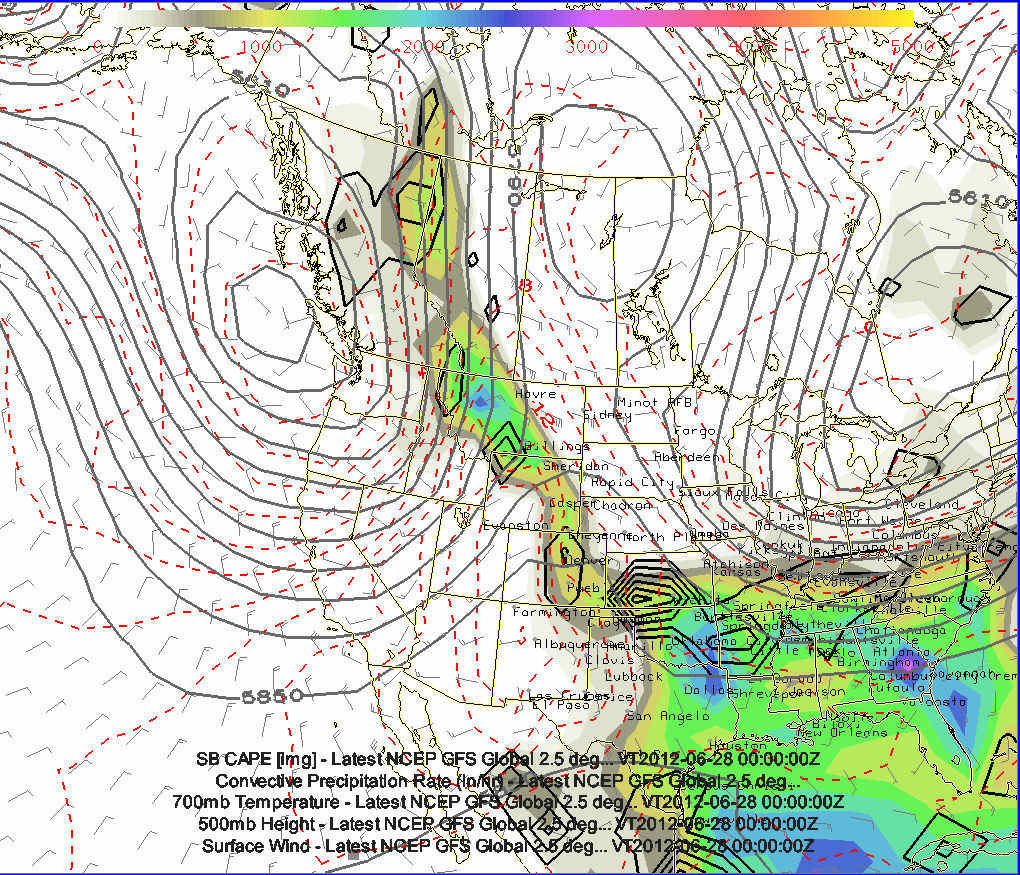
Day Four (Tue, June 26): (GFS Composite Chart, See Fig. #4,
ECMWF 500mb/MSLP Chart, see Fig #5)
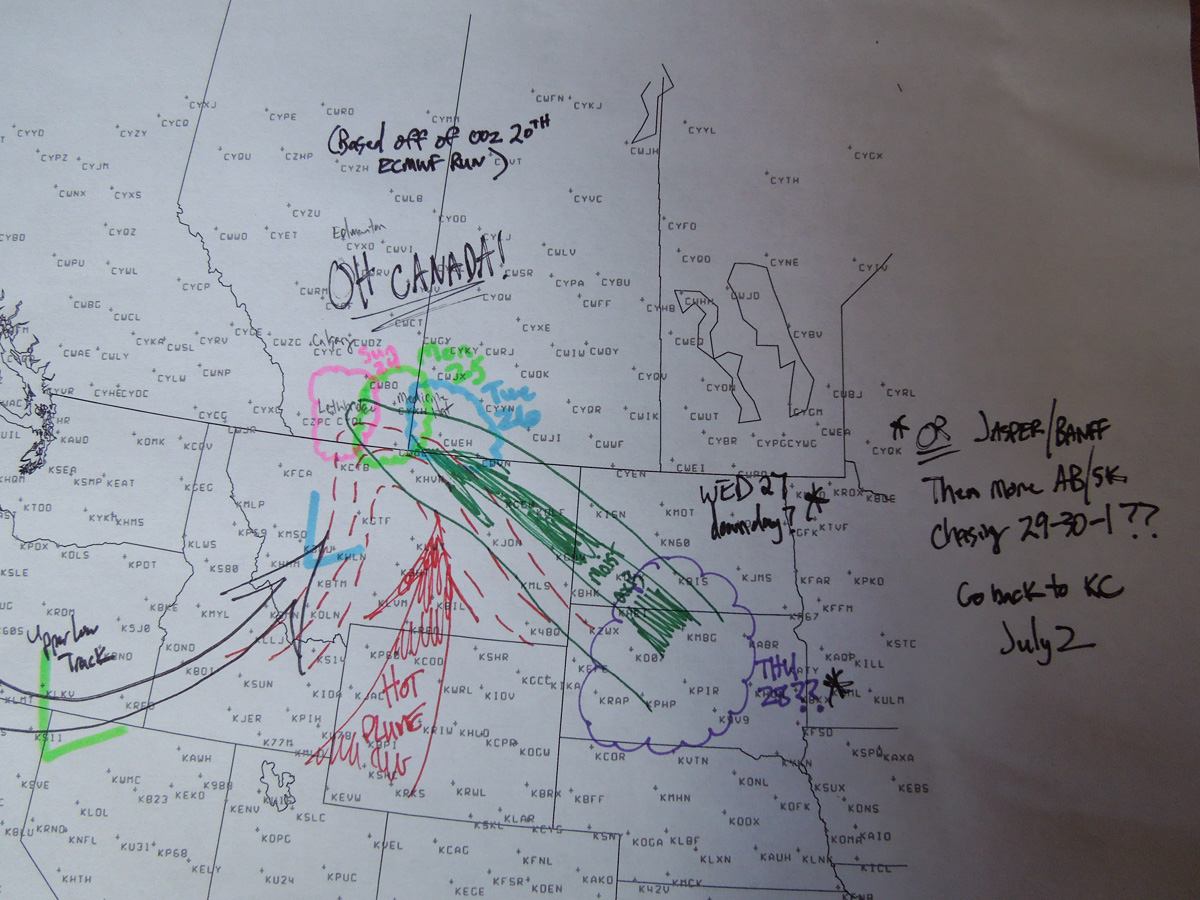
This is where the GFS and ECMWF models really begin to diverge in
how fast it ejects the upper low northeastward. The GFS is much
faster than the ECMWF model... and in fact the ECMWF model has
slowed down even more than the previous runs. Where the GFS
suggests the best play will be well into southeastern Saskatchewan
(east of Swift Current to Assiniboia, SK), the ECMWF suggests yet
another day (perhaps the best day of the bunch) back in southeastern
Alberta from Lethbridge to Medicine Hat. This is still quite a ways
away, but the trend of slower is certainly promising for additional
chasing without a substantial amount of driving.
Day Five (Wed, June 27):
The GFS model, given its faster speed, is suggesting a down day
Wednesday, but the slower ECMWF would suggest yet another chase day
farther east in Canada from southeastern Saskatchewan to
southwestern Manitoba.
Impressive, large scale upper low off the coast of Washington/British
Columbia may yield plentiful chase opportunities in Montana...and
eventually North Dakota... perhaps a day or two in southern
Alberta/Saskatchewan! A lot can still change in the models, and
probably will, so it's still quite a bit of speculation at this point.
This post contains audio. Use the embedded QuickTime plugin below to play. (The audio file is in 3GP format sent via smart phone and requires QuickTime plugin to play)
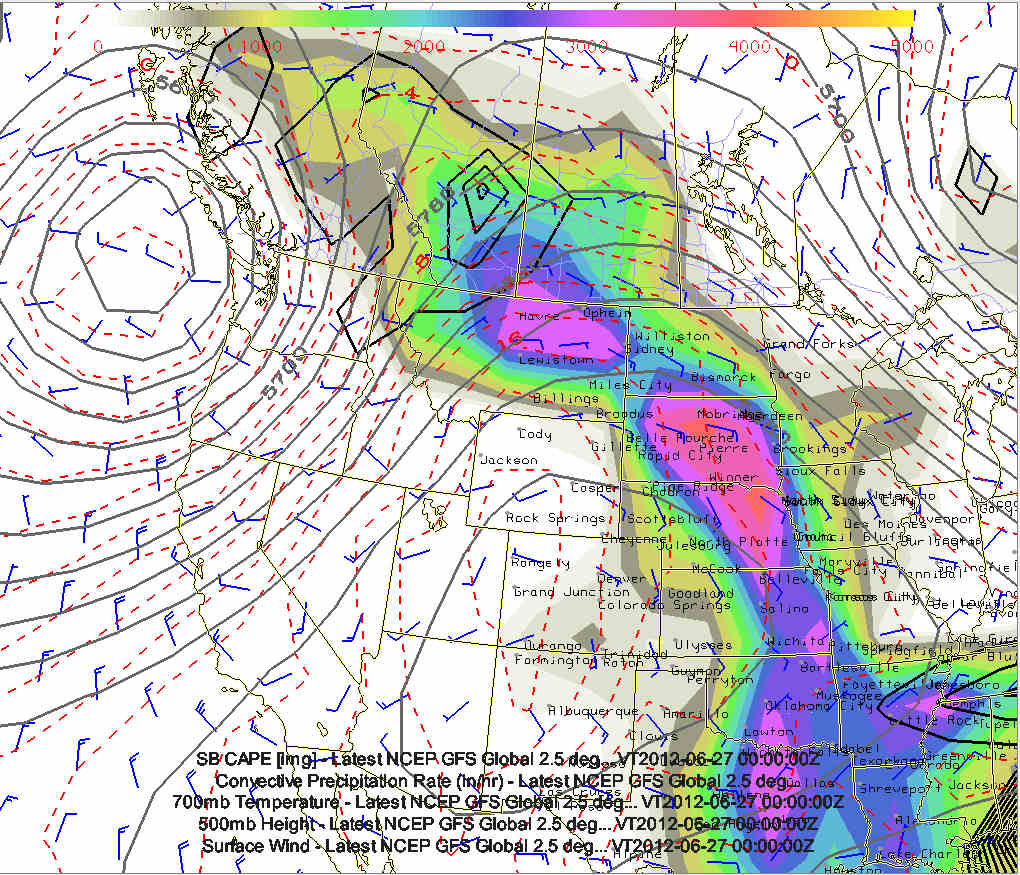
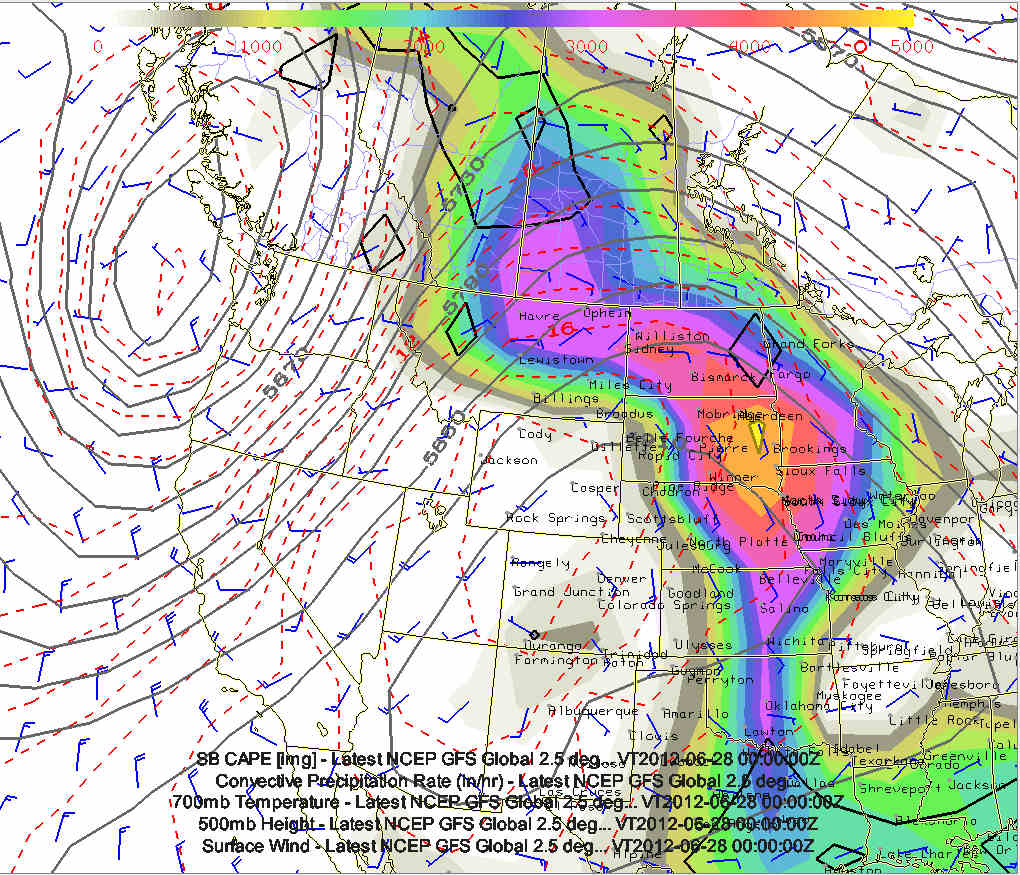
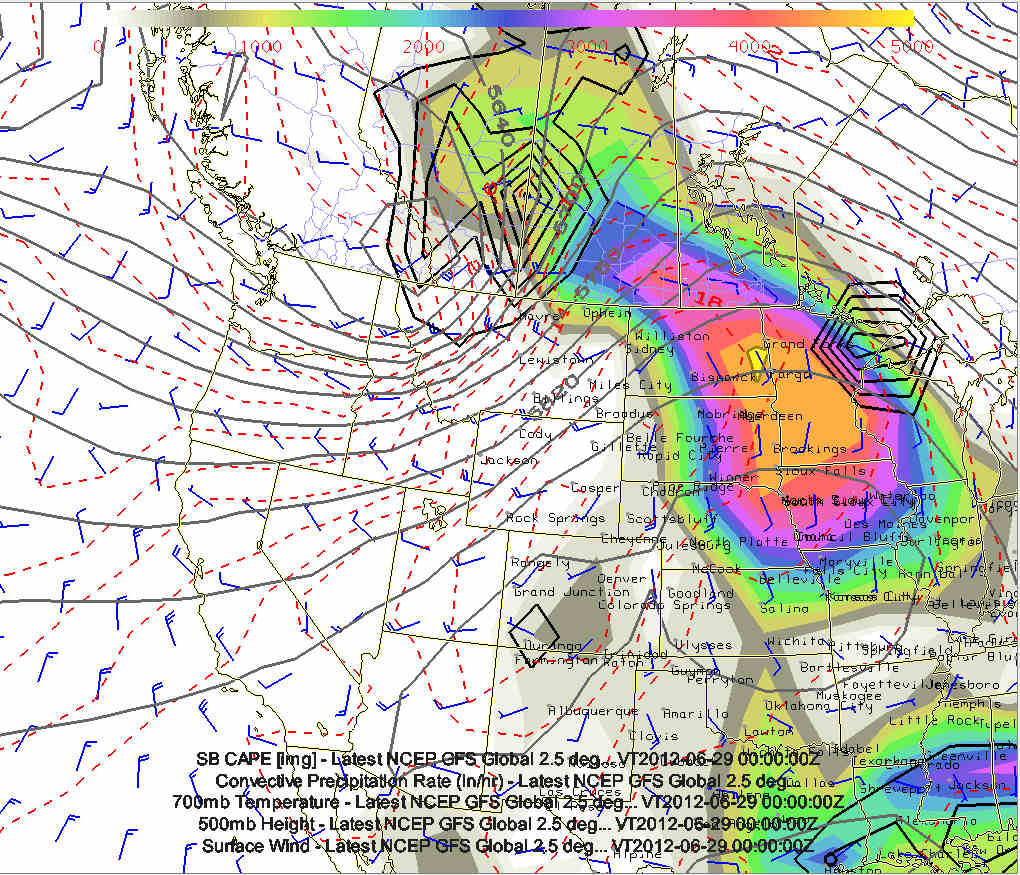
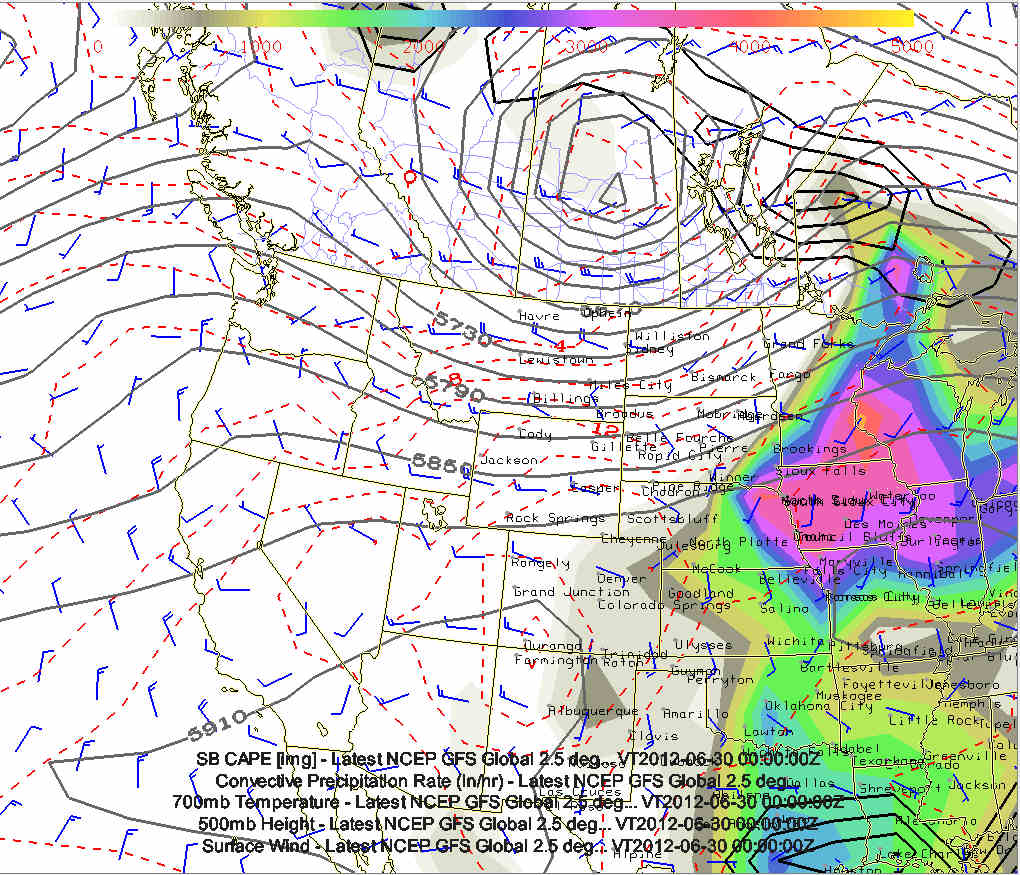
Today is Wednesday, June 13th -- still a solid 10 days away from Day One
of my annual storm chase trip -- and the time has come to begin
speculating on how the beginning of the trip will look as far as storm
chasing/photography prospects go. I will be chasing with Evan
Bookbinder and Jay Antle... leaving Kansas City either late night Friday
Night the 22nd or first thing in the morning on the 23rd. Attached to
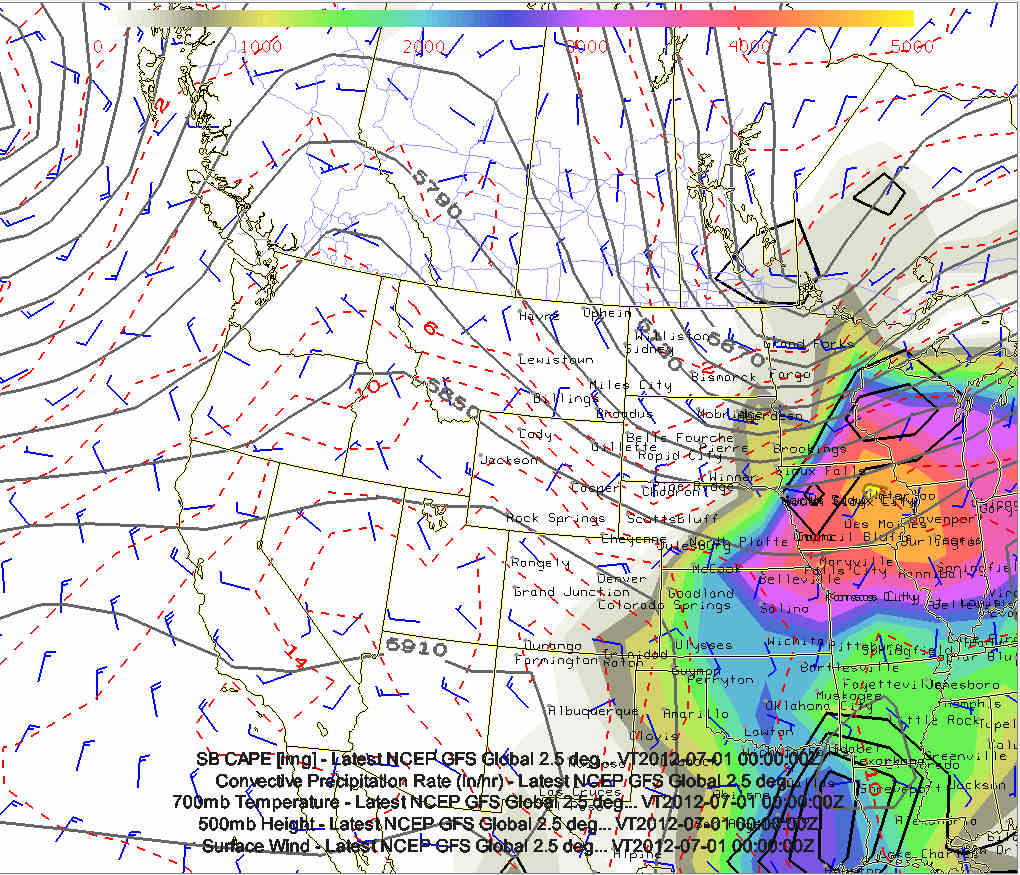
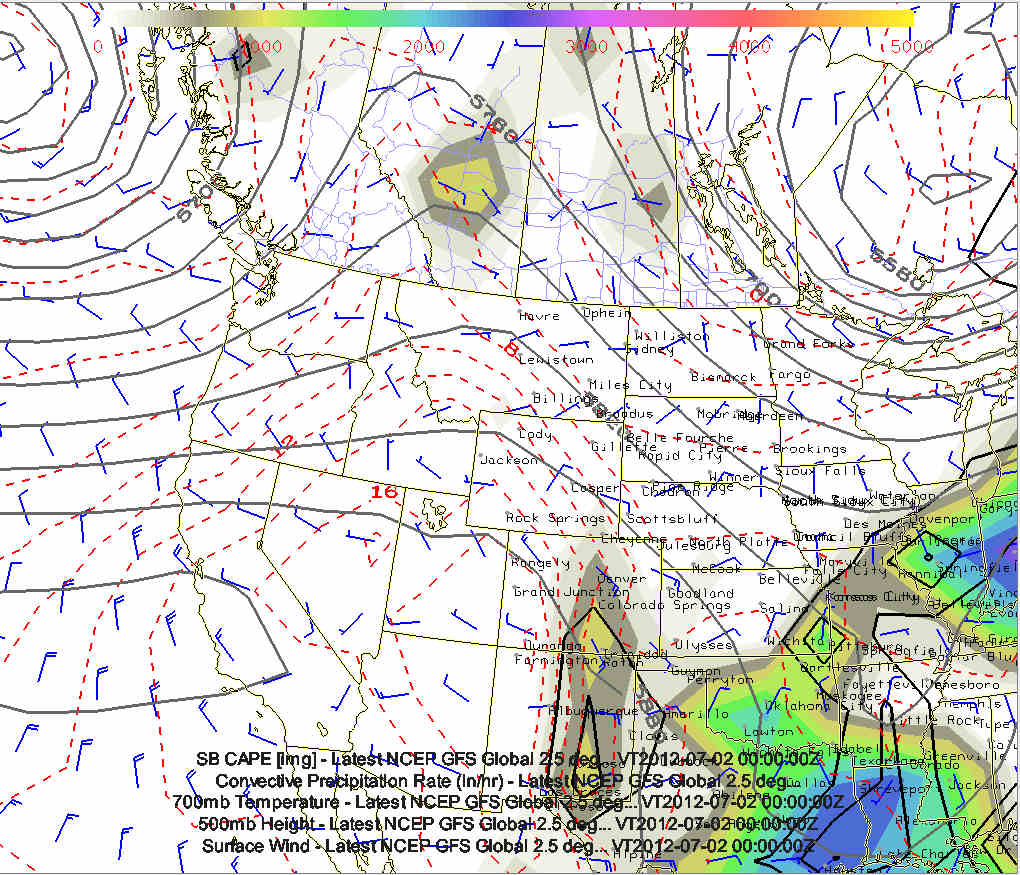
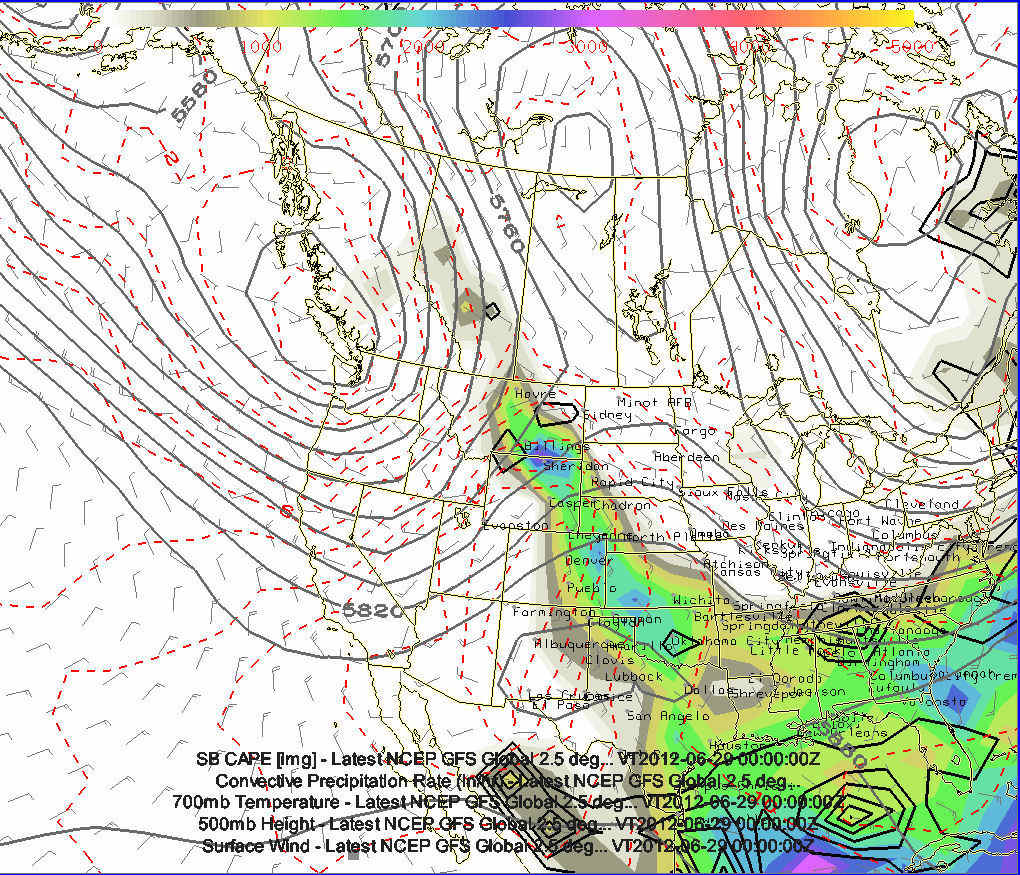
this post are 6 images showing this morning's 12z run of the GFS valid
June 23rd through June 28th. The GFS is hinting at a very well-defined
trough off the coast of Washington-British Columbia... bring multiple
days of southwest flow across Montana and into Alberta and southern
Saskatchewan.
The images are of the GFS 500mb Heights, CAPE, Surface Wind, and QPF
valid 00z June 24th (Image 1) through 00z June 29th (Image 6)
This would be a dream setup if it were to pan out this way... but this
is the 240-368 hours out and models have next to no skill at synoptic
features. However, the good global models to have just a little bit of
skill in the longwave pattern... and the continued notion of low heights
in the Pacific Northwest/northeast Pacific Ocean with an extended
Pacific Jet is probably a noteworthy signal in the models June 23-June
26th time frame.