High Plains Drifter


disclaimer:  "The meteorological views/forecast thinking expressed are those solely of the author of this blog
and do not necessarily represent those of official National Weather Service forecast products,
therefore read and enjoy at your own risk and edification!"

July 19, 2008

Chase Acct: July 19, 2008 (Northwest KS)

Filed under: Chase Accounts,Storm Chasing — Mike U @ 1:11 am

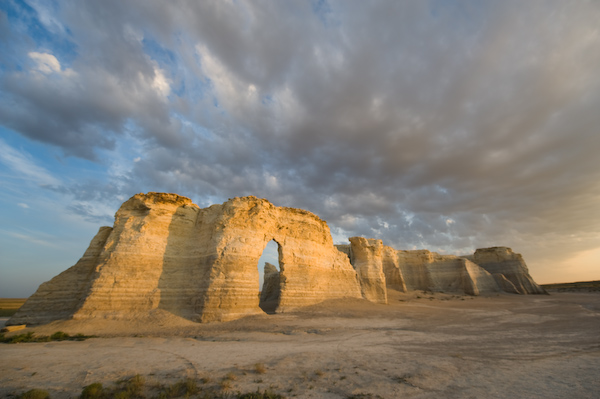
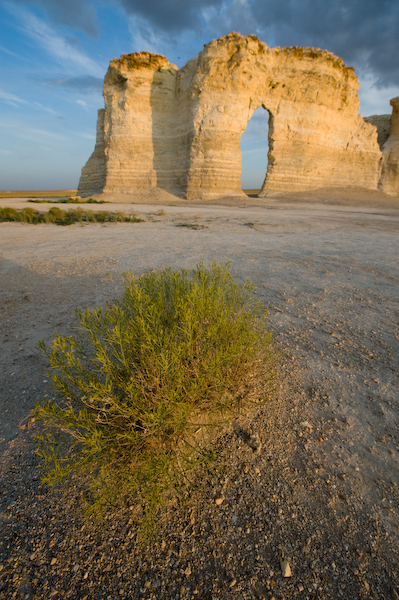
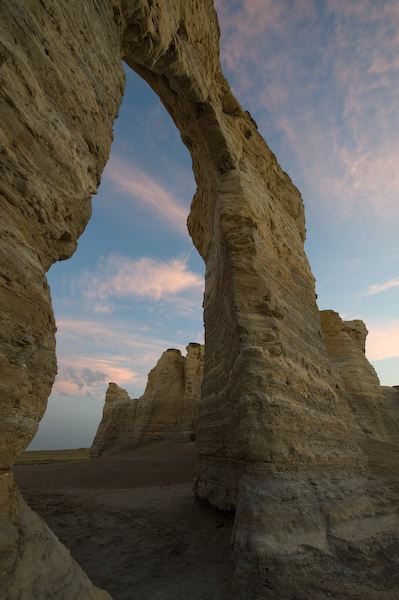
I started this chase at 1:30 am.  Yes.  Since my sleeping schedule wasmessed up, I was pretty much up for good by that time.  With a fullmoon out, I decided to do some moonlit landscape photos at MonumentRocks north of Scott City.  By the time I got there around 4am, though,the moon was getting very low in the sky.  I experimented a bit with"flashlight illumination" of the Monument Rocks formation.  Overall, itwasn’t much of a success, as it’s difficult to spread even amounts ofillumination on such a large subject.  None of the images turned outall that great to my liking.  Sunrise was a little bit better, though,and I got some decent images in the sunrise light. 


Fast-forwarding to later in the day… 

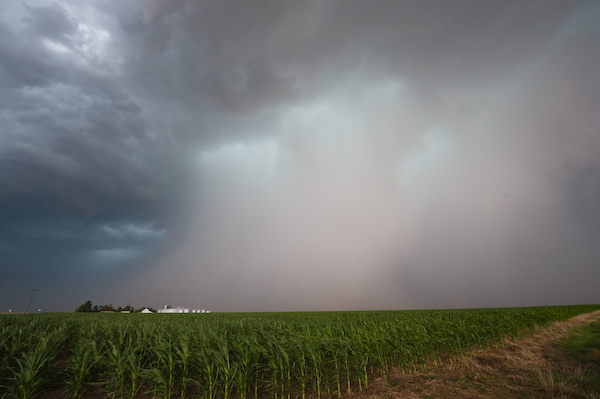
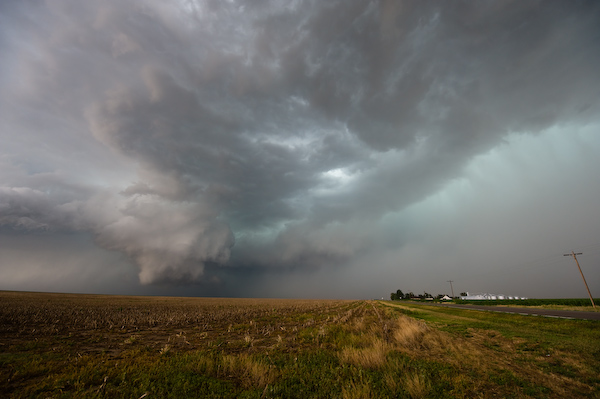
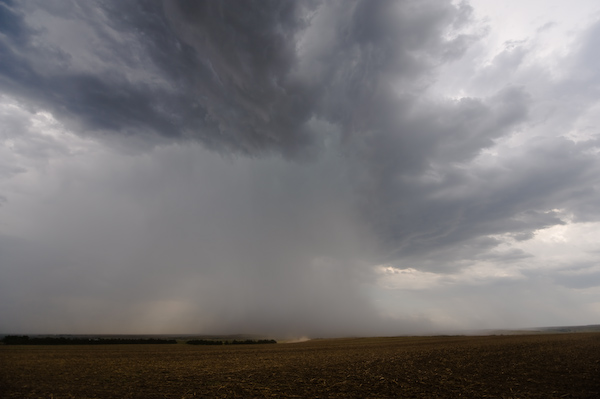
This was kind of a gamble chase — gambling that there could possibly be anything of interest to photograph in terms of storm structure given the crappy summertime flow regime.  It was a gamble that I think paid off, because even though the storms I chased were barely severe, I managed to photograph some interesting storm structure — not necessarily updraft structure per-se, but beautiful, tall, contrasted rain-shafts, impressive rain-foots, and even some small/weak gustnadoes at the leading edge of outflow boundaries.  There was a brief moment of excitement north of Colby when two storms were converging on each other, ultimately forming a decent but brief rotating area when the storms converged.  At this point, a very nice looking and rather low-to-the-ground wall cloud formed — actually one of the better looking wall clouds I’ve seen all year!  It didn’t last long, though, and evolved into an outflow dominant shelf cloud.  I photographed probably 6 or 7 different storms over the span of about 3 or 4 hours from northwest of McCook to Atwood to southeast of Colby.  I witnessed and reported through SpotterNetwork 3/4" or larger diameter hail on two separate occasions – the largest hail witnessed being a piece just barely larger than a quarter just west of Atwood on the back edge of a storm.  I also saw a bunch of small, short-lived gustnadoes along an outflow boundary southeast of Colby.  I got one CG lightning image from the Lightning Trigger and that was it for the entire day from a lightning standpoint.  I got back home just after midnight — thus concluding my nearly 24-hour chase day!  I slept for 13 hours after that :)   Below are a few images from the chase:


July 17, 2008

Chase Forecast — July 17, 2008

Filed under: Chase Forecasts/Outlooks,Storm Chasing — Mike U @ 12:42 am

I will be chasing today, Thursday, July 17th.  It is my two days off between midnight and day shifts which start Saturday.  Obviously, with it being summer, the wind shear setup is less than ideal for long-lived supercell thunderstorms, but the thing today has going for it is a lot of moisture.  As I type, much of western Kansas is soaking in 65-67 degree dewpoints, with a 66 dewpoint at Imperial, NE.  Coincidentally enough, Imperial, NE is my target.  All the models generate quite a bit of convective precipitation, so I am giving today about a 60-75% chance of observing and photographing a severe thunderstorm of some sort in the target area of Southwest Nebraska and adjacent far Northeast Colorado.  Since I am fresh off midnight shifts, my sleeping pattern is F*d up.  My day has essentially begun at 1:30am.  I plan to do some moonlit landscape photography at the Monument Rocks north of Scott City before heading north toward the chase target.  I’ll probably get there late morning which will allow me to grab a midday power-nap of sorts before storms start developing.  

UTM Update — July 17, 2008

Filed under: UTM Updates — Mike U @ 12:31 am

Over the past week and a half or so, I have been adding a number of chase image albums dating back to Late May.  I have them updated through Day 5 of my late-June chase vacation.   Here is a list of the new storm photography albums.  These are all accessed through Under The Meso Collections (except May 21,22,23 — I forgot to include those for some reason, I’ll get those linked soon):

July 7, 2008

Nikon D3 & Night Sky Photography

Filed under: Photography — Mike U @ 11:56 pm

A test of super-ultra long exposure with Nikon D3.  After work on Sunday night, July 6th, I decided to drive south to my favorite nearby photography location — Big Basin Prairie Preserve.  I wanted to give the Nikon D3 + 14-24mm f/2.8 lens combination a try in some really low light conditions — the night sky.  I really was curious to try a super-ultra long exposure (greater than 30 minutes) to see how the sensor noise was leaving the shutter open for so long.  Digital imaging sensors will accumulate "hot" pixels the longer the shutter is left open.  As technology has improved in digital imaging sensors, the duration one can leave the shutter open without introduction of noise has greatly improved over the years.  I remember my very first digital camera was a point and shoot Nikon Coolpix 950.  You couldn’t take 8 second exposures without introducing all sorts of horrible "hot" pixels dotting your image.  When I then got my first digital SLR (Nikon D70) one of the first things I noticed was the absence of hot pixels at 8 to 30 seconds!  They were absolutely clean of noise at low ISO.  That being said, image sensor noise ("hot" pixels) started showing up at super long exposures of 5 to 10 minutes.  Also, this thing called "amp glow" also started showing up in the form of a pink blotchy area at the corner of a frame due to the sensor heating up.  Internal camera digital noise reduction can eliminate much of this by a simple technique called frame subtraction (whereby taking another black-frame exposure of the same time length and subtracting that from the original image).  The only kind of photography really needing this kind of long exposure is star trail photography, which require 30 minutes to 3 hours worth of exposure time, depending on how much trailing you are interested in for your shot.  

Along comes the D3.  I was really curious how long I could keep the shutter open on this camera before the hot pixels and/or "amp glow" became too much of a problem.  On the old D70 I had, the amp glow started really becoming a problem at about 8 to 10 minutes exposure time.  Below are two versions of the same image from the D3 I shot last night with a shutter speed of 3,650 seconds (1hr, 0min, 50sec).  The first is the processed version adjusting the exposure compensation, levels/curves, noise reduction in Adobe Lightroom:


In the 2nd image, which is unprocessed, you can barely pick out the slight purple-ish hue at the very bottom of the frame.  You really have to look closely, but it’s there.   This is a ONE HOUR exposure, and you have to squint to find the amp glow.  I think Nikon finally got it right with the D3 and hot pixel/amp glow digital sensor issues for exposures longer than 10 minutes.  Some of the star trails, though, have some holes in them, as if it wasn’t exposing properly for a bit during the one hour.  I can’t entirely explain what was going on there.

But here is what really excited me…

Milky Way looking south.  Nikon D3, 14-24mm f/2.8 lens @ 14mm.  Exposure 99s @ f/2.8, ISO 1250 


I couldn’t believe the detail I was able to capture here.  Of course, the artificial lighting on the horizon was a bit of a pain, but given this shot, I am excited to get out on another clear, moonless night absent of any horizon lights to shoot the Milky Way again.  A full album of images from last night (just 7 images), is available. 

Mike U 

June 27, 2008

June Chase Trip 2008: Back Home.

Filed under: Chase Trip 2008,Storm Chasing — Mike U @ 9:48 pm

Vince Miller and I have arrived back in Dodge City this Friday evening.  We noticed a nice looking storm on the southern horizon which was located over Beaver County, OK.  It had a huge back-sheared anvil and we could see the backside hard convective tower as we neared Dodge City at sunset.  This was indeed a fun trip with a nice collection of new images to go through.  Thanks to Vince for doing all the driving and allowing his vehicle to accumulate even more mileage on his "old reliable" Toyota Camry wagon.  The chase season is over now, but of course I’ll be out again on spur of the moment opportunities (like always) on days off close to home should a summer disturbance move into the area. I’ll be working hard over the next couple weeks to get updated albums loaded to the Image Collection section of Underthemeso.com.

June Chase Trip 2008: Day 9 Summary — Northern & Central South Dakota

Filed under: Chase Accounts,Chase Trip 2008,Storm Chasing — Mike U @ 9:24 am

This was the last day of the chase trip since a strong cold was pushing through the length of the Great Plains shutting off severe weather over the northern plains until next week sometime.  Will post a full account later on today on the road with some images.  It was a fun chase that took us northeast to the Dupree and Eagle Butte area northwest of Pierre, SD. 

EDIT (July 1 at 9:30pm):  The more detailed account is below, including 8 photos from this chase.  -Mike U  

June 26, 2008 — Northern/Central South Dakota Severe Storms and brief "whatever"-nado

Vince and I abandoned Sturgis area once it became apparent that weneeded to get north with the first significant storm developing betweenBison and Buffalo. We were quite aways away, but given extrapolation ofour position and the storm’s track, we would be in position of at leastsomething interesting once we approached Dupree. When we got closer tothe storm, another small supercell updraft formed to the immediate westwith a razor-sharp anvil and rock-hard convection. Soon, an interestingblocky wall cloud formed beneath its base looking toward Meadow, SDfrom a location about 7 miles north of US212 along S73. As this washappening, explosive convective development was occurring to the east.These would be almost impossible to intercept given Lake Oahedownstream. Our storm finally got some beef to it and it began to rollsoutheast from Isabel to Eagle Butte. It certainly looked slightlyoutflow dominant from a distance as it approached, but there was anoticeable kink in the gust front with an embedded meso in theresomewhere northh of Lantry. We drove east on US212 toward Eagle Butteand we observed what we will just call for now a "vortex of debatablename" as loose and dried up vegetative debris from a farm field wasrotating nicely in a tall column just off to our northeast. If you wereto look at this feature from a distance, I would imagine you would beable to see a nice "kink" in the shelf cloud. There was an inflow notchinto this area where our vortex occurred and it was occurring very nearrenewable updraft growth atop the shelf. We weren’t in the best position in the worldwatching this track from our northeast to immediate east to southeastas it crossed US212 in front of us less than a mile east of theUS212/63 junction (the western one east of Eagle Butte).

Atany rate, there certainly was an interesting notch in this gust frontwhere the vortex occurred. And it was this that made me think it was aweak tornado, thus was what I reported on SpotterNetwork. It was neverreally all that violent, but a rear northerly inflow jet (for lack of abetter description) blasted Vince’s car with all sorts of dried upweeds and other vegetative debris… and it was very focused too, withthis stuff blowing across the highway over about a 10-20 yard distance.You could see little fingers of condensation, some of which resemblingwhispy funnels, but who knows what to really call them. How about"thingies"? Or "danglies"? Yeah, those. The vortex resembled some sortof multi-vortex, but quite weak, mess in the dust as it continued tomarch south in the somewhat dusty fields just south of the highwayjunction.

The other excitement of the chase was after dark whenwe observed and photographed a spectacular Cb lightning display to ournortheast, the tail-end storm of the central SD complex — completewith a star-filled sky surrounding the storm. An amazing sight indeed.What a fun chase to end our trip!   Vince does have dash mountvideo of the entire sequence, and after several reviews of the video,we just came to the final conclusion of calling it a "vortex of unknownname". :-)


June 26, 2008

June Chase Trip 2008: Day 9 Forecast — Western SD

Filed under: Chase Trip 2008,Storm Chasing — Mike U @ 2:30 pm

Vince and I are going to hang out in Sturgis, SD to play the "waiting game" as we were pretty much already in our target area to begin the day.  Lower to mid 60s dewpoints are working their way into western South Dakota by midday.  A mid-upper level jet streak will continue to push into the northern dakotas with jet influence reaching the high CAPE areas of western/central SD by late in the day.  Excellent shear will exist for supercells but fairly marginal low level shear for any sustained tornado development.  This will likely be the last day of the chase trip as a strong cold front will plow through the Great Plains beginning late tonight.  We will begin the drive toward home tomorrow (Friday 27th).  We should have decent internet connection as long as we remain within reach of I-90, but it will be sporadic at best as we venture away later on today/tonight, so there will be down times on the live chase mode update graphic.

June Chase Trip 2008: Day 8 Summary (Alzada/Ridge, MT area)

Filed under: Chase Accounts,Chase Trip 2008,Storm Chasing — Mike U @ 10:35 am

June 25, 2008 — Late evening storms & landscape near Ridge, MT

This was probably the most adrenaline-filled chase of the trip, which largely had to do with the 45-mile stretch of unpaved roads we decided to take in extreme southeastern Montana.  Our target was the northeast Wyoming/southeast Montana border area downstream of the Bighorn Mountains.  Nothing seemed to be developing ahead of the Bighorns despite decent convergence along the Hwy 212 corridor from Alzada to Broadus — therefore we had to rely on terrain-forced convection well to the west.  The first storm of interest moved northeast into Crook County, WY near Devil’s Tower, and we decided to edge northwest a little bit on Hwy 212 from Belle Fourche.  We found a nice high spot between Colony and Belle Fourche and watched this storm die a rapid death to our distant southwest.  After this, we had a hard time figuring out what to do next.  There were storms moving northeast toward the southern Black Hills and at the time thought this was going to be the only opportunity for decent lightning to salvage the chase.  Rapid convective development then occurred between Buffalo and Sheridan over the Bighorns again.  Another storm also formed northeast of there near Lame Deer, MT.  This rapidly became severe and took on some supercell characteristics on radar.  Since we stayed put for awhile trying to make a decision… it seemed as if this new development made the decision for us.  We headed northwest on Hwy 212 to Alzada.  Now the decision was… do we head west on Ridge Rd. or do we continue west-northwest on Hwy 212. 

It looked for all the world like this northern supercell was going to take a track that would parallel Hwy 212, so we decided to continue west-northwest toward Hammond and Boyes.  The storm however split, and the southern right-mover really began to take a turn to the right.  We noticed this unpaved road on the map that dropped south about 16 miles to Ridge Rd.  We figured with all this activity still well to the west that we would have time to make it south to Ridge Rd.  This road wound through some amazing terrain with an abundance of rolling hills and a scattering of pine trees — free-ranging cattle, some of which we had to weave around, and a brief encounter with 3 mule deer bucks together.  I managed to get some decent images of the bucks with the amazing landscape and sky.  We had to continue south, however, in order to stay ahead of the approaching storm core(s).  As we drew closer to Ridge Rd., the lightning to our south and southwest was increasing quite a bit.  It began to sprinkle just a couple miles before our east turn.  We made it to Ridge Rd., but we still had 30 miles to drive on this unpaved road, albeit a fairly hard surface for most of the drive.  As long as it didn’t pour down heavy rain, we’d be alright.  Lightning began to really increase all around us… effectively blinding us at times given how luminous and close the flashes were.  We were too close to the core to stop. 

It sure would have been nice, in retrospect, to have gone east on Ridge Rd. initially!  Storm chaser Brian Morganti did take this route and managed to capture some very nice lightning images from farther east.  We were just too close the whole time.  It was a white-knuckler for Vince as we just barely stayed ahead of the core as we were driving about as fast as the storm was moving… dodging cattle, close CGs, and slowing down for cattle guard seemingly every mile or two.  But we made it.  It was 45 miles of driving we won’t forget… from the incredible terrain and sky and color to drama-filled moments as we were barely outracing the core for 30 miles on Ridge Rd.  I tried to shoot some handheld images with the shutter on Bulb setting just pointing straight out the window in hopes of documenting the moment on camera.  I did manage to catch one of the very close CGs in the very right edge of the frame, and I think it illustrates nicely just how close and bright some of these CG’s were.  When we got to Alzada finally, we drove just northeast of town to try our hand at more lightning photography, but the nuisance light rain in the wake of the storm forced us to continue shooting from in the car.  I did manage to capture a couple lightning images handheld leaning the camera against the car window.  Images from this memorable experience below!


June 25, 2008

June Chase Trip 2008: Day 8 Forecast — Back to Alzada/Belle Fourche

Filed under: Chase Trip 2008,Storm Chasing — Mike U @ 11:21 am

Vince and I have left Pierre and are heading back west toward the SD-WY-MT triborder area around Belle Fourche to Alzada.  We anticipate storms developing around the Bighorns area again and rolling across the west-east mid level baroclinic zone.  Low-mid 50s dewpoints exist in the return east to southeast surface flow, and overall shear will be adequate for supercells once again.  We’ll see how it all pans out. 

June Chase Trip 2008: Day 7 Summary – ND/SD Border area

Filed under: Chase Accounts,Chase Trip 2008,Storm Chasing — Mike U @ 9:20 am

June 24, 2008 — Supercell evolving to massive high-precip, outflow dominant "washing machine" [Mott, ND to McLaughlin, SD to Selby, SD to Agar, SD]

Vince and I targeted the North Dakota area along I-94 near Dickinson or so, but after a hearty lunch at a favorite mexican restaurant in Spearfish, SD, we got on the road about Noon MDT.  By the time we reached Buffalo, SD, there was already a severe storm underway just north of I-94 north of Medora, ND.  This storm was moving quickly to the east and evolved into a large hail producing storm just north of the interstate.  It was quickly advancing east of our current longitude, so once we reached Bowman, we decided on a different strategy.  We optioned east on Hwy 12 out of Bowman.  While doing so, a small storm developed essentially right on top of us as we were driving east.  It had a real small base without much substance, but we pushed on eastward nevertheless.  Meantime, a few strong to marginally severe storms were developing along the Hwy 85 corridor from Buffalo to Belle Fourche, SD.  These storms developed in the more capped atmosphere and we figured these storms didn’t stand much of a chance of doing much.  We also monitored the continued southward development/propagation of the complex of severe storms along I-94.  Some of the biggest updraft cores with this complex were beginning to turn more to the right…and as we continued east, all this activity to our north was becoming more "in play". 

Eventually that small storm that was over us began to move closer to the "main complex", and as it does so it began to strengthen.  This storm finally began to take on some supercell characteristics between Haynes and Mott, ND.  We reached Thunder Hawk, SD (basically right on the SD-ND state line) and drove north about 6 miles to a nice stopping location to film and photograph.  We sat there for probably an hour watching this nice flat updraft base evolve into supercell structure with scud forming and rising into the updraft to form a wall cloud in time.  There wasn’t much rotation with this feature, and I noticed this arcus cloud behind our storm…which was the leading edge of the northern complex about to overtake our southermost supercell.  Then the "race chase" was on.  The supercell we observed became absorbed into the big severe complex and was rolling east-southeast at a 40-50mph clip.  We followed this thing on Hwy 12 from Thunder Hawk all the way to Selby, crossing the Lake Oahe along the way.  Highway 12 paralleled this storm almost perfectly for quite some time…and we stopped a number of times to watch the well-structured, multi-tiered shelf cloud and dust approach rapidly.  This stuff was moving fast — a forward-propagating severe complex.  At sunset, the colors and contrast were superb along Hwy 83 from Selby to Agar.  It was a fun chase with great colors/contrast once again from nicely structured outflow-dominant severe storms over beautiful country.  We stayed in Pierre, arriving about 11:15pm CDT or so. 


« Newer PostsOlder Posts »

Powered by WordPress