|
status:
|
>> August 2022 -- North American Monsoon Lightning -- Southeast Arizona Region
(Updated November 15, 2024 11:15:52 am CT)
|
-- No recent radar/chase position image. --
Mike has not been in active CHASE MODE in the past 48 hours!
....map loading, please wait...
....map loading, please wait...
|
>> Next Page Tue, 26 Apr 2011 11:44:47 -0500
15z RUC still looks good for northern Texas Panhandle | I left Dodge City shortly after 10am with a target of Gruver-Spearman,
TX in mind. I have seen nothing yet to change this... in fact, the
15z RUC model reinforces this target. A meso-beta scale sweet spot
will likely develop after 2pm across the north-central Texas Panhandle
where near-1000 J/kg CAPE will nose into impressive surface
convergence with cyclogenesis occurring. I should be in Gruver around
1:30pm or so, and I will re-evaluate the situation at that point.
| 
(click on thumbnail for pop-up of larger image) |
Tue, 26 Apr 2011 13:53:58 -0500
storm chase update 140 pm | heading south into the northern texas panhandle . there is a storm trying to develop 30 miles to my southwest . I will get gas here in gruver then get outside of town and watch things develop visually and on radar
|
Tue, 26 Apr 2011 15:52:13 -0500
storm to my west at 348 pm | I am on highway 70 between perryton and pampa looking west.. this storm is moving slower than I thought so I will have to wait for it
| 
(click on thumbnail for pop-up of larger image) |
Tue, 26 Apr 2011 18:45:40 -0500
Storm chase update 635 pm | Heading back toward dodge buy on the way more linear storms hearing towards Booker and perryton that I might b able to photograph
|
Tue, 26 Apr 2011 18:46:56 -0500
Storm chase update 635 pm | Heading back toward dodge buy on the way more linear storms hearing towards Booker and perryton that I might b able to photograph
|
Sun, 01 May 2011 11:52:21 -0500
| 
(click on thumbnail for pop-up of larger image) |
Thu, 5 May 2011 10:00:00 -0500
ECMWF 96hr forecast valid Sunday May 8th early evening | ECMWF showing the 850mb low over western Nebraska with good moisture
streaming in from the southeast 850mb Theta-E ridge nosing into the
the Nebraska/South Dakota border region. This is toward the southern
edge of the northern branch jet (depicted in the other figure).
| 
#1 | 
#2 |
(click on thumbnails for pop-up of larger images) |
Thu, 5 May 2011 09:22:30 -0500
Storm chasing will commence either Saturday or Sunday. | Saturday, May 7th may be the first chase day of what appears to be a
fantastic multiple-day stretch of storm chasing going well into next
week. Initially on Saturday, there will be the potential for an
isolated supercell or two along the Red River valley around Wichita
Falls or so. After that, good moisture will move northward into the
central and northern Plains... about as far northwest as the Black
Hills region. This is where the northern branch of the jet stream
will nose. A southern branch of the jet will remain across Texas with
fairly weak flow in between. The dryline may be active on consecutive
days beginning Saturday in the same general area. Will Saturday be
too marginal and thus blow-off in favor of getting into position for
Sunday up north? Or do we chase Saturday south... then blast north to
get into the NEB/SD border region for the next day Sunday? Or do we
head south for Saturday and STAY down there for the duration and play
the hot dryline for consecutive days? The better tornado potential
will likely be up north where the backed winds will be and cooler
temperatures will be found (lower LCL heights). More later!
|
Thu, 5 May 2011 22:42:31 -0500
Some readings from the Thursday 12z run of the Hi-Res ECMWF | I went into the office (WFO Dodge City) to interrogate the ECMWF since
that's the only way I can get a look at more fields since they aren't
available on the internet. After looking at this more, I am swaying
more toward the southern scenario... as in go south Saturday... and
stay south for the duration of this good pattern. The upper low is
slower to move out in the ECMWF and latest GFS solutions. The best
forcing and dynamics will be too far west, I think, Sunday and Monday,
and the exit region of the northern jet ahead of the low will be
cofined wayyyy to the north over eastern Wyoming and Montana. This is
not good and will effectively spread the cap northward quite a
ways....into the cooler surface airmass that will not budge. There is
also a sharp gradient in upper level wind speeds with crappy upper
tropospheric flow over Nebraska and points north...with the greatest
flow over eastern Wyoming and Montana. If this were mid to late June,
this would be great for eastern Wyoming/Montana and western Dakotas
chasing, but it is early/mid May and it is still fairly cool up there
and quality moisture just won't make it that far northwest.
This leaves the southern solution. There are a lot of pros for the
southern scenario. 1) Quasi-stationary dryline position day after
day Saturday through Tuesday with southern branch jet spreading
northeast across Texas. Hot surface temperatures and dryline
convergence should help alleviate concerns of initiation, but there
will likely be at least one of these days that will probably cap bust.
Wednesday May 11 looks to be the big day with the main trough/jet
coming out nosing into southern Kansas/Oklahoma. The GFS is faster
suggesting Tuesday would be the most active day (most numerous
storms).
ECMWF dailies:
Saturday -- weak 999mb surface low with convergence max 00z near
Childress with ~ 2500 J/kg CAPE nearby. No QPF being generated.
Sunday -- stronger low level momentum with dryline convergence from
roughly Enid south to Abilene TX. 2500-3000 J/kg CAPE all along
dryline, but CAPE drops off toward central TX. QPF being generated
Red River south to Abilene TX
Monday -- very similar to Sunday...dryline convergence roughly Enid to
Abilene, but may see some moisture mixout farther south toward central
TX... 35-40 knots at 500mb...250mb flow stronger in TX ~ 60-65 knots
weaker toward northern OK/KS around 35 knots. No QPF being generated
anywhere along dryline.
Tuesday -- Same song, third verse. QPF being generated at nose of
southern branch way down near Uvalde, TX (one of our favorites!) and
also in western OK... 2500-3000 J/kg CAPE from Del Rio, TX all the way
into IA.
Wednesday -- The big day in the ECMWF. All sorts of QPF being
generated along dryline/Pacific cold front from southern South Dakota
all the way into southern Texas.
Thursday -- Play scraps in Texas somewhere?
Bottom line is for Sunday and Monday, I am not really in favor of the
weak flow between the two jets up north...and best low level
convergence will probably be confined well to the west away from the
best moisture. I'm swaying toward going ALL IN on the dryline
beginning Saturday Childress to Wichita Falls and just staying down in
north Texas (give or take a 100 miles or so) for the duration of this
pattern.
-Mike U
|
Thu, 5 May 2011 18:31:21 +0000
Brief thoughts | |
Just
glanced at the 12Z NAM over lunch. Still has the marginal Red River play on
Saturday, but Sunday could be NICE in swrn NE. If the cap was weaker over
nrn OK, that could be considered. Of
course, then there's Mitch's SPS storm again. Finally, there will likely be
a beautiful supercells in the moisture deprived environment in swrn SD. Ta
ke your pick! If this were to verify, I'd be very intrigued by the SW NE op
tion. Keep in mind that I did not
have time to look and the GFS.
-Jon<
/font>
Jonathan S
. Smith, Officer
State Street Global Services |
Fri, 6 May 2011 07:29:13 -0400
Friday morning thoughts |
Thanks for going in and looking at it Mike. I'm basically in agr
eement that the southern play looks best as of today. Saturday look
s extremely marginal but days like that can lead to surprises. W
hile the GFS does a little better on the moisture return Sun-Tues the up
per flow remains shunted to the west. The days where it might be re
asonable offer very little in the way of low-mid level winds. So
I would also focus on north Texas while always keeping an eye peeled to th
e north in case the northern target comes together for certain supercells o
n a certain day.
Jon
|
Fri, 6 May 2011 18:05:01 -0500
Late Friday update on chasing prospects | It looks like I will be heading north into western Nebraska on Sunday. I
say "I" loosely, because I will most likely be joined by Rob and
Jon and eventually Mitch and Candice. Earlier today the group discussed
the possibility of me being the only one heading north toward the western
Nebraska target for Sunday-Monday. Since Mitch and Candice are driving u
p from Houston, it makes perfect sense that they would have a southern chas
e target bias for Sunday and Monday along the dryline centered roughly arou
nd the Red River region. Rob and Jon will be starting in Kansas City and
Saturday will likely drive down toward Dodge to meet up with me. It app
ears likely that Rob and Jon will join me in my Jeep with Jon leaving his v
ehicle in Dodge. Meanwhile, Mitch and his wife Candice will probably cha
se separate from us Sunday and Monday if Jon and Rob decide to head north i
nto Nebraska with me.
I really like western Nebraska both Sunday and even Monday. Monday c
ould be an extremely dynamic day over northwestern Nebraska at the nose of
the incoming cyclonically-curved jet streak. An east-west axis of CAPE w
ill extend all the way back toward Harrison-Chadron, NE on Monday right at
the nose of this jet and just north of a deepening 990mb surface low. Af
ter Monday's chase, I/we would likely have to bust ass to get back towa
rd the dryline for what appears to be a fairly fruitful day along the dryli
ne south of the front from central KS all the way into north/central Texas.
Tuesday and Wednesday both look like good dryline days. More later..
-Mike U
|
Sat, 7 May 2011 00:55:21 -0500
Tonights GFS run valid 00z Monday May 9 | Based on this GFS run (and former runs with ECMWF support as well), it
appears the best area Sunday will be across the Nebraska Sandhills
region, perhaps as far south as I-80.
|
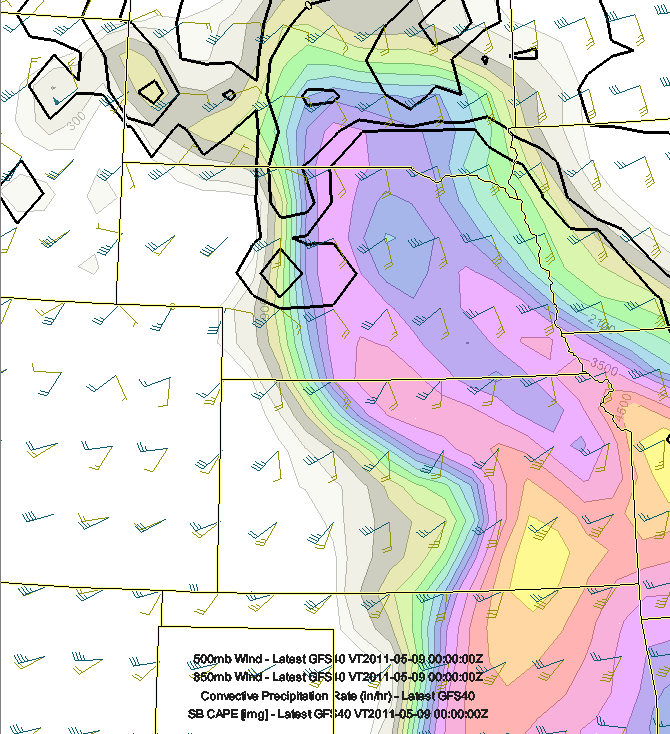
Sat, 7 May 2011 00:57:23 -0500
Tonights 00z GFS run valid 00z Monday 9 May | Based on this GFS run (and former runs with ECMWF support as well), it
appears the best area Sunday will be across the Nebraska Sandhills region,
perhaps as far south as I-80.
| 
(click on thumbnail for pop-up of larger image) |
Sat, 7 May 2011 11:36:16 -0400
Saturday Morning |
Day 1 is a down day as Rob and I drive to meet up with Mike. Mitch
and Candice have already started their northward trek. They are sti
ll considering a southern target for tomorrow while Mike Rob and I wi
ll be farther north. The 12Z NAM continues to give us multiple opti
ons including one in NW KS ahead of the developing surface low. The
most likely target remains in wrn NE to as far north as extreme swrn SD.&n
bsp Strong moisture advection beginning today will allow a plume of 60-6
5F dewpoints and 3000K+ CAPE to cover the region. There is decent 5
00 mb flow aloft but I'm intrigued to see where the pockets of 850 mb wi
nd end up residing. Wherever the strong crossover between 850 and 5
00 is in wrn NE may end up being the play as long as there is something
trigger storm initiation.
On another note the 12Z NAM does introd
uce something to keep our eyes on in south-central KS. It's a long
shot and likely capped (as the NAM fails to break out any precip) but a
small area between Medicine Lodge and Wichita shows strong sfc convergence
and plenty of flow aloft to make things interesting. Time will tell
!
Jon
|
Sat, 7 May 2011 13:28:24 -0400
GFS is out... |
...and it shows better convergence along the dry line with wrn OK.
Rob and I are getting ready to leave for Dodge where we will meet up with M
ike to discuss our plans. Mitch and Candice are currently near Ft.
Worth.
|
Sat, 7 May 2011 12:40:26 -0500
Saturday Midday update... finishing up some last minute preps for the chase | Hey Jon thanks for the updates. Looks like you guys will get in here
during the 6 o'clock hour. Honestly, I haven't had much time to
interrogate the latest model data due to a number of last-minute items
I needed to take care of here at home...including the eradication of a
huge swarm of moths that invaded my garage. There were no less than a
thousands moths in my garage. I kid you not. Of course, I had crap
cluttered and piled in the garage, and the moths were all
hiding/sleeping/whatever in every single little dark nook and cranny.
It was something else. Anyway, I am also on short sleep from last
night with the moths being a huge distraction... but at any rate, I've
remedied the issue, and by the time Jon and Rob get here, I will be
ready for a nice dinner and ready to load up and get the hell outta
Dodge. I talked to Jon earlier this morning about possibly getting a
jump start on the Sunday chase target by driving north to I-70 this
evening, mainly given the disgusting moth situation I'm dealing with
at home. More later...
|
Sun, 8 May 2011 00:42:37 -0500
Late Saturday Night Update | Rob, Jon, Mitch, and Candice all arrived safely in Dodge City this
evening. They are staying at the Super 8 in town, while I get to deal
with thousands of moths. Yay is me. Tomorrow is a chase day... moths
or no moths... and if the EMC/NCEP 4km WRF model from this evening is
any decent prognostication of how the real atmosphere will play out
tomorrow, then Kansas will light up like a Christmas tree with
numerous supercells all up and down the dryline. There's actually
going to be some halfway decent convergence on the dryline tomorrow in
Kansas...including not too far northeast of Dodge City. This is
something to watch out for... even though the EMC WRF is the only
numerical model showing such a robust and favorable supercell signal
down the dryline. A minor shortwave trough will actually move across
the central plains tomorrow afternoon allowing enhancement along the
dryline. This may just be the impetus to initiate supercells. Take a
look at this evenings 00z run of the EMC/NCEP 4km WRF. Left image is
simulated composite reflectivity valid 8:00pm CDT Sunday evening.
Right image is a two panel comparison of 3-hr convective QPF from the
EMC WRF and the Operational NAM model.
| 
#1 | 
#2 |
(click on thumbnails for pop-up of larger images) |
Sun, 8 May 2011 05:24:19 -0500
5/8 5am thoughts | Morning boys and Candice! Last night's run of the EMC 4km WRF was
rather enticing showing a string of pearls from western Nebraska down
into Oklahoma. Unfortunately, I don't think this is realistic. The
15 to 18hr RUC and HRRR are really keying in on moisture mix-out
across much of Kansas with highest CAPE nosing into
western/southwestern Nebraska. Latest GFS and NAM 06z runs still do
show convective attempts across southwest Nebraska at the nose of the
upper 90s heat axis. My idea for a target is bounded by
Ogallala-North Platte-McCook based on this (especially the 06z GFS
solution). We've really gotta get away from the moisture mix-out,
which means get north. Attached is the 06z GFS valid 03z and the 06z
NAM valid 00z both showing a small convective QPF signal (although not
as robust as previous runs)
It will be a fairly late show I do believe, thus even if we need to
get toward I-80 (which I think it looks like we probably will), then
we can still leave as late as Noon or so, but I'm going to be prepared
to leave my house by 11am. I will meet you guys down at your hotel
probably around your check-out time. -Mike U
|
Sun, 8 May 2011 05:29:09 -0500
Re: 5/8 5am thoughts | For some reason the files didn't attach on the previous email... here
are the images | 
#1 | 
#2 |
(click on thumbnails for pop-up of larger images) |
Sun, 08 May 2011 16:27:43 -0500
chase up date 422 pm | | YWZ0ZXIgZ3JhYmJpbmcgYSBxdWljayBiaXRlIHRvIGVhdCBpdCBtYyBjb29rIEkmIzM5O20gZ29u
bmEgaGVhZCBzb3V0aCBmb3IgdGhlIGJ1aWxkaW5nIHRvd2VycyAuLiB0aGF0IEkgc2VlIGZvcm1p
bmcgc291dGggJm5ic3A7c291dGggZWFzdCBuZWFyIGhveGllIGthbnNhcyA8YnI+PGJyPjxicj5T
ZW50IGZyb20gbXkgVmVyaXpvbiBXaXJlbGVzcyA0R0xURSBzbWFydHBob25lPGJyPjxicj4
|
Sun, 8 May 2011 16:53:49 -0500
chase update 450pm | I'm sitting near the Nebraska-Kansas border watching really high-based
cumulus with some ever slight verticality to my south and also to the
west-northwest. I think I'll sit here along Hwy 83 near Cedar Bluffs
KS and watch both of these areas. It's really dry right where these
cu are developing in the greatest convergence... the hope is that by 6
or 7pm, east-southeasterly flow will help bring some higher dewpoints
back in this area, but the hot, highly-mixed airmass is reducing
near-surface based CAPE substantially right where these cumulus are
developing. It's a wait and see game like it usually is...
|
Sun, 8 May 2011 19:21:30 -0500
Bust!! Heading to North Platte for the night... | Well... this sucks. Moisture mixed out, much like expected, actually,
but even more so than the models suggested (well, except for the HRRR,
as it really mixed moisture out over western/central Nebraska). The
best convergence is just too far west where dewpoints are in the
20s... so deep convection can't get started... it's just flat looking
cumulus that glaciates about 15,000 feet. Anyway, maybe some
lightning photography after dark up north, perhaps, but this one is a
bust... tomorrow still looks decent with much better forcing for
ascent at the nose of the incoming upper level jet streak up into the
northern Nebraska Panhandle and southwestern South Dakota.
|
Mon, 9 May 2011 02:11:07 +0000
We did a great job of confirming... | ...that both southeastern and southwestern NE were very poor plays today. H
eading to Kearney tonight to position ourselves for a drive to the north an
d west tomorrow.
Jon
|
Mon, 9 May 2011 07:42:58 -0500
Difficult chase forecast for today, May 9th: Two targets, which one to go to? | A significant jet streak will be nosing up into Wyoming today allowing
fairly robust cyclogenesis around the Laramie Range. Southeast winds
will develop over eastern Wyoming in response, bringing in some lower
to perhaps mid 50s dewpoints as far west as harrison, NE and even
Lusk, WY. This is Target #1 (Lusk WY to Harrison, NE). Second target
is a north-south convergence zone whihch will develop north of a
secondary sfc low farther east. Much more abundant moisture will
exist in this area with dewpoints in the mid 60s as far northwest as
central SD by late in the afternoon. Upper winds will be a bit weaker
in this area, but direction shear will still support supercells.
Target #2 is west to northwest of Pierre. Below is the 11z RUC model
and the 06z NAM model valid around 00z time later on today: I will
either head west-northwest to Harrison, NE or north to Murdo, SD (then
northwest from there) leaving around 9am.
I'll update the chasemode status with which target I select.
| 
#1 | 
#2 |
(click on thumbnails for pop-up of larger images) |
Mon, 9 May 2011 11:30:57 -0500
11:30am update from Valentine, NE | I'm pretty much committing myself to the northern target. I like the
look of the visible satellite with a lot of clearing in the
central/northern South Dakota area. 60s dewpoints will spread north
through the day. There is north-south baroclinic zone that will
develop, thanks to prolonged stratus farther west toward western South
Dakota. This will enhance local lifting due to frontogenesis... with
2500 to 3000 J/kg CAPE developing to the east over a large area.
Vertical shear is not spectacular this far north, but directional
shear will be adequate for nice storm organization and supercells.
| 
#1 | 
#2 |
(click on thumbnails for pop-up of larger images) |
Mon, 9 May 2011 14:40:09 -0500
240pm in Murdo, SD along with a ton of other storm chasers. http://chase.underthemeso.com | At 2:30pm, am sitting in Murdo waiting things out. An outflow
boundary from overnight convection farther north had pushed south into
south central south dakota. This is enhancing convergence along an
east-northeast to west-southwest orientation very near my location.
The plan is to hang out here until hard towers start forming near or
west of this location. It is 73 degrees in Murdo with temperatures in
the 80s just to the southeast of here.
|
Mon, 9 May 2011 22:52:44 -0500
Another busted chase on Monday 5/9. Tuesday 5/10 may see some storms along dryline in Kansas? | It was an extremely frustrating chase day in southern South Dakota. I
picked the wrong target... it was a 50/50 coin flip Lusk/Harrison or
Dupree/Phillip. Well as it turned out, there were severe storms in
both areas.... however, in the Phillip, SD area, the tornadic
supercell formed way too late, after sunset, and was shrouded in
stratus clouds. I tried to pursue that storm, but came upon stratus
at Kadoka and decided to turn back to Murdo and call it a day. I
guess you could call this a storm chasing slump. Haven't even gotten
camera out of the bag to shoot storm images since the beginning of my
vacation on May 3rd. Quite sad. Some decent mid/upper level flow
will overspread the dryline in KS tomorrow, and there is some hope for
some storms along the dryline as some of this leading wind energy
ahead of the next shortwave trough may help enhance convergence and
lead to storm initiation. NAM model this evening shows storms
developing along the dryline northeast of Salina. That's 8 to 9
driving hours or so from Murdo, so I will be getting up early tomorrow
morning and heading south. -Mike U
|
Wed, 11 May 2011 16:17:37 -0600
Near vona Colorado | 
(click on thumbnail for pop-up of larger image) |
Wed, 11 May 2011 18:57:38 -0500
Heading east to Colby/Hill City to intercept evening dryline storms... Not a whole lot of success chasing cold pool activity along I-70 in eastern CO. | We did manage to drive through two hail storms... one was south of
Vona, CO where hail covered the road and the temperature on the car
thermometer dipped down to 39 degrees! The ambient temperature was
already in the upper 40s near Vona where that tornado-warned storm was
earlier this afternoon along I-70 area. Didn't see much with that,
but it had a nice base for the longest time with continued
back-building. After that, we bailed east as the far most western
storm became severely outflow dominant with a cold air push. We then
headed east on I-70 and drove through the Burlington Supercell as it
crossed I-70. We stopped briefly along the interstate to photograph
the structure from near the Colorado border. It did have a wall
cloud/lowering, but nothing much more. We are now driving east toward
Colby and then likely northeast from there to intercept cells forming
along the dryline in northern Gove County... if they hold together.
|
Thu, 12 May 2011 09:32:09 -0500
Storm Chase Summary May 11 -- Vona to Burlington, CO storms
Summary & Images (part 1) | Vona to Burlington, CO storms early in the chase. The Burlington
supercell was more impressive as we drove right under it along I-70
then briefly photographed it from the east along I-70 (image at
left). We continued east to Colby after this.
| 
#1 | 
#2 |
(click on thumbnails for pop-up of larger images) |
Thu, 12 May 2011 09:35:08 -0500
Storm Chase Summary May 11 -- Atwood, KS storm
Summary & Images (part 2) | After the Burlington, CO supercell, we continued east to Colby and
north to Atwood catching that marginal supercell storm from the south.
We sat at a location about 6 miles east of town and photographed the
storm for about 15 to 20 minutes:
| (click on thumbnails for pop-up of larger images) |
Thu, 12 May 2011 09:38:16 -0500
Storm Chase Summary May 11 -- Oberlin storm after sunset
Summary & Images (part 3) | We intercepted another marginally severe storm near Oberlin to
conclude the May 11 chase. We photographed this storm from along
Highway 36 as well. We let the storm go by to the north and this
yielded impressive view of the convection on the backside of the
storm. This was quite photogenic. We then concluded the chase at
Oberlin and headed to WaKeeney, KS for the night again.
| (click on thumbnails for pop-up of larger images) |
Fri, 13 May 2011 10:29:51 -0500
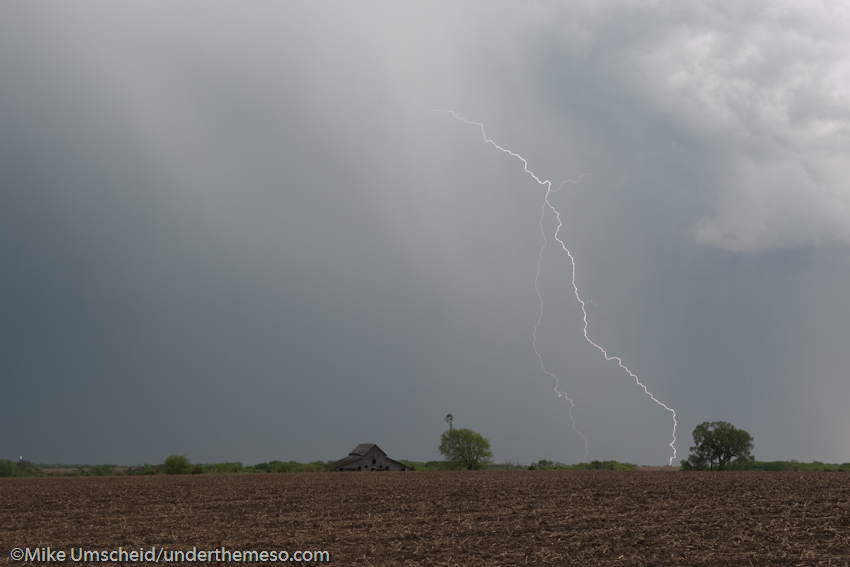
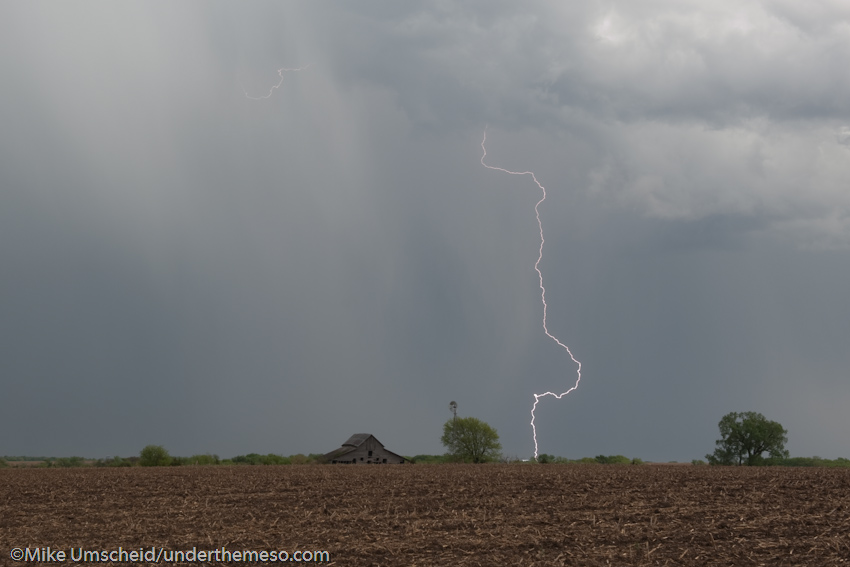
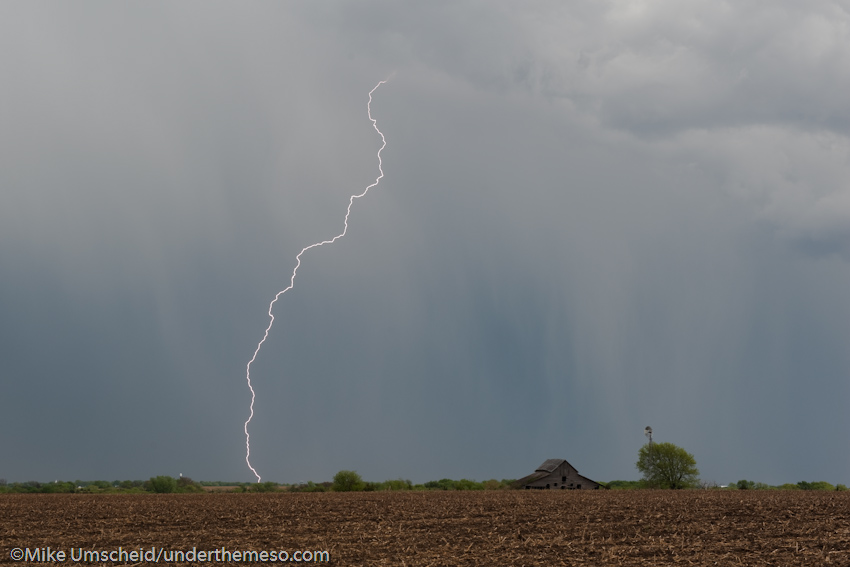
Prelim images from May 12 chase in southeast Nebraska | Rob, Jon, Mitch, Candice and I targeted the York, NE area on May 12th.
We intercepted the initial storms north of York as we waited for the
activity to move toward us... but it really never did. As a result,
we were caught too far north to observed the weak, brief, very small
funnel cloud(s) and/or tornado(es) near York. We then drove south to
intercept new storms down in the Fairbury area, ultimately concluding
the chase near Odell along the KS/NE border south of Beatrice, NE. I
was fortunate to capture some cloud-to-ground lightning flashes with a
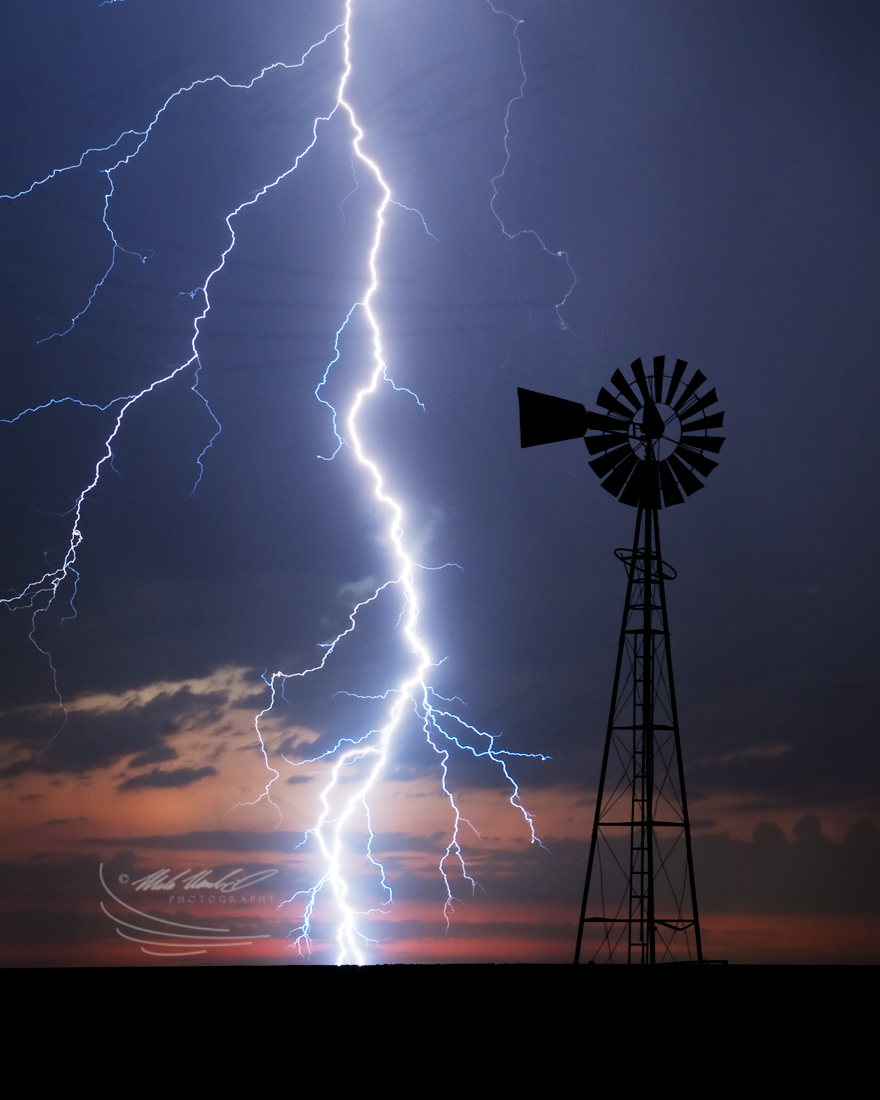
barn and windmill in the landscape. The backside cumulonimbus
structure was impressive as well just after sunset near Odell. All in
all a fun chase and quite pleased with the lightning images captured.
| (click on thumbnails for pop-up of larger images) |
Mon, 16 May 2011 10:23:31 -0500
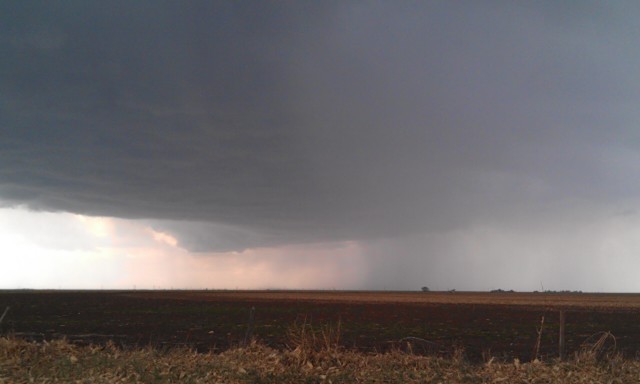
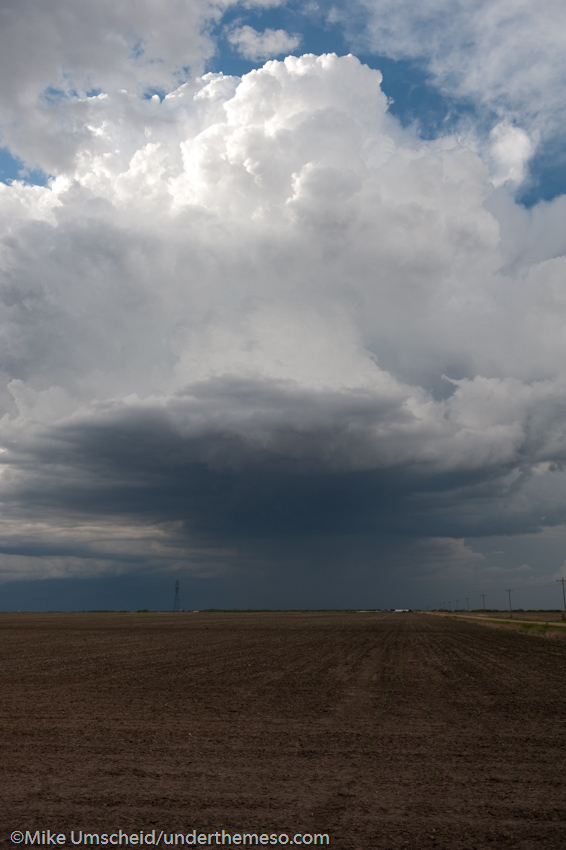
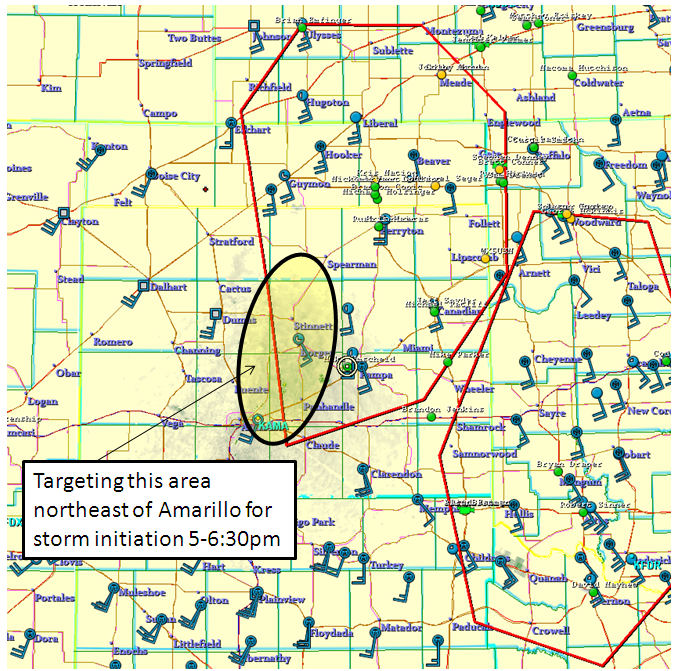
26 April 2011 Chase Summary & Images -- Northern Texas Panhandle (Part 1)
Summary & Images (part 1) | This was a solo chase while I was on my 10pm to 6am shifts. I knew
this was going to be an early show as far as storm initiation was
concerned, and given the chase target was a little more than two hours
from Dodge City, I decided to make a go of it. Very cool temperatures
aloft and marginal moisture of 45 degree dewpoints would yield about
800 to 1200 J/kg SBCAPE. I targeted the area around Spearman, TX.
The first storm I intercepted was one which formed to my southwest
between Stinnett and Spearman. Unfortunately, this storm was moving
east-northeast through the desolate ranch land of eastern Hutchinson
and Roberts County. I had to drive all the way east to Hwy 70 before
heading south for an intercept. I waited on the storm in northern
Roberts County near the Canadian River. I then followed the storm
southeast along Hwy 283. The sequence of images shown here are of the
storm during this portion of the chase through Roberts County:
| (click on thumbnails for pop-up of larger images) |
Mon, 16 May 2011 10:52:08 -0500
26 April 2011 Chase Summary & Images -- Northern Texas Panhandle (Part 2)
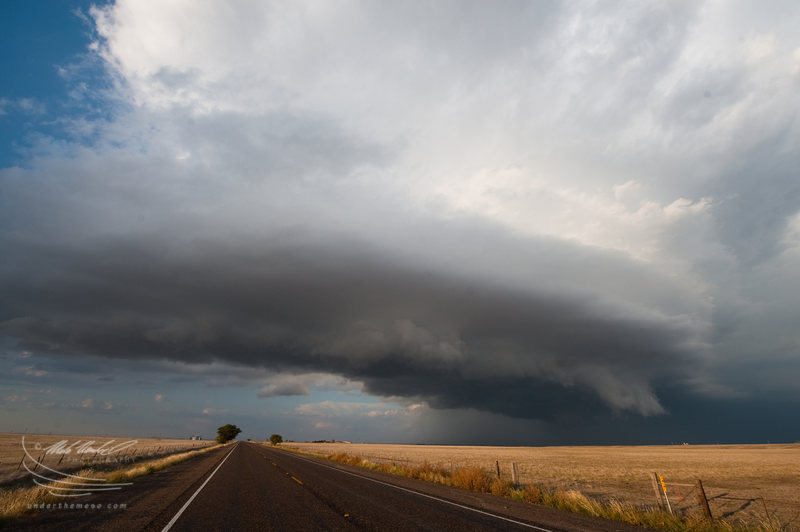
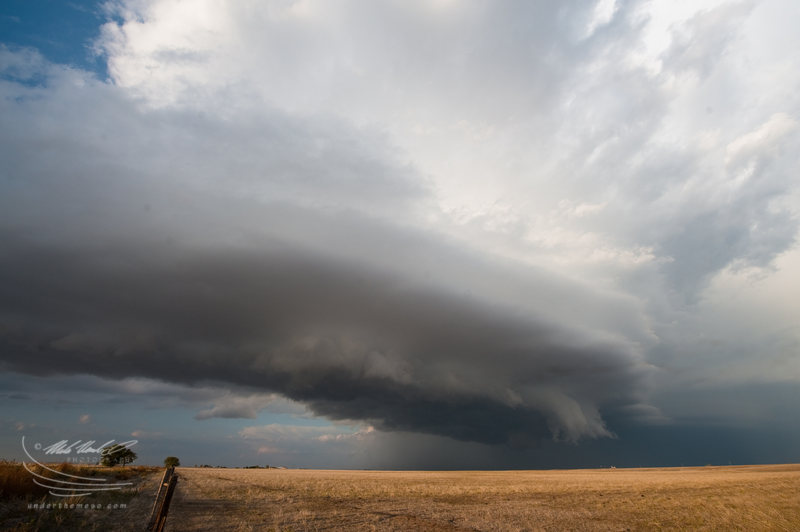
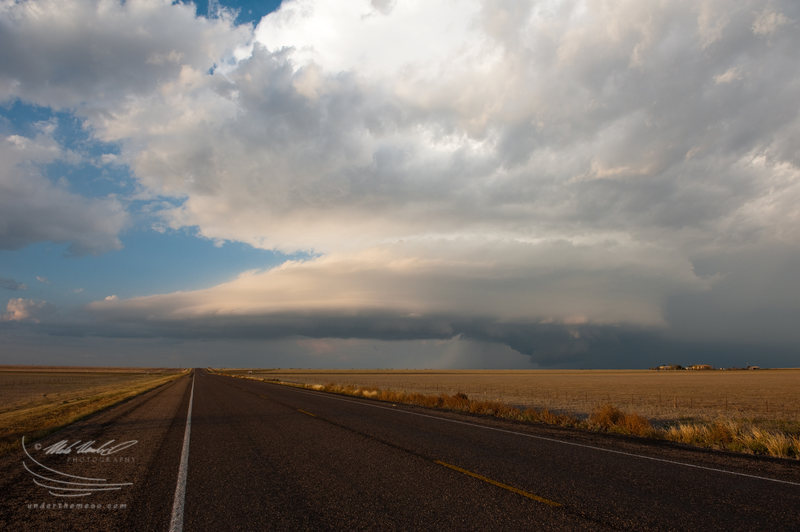
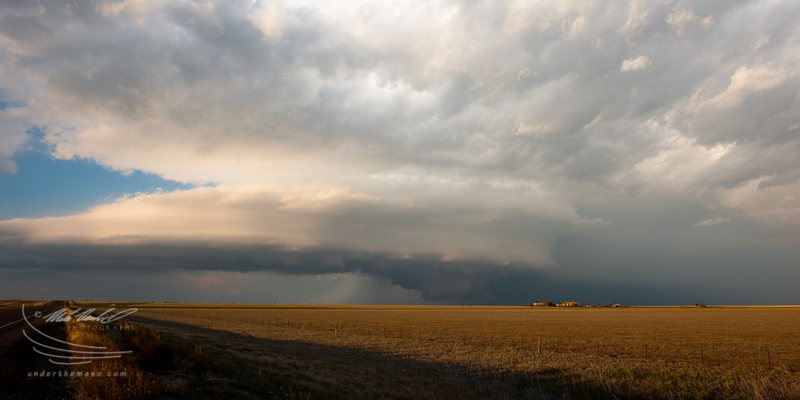
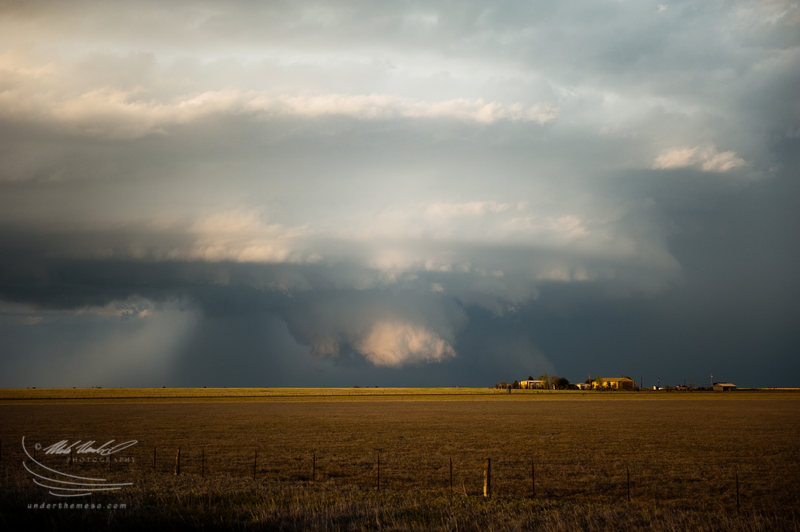
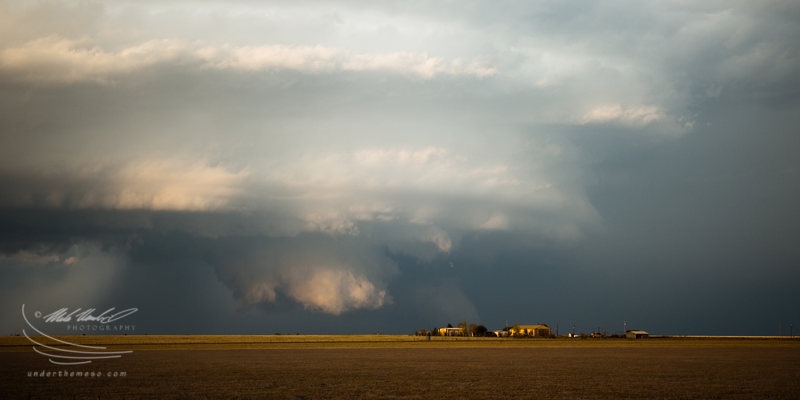
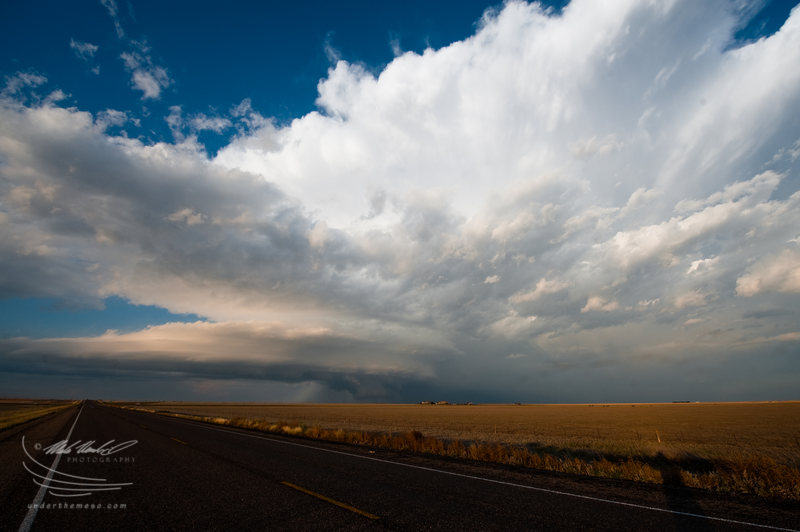
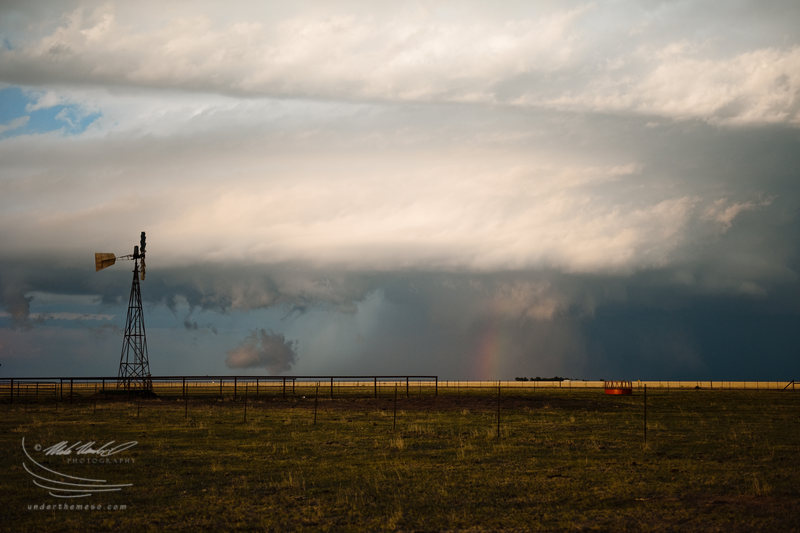
Summary & Images (part 2) | *Perryton Storm*
After the first storm dissipated and moved east near Canadian, I decided to
intercept another fairly strong storm that was approaching Perryton from the
Oklahoma Panhandle. This storm was moving east-southeast and would be a
good intercept on the way back home to Dodge City. This was a nice little
surprise and ended up resulting in my best images of this chase. The shelf
cloud associated with this storm was rather photogenic as I approached it
over northeastern Ochiltree County southeast of Perryton. I followed it
south then back to the east along some county roads, stopping every few
miles along the way to photograph.
| (click on thumbnails for pop-up of larger images) |
Mon, 16 May 2011 11:00:58 -0500
26 April 2011 Chase Summary & Images -- Northern Texas Panhandle (Part 3)
Summary & Images (part 3) | Cloud to ground lightning east of Perryton
Shortly after photographing the structure of the Perryton storm's shelf
cloud, I continued east on a county road about 8 miles south-southwest of
Booker, where I stopped to photograph some of the fairly vivid
cloud-to-ground lightning. As the storm approached, I booked it east to
Road 1265 where the core of the storm overtook me and I received copious
amounts of pea to penny size hail which covered the road about 6 miles south
of Booker. After this was over, I made my way back to Dodge City.
| 
#1 | 
#2 |
(click on thumbnails for pop-up of larger images) |
Mon, 16 May 2011 19:04:21 -0500
4/21 chase update 6:35pm | well, the one attempt at convective initiation failed north of
Richfield. Despite the strong surface convergence occurring now with
good southeast winds, the lack of appreciable moisture is certainly a
mitigating factor...and the main upper level wave is still a bit too
far west to compensate for lack of moisture. 80 degree temperature
over a 46 dewpoint supports about 1000-1200 J/kg CAPE here, but all
the cumulus just looks really flat now to the west, as the strongest
convergence is in Baca County where the really dry air is (30
dewpoints or lower!). I'll keep watching things through 7pm, but the
way it looks now, this gamble I took did not pay off. Really no
biggie. I'll be on vacation to chase May 3-16.
(transferred from blog)
|
Mon, 16 May 2011 19:02:31 -0500
4/21 chase update 545pm cdt | I am taking a shot at a marginal setup for an isolated, photogenic,
marginally severe storm in far Southwest KS. There is a narrow axis
of 48 to 52 degree dewpoints moving up into far southwest KS providing
900 to 1200 J/kg CAPE where temperatures have warmed into the lower
80s. I am observing a clusted of high based cumulus to my west near
Richfield, KS at this time. It is currently in the dry air where
dewpoints are in the mid-upper 30s... but 46 to 48F dewpoints are
about to become ingested into this highly convergent area, so I am
hoping that a decent isolated storm can result here. We'll see what
happens. I'm only 100 miles from Dodge, so it's a decent gamble in my
eyes. I'm due in to work at midnight tonight, so I have time to play
around with whatever develops since it would be moving in the
direction of home.
transferred from blog
|
Wed, 18 May 2011 14:22:55 -0500
Tuesday May 24th looking interesting, my next opportunity to possibly chase... | After a string of 7 evening shifts, I will have a day off on Tuesday,
May 24th, which I had on the calendar a possible chase day if the
pattern was right and it wasn't ridculously far away. As it stands
now, there is a very high probability that a substantial southwestern
upper low/trough will develop and approach the plains. The ECMWF
model has been the fastest model with this next system while the
deterministic GFS model has been the slowest. Attached in this post
are the GFS and the ECMWF 144-hour forecast valid 12z Tuesday the 24th
(from this Wednesday morning's 12z run). It certainly looks like
Monday and/or Tuesday will be active for severe weather on the plains
worthy of a storm chase. Will continue to monitor this potential set
up for a chase and post some followups on this chase mode blog:
| 
#1 | 
#2 |
(click on thumbnails for pop-up of larger images) |
Sun, 22 May 2011 13:52:44 -0500
Tuesday May 24 has the makings of an impressive central plains tornado outbreak | Since Tuesday May 24 is really my only day off to possibly chase, I
have been keeping an eye on the numerical model trends regarding a
storm chase setup. As each model run of the GFS, NAM, and ECMWF come
in, the signals of a severe weather outbreak become increasingly
clear. In fact, given the anticipated upper 60s/lower 70s dewpoints
across much of the warm sector, an outbreak of tornadoes seems quite
possible, if not likely. The question is where the center of activity
will be focused. The NAM insists on a smaller area of warm sector,
only pushing as far north as north-central Oklahoma. The GFS, on the
other hand, is more aggressive with a push of warm, moist air into
much of Kansas ahead of a very impressive mid level jet streak/cold
air advection. The 500mb pattern looks really, really good...
regardless of which model you look at. By Monday night, a target
region of interest for me will most likely emerge. I'm hoping for a
GFS type scenario as it would spread the storm chasers out across
Kansas, Oklahoma, and N. Texas. Attached below are the 12z Sunday
morning model runs of the NAM and the GFS:
| 
#1 | 
#2 |
(click on thumbnails for pop-up of larger images) |
Mon, 23 May 2011 11:29:08 -0500
Tuesday May 24th potential tornado outbreak still on track (23.12z NAM model run shown) | The latest NAM model has now trended to the ECMWF and GFS of a wider
warm, moist sector extending into central Kansas. This lends greater
confidence in signficant tornado outbreak extending well into Kansas
for Tuesday. This will also likely lead to a greater probability of
storm chaser dispersion as there should be scattered tornadic
supercells from basically I-70 corridor south to the Red River across
the central Plains. Trying to fine-tune where the greatest threat
area amidst this corridor is likely an exercise in futility because
significant tornadic supercell ingredients should be very impressive
over this entire area. The only caveat to this is a large nocturnal
MCS or morning explosion of convection that could substantially alter
the warm/moist sector like on May 11th. Major cities like Wichita,
Oklahoma City, and Tulsa are at risk to tornadoes Tuesday evening.
| 
(click on thumbnail for pop-up of larger image) |
Tue, 24 May 2011 07:03:14 -0500
High Risk of severe storms with several long-lived, destructive tornadoes likely (24.06z NAM model shown) | The dawn hours have arrived -- of what, on paper, looks to be one of
the most explosive Great Plains severe weather outbreak in quite some
time -- in terms of the potential for multiple, long-lived,
destructive tornadoes. I will be storm chasing today, on my one true
day off work between ending evening shifts and beginning midnight
shifts late Wednesday Night. I will be hanging around Dodge City
until around 2:00 to 2:30pm or so, which at that time, the surface
focus for storm initiation will actually not be too far from here.
The initial surface-based storms will probably form in an area from
Kinsley to Greensburg to Pratt after 3:00pm and continue developing in
an explosive manner through the afternoon. A surge of warm air will
develop northward from western Oklahoma into portions of far
southwest/south-central KS greeting a cooler, much higher relative
humidity airmass along either the Highway 50 or 54 corridor. This is
where the initial triple point will be... and a focus for this initial
development. By late afternoon/early evening, say after 5pm,
additional storms will develop in perhaps an even more explosive
manner farther south... along the OK-KS border and points south all
along the dryline in central Oklahoma. The 06z NAM model depicts
supercell thunderstorm development as far south as the Dallas-Ft.
Worth metroplex by 6 or 7pm. The low level wind shear in combination
with 3500 to 4500 J/kg Surface-based CAPE will yield support the
development of very aggressive supercell thunderstorms all the way
from south-central Kansas south to North Texas. All storm chasers
should be very careful, especially considering the number of storm
chasers that will likely be out. Storm chasers will be out in huge
numbers today. I will likely observe storms/storm structure from a
safer distance (which is what I usually do anyway), as many other
storm chasers will likely be up close and personal to large tornadoes.
A final chase strategy will be decided by midday.
| 
#1 | 
#2 |
(click on thumbnails for pop-up of larger images) |
Tue, 24 May 2011 13:40:35 -0500
outflow boundary retreating north. Many options from Dodge...supercell developing near Liberal. 70 dewpoints surging back into western OK. | Wow. Already a tornado watch in effect as of 1:30pm across all of
Southwest Kansas. Will be departing Dodge City around 2:30 or so
depending on how things look with radar and visible satellite trends.
The NAM solution was a total mis-forecast for southwest Kansas. There
is a greater risk now for tornadoes across much more of southwest and
west-central Kansas since the stratus is eroding and mid 60s dewpoints
are surging back west on east winds. I may not be going very far from
Dodge City. Final decision on where to go, you'll just have to
monitor the CHASE MODE page with real-time graphics on the left hand
side to see where I ultimately went and which storm I'm on.
|
Fri, 27 May 2011 22:52:01 -0500
Storm chase summary & images May 24th (1 of 3): Kalvesta-Ness City, KS supercell
Summary & Images (part 1) | Overall, I wish I had May 24th to do over again. This was a high-risk
day for severe storms from southern Kansas into Oklahoma. It was
much-advertised, including by yours truly with various blog postings
prior to the event. All along I had decided to stay in Kansas to
chase since there was the potential for tornadic supercells closer to
home versus anywhere else. I decided to target the from Pratt to
Hutchinson, but as the morning of the chase day came to pass --
another target area emerged. This was the area WEST of Dodge City as
winds were becoming easterly behind an early morning outflow boundary
with lower 60s dewpoints as far west as the Highway 283 corridor
(Dodge City to Ness City). A supercell formed early in the afternoon
near Liberal and it was moving up toward the Cimarron-Dodge City area.
I decided to make this my target storm. A friend of mine from
bowling was also with me on this chase.
We left around 2:30 for the storm approaching Hugoton. The fate of
the chase day was determined very early on -- a poor decision of mine
to head southwest on Hwy 54 toward Copeland versus Hwy 50 toward
Cimarron-Ingalls. I had thought that the storm would begin to
right-turn and move more northeast (instead of north-northeast) when
it was down near Hugoton. The storm never did do this...until it
reached Highway 50...of course! So, we ended up falling behind the
storm in a hurry since it was booking north-northeast at a good 40
mph. We had to play catch up and blast north on Hwy 83 to Garden City
and intercept it from behind on K-156. We finally did get back into
the inflow sector of the storm near Kalvesta. Along the way, we came
across some very large hail along the highway west of Kalvesta. I
estimated some of the stones behind 2" in diameter, but I'm sure there
were some baseball-sized stones scattered in there. We didn't stop
because I wanted to continue getting into a proper position to
photograph the storm itself.
At Jetmore, we drove north on Hwy 283 and it did not take long to get
a good view of the supercell updraft structure to our west-northwest.
Radar showed a fairly good appendage/nascent hook echo with a slight
velocity couplet approaching the Ness-Hodgeman county line. Then we
came upon that dreaded road sign: One lane road ahead. I couldn't
believe it. What a time to run into road construction/pilot car. We
came upon the pilot car stop and the storm updraft and rotation was
coming upon us. we only sat there for a minute or two before deciding
this was stupid and turned around and got the hell out of there.
About a mile south of that, I pulled off and photographed some of the
structure of the storm approaching. There was definitely broad scale
cloud base rotation on the south side with RFD rain curtains rotating
around the backside basically coming straight for us. I was able to
get a few images of the supercell approaching (shown below). This was
the only time we would photograph this storm. After that, the road
network was unfavorable and we continued on east-northeast along K-156
again in the general direction of Larned.
By this time, we were already way out of position to intercept
tornadic storms that had formed to our northeast across Rush County.
Other storms tried to form back down into Pawnee County, but these
were also northeast of us and continued to race north-northeast. When
we reached Larned, I decided it was just time to regroup and figure
out what to do next. Other storms began to form to our
south-southwest which would be good intercepts for us... so we went
after those storms. Continued in post #2
| (click on thumbnails for pop-up of larger images) |
Fri, 27 May 2011 23:01:25 -0500
Storm chase summary & images May 24th (2 of 3): Marginally severe outflow dominant storms with shelf cloud from Stafford to Hutchinson
Summary & Images (part 2) | Images below are from the sequence of the chase along Hwy 50 in
Stafford and Reno County. The storms that developed to our
south-southwest as we were in Larned did not become supercells... but
evolved into a linear mess of strong to marginally severe storms. It
was basically shelf cloud photography from this point on with these
storms. We followed these until we approached Hutchinson then let the
storms roll over us and then began our way back to Dodge City.
| (click on thumbnails for pop-up of larger images) |
Fri, 27 May 2011 23:10:19 -0500
Storm chase summary & images May 24th (3 of 3): Some lightning and mammatus on the backside of linear storms near Reno-Stafford County line
Summary & Images (part 3) | I was hoping for some photogenic scenes on the back side of the storms
we let roll over us near Hutchinson. Unfortunately, the sun had
fallen behind some distant cirrus, so we didn't get good sunset light.
Some intra-cloud lightning illuminated the sky to the east as the
storm moved on and I manage to get a few marginal lightning images.
After we left this scene I stopped again about 15 minutes later as
mammatus was evident in the low light. I set the tripod up and did
some long-exposure work here for about 10 minutes. A couple of the
images are seen below:
| (click on thumbnails for pop-up of larger images) |
Mon, 30 May 2011 13:47:02 -0500
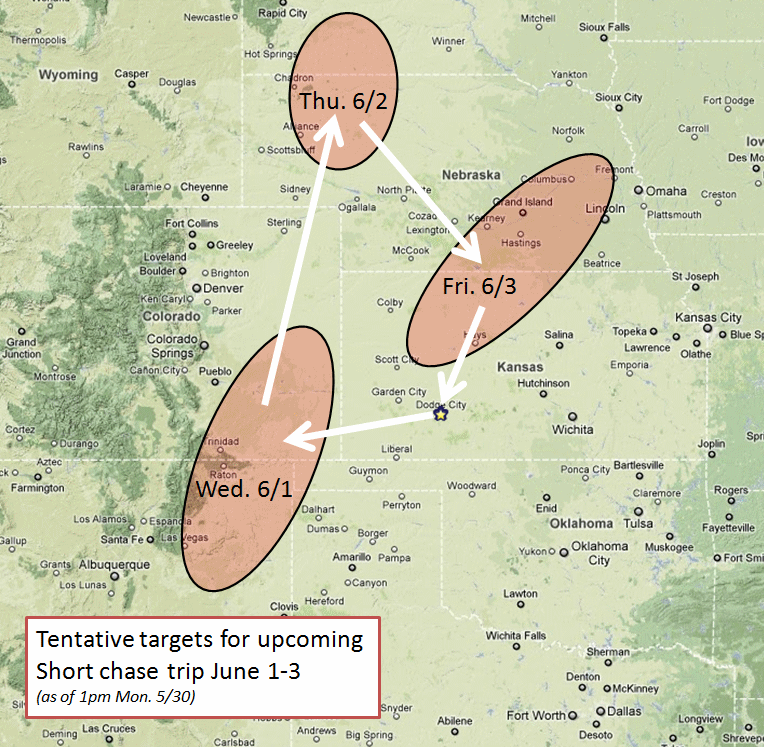
Tentative storm chasing plans June 1-3 | After my last midnight shift early Wednesday morning (June 1), I am
free to roam the western and central plains until I am due back to
work Saturday morning (June 4), and the overall pattern is favorable
for storms to chase each day. Moisture will return to the high plains
late Tuesday and early Wednesday. I have really liked the looks of
northeastern New Mexico east of the Sangres (Las Vegas, NM northeast
to Clayton) for several days now. After that, though, eastern New
Mexico will likely dry back up from a severe storms standpoint and I
will have to shift my attention back to the north. The threat area
Wednesday may include east-central CO and far western KS. The
300-500mb jet core will overspread the central Rockies and northern
High Plains Thursday -- and on paper this looks to be the best day of
the three of this short trip. I am tentatively thinking about the
northwestern Nebraska area near the South Dakota border east/southeast
of the Black Hills, but I may end up heading all the way up into
central/northern South Dakota where even higher CAPE will exist > 4000
J/kg more than likely with 45-50 knots 500mb flow out of the
southwest. Thursday could be a very good day for the Dakotas. The
front then moves south late Thursday Night and Friday pushing the
focus for storms back into the central Plains. By late day Friday,
the front will probably be positioned across southern Nebraska or even
farther south toward Northwest/north-central Kansas... which is good
as this would be a shorter drive back to Dodge to conclude this trip.
More later.
| 
(click on thumbnail for pop-up of larger image) |
Mon, 30 May 2011 15:33:18 -0500
Storm chase images from May 29 (1 of 3)
Summary & Images (part 1) | A couple of images of the actual storms on this chase... including a
small LP updraft that formed just northeast of the Big Basin Prairie
Preserve south of Minneola and mammatus south of a marginally severe
storm in Rush County, KS:
| 
#1 | 
#2 |
(click on thumbnails for pop-up of larger images) |
Mon, 30 May 2011 15:38:17 -0500
Storm chase images from May 29 (2 of 3)
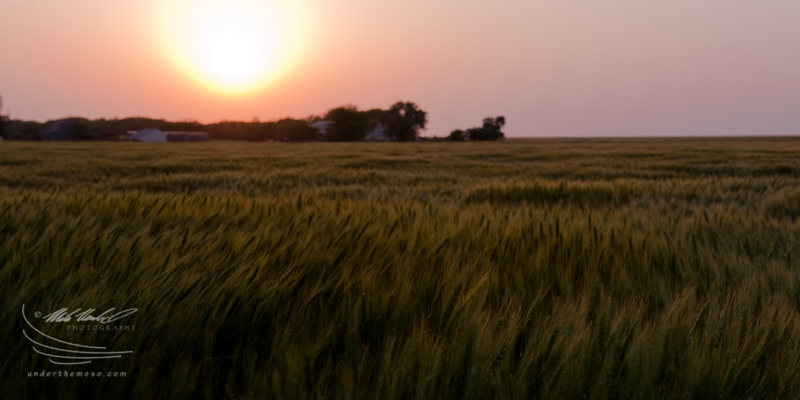
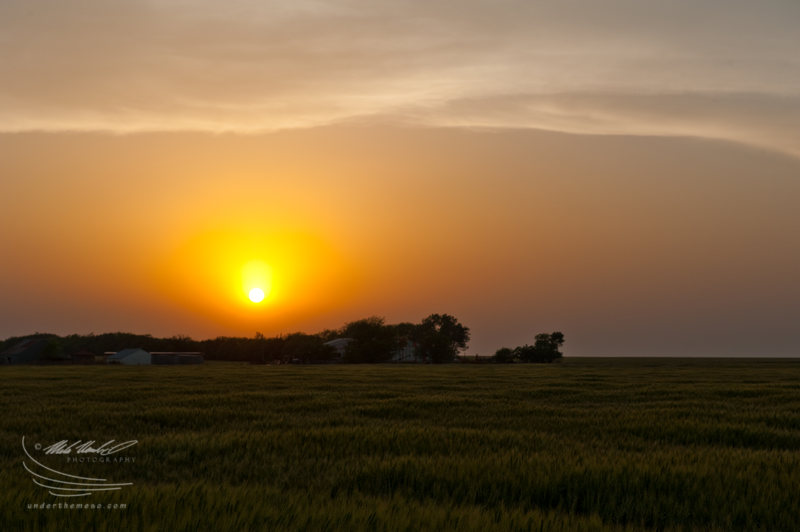
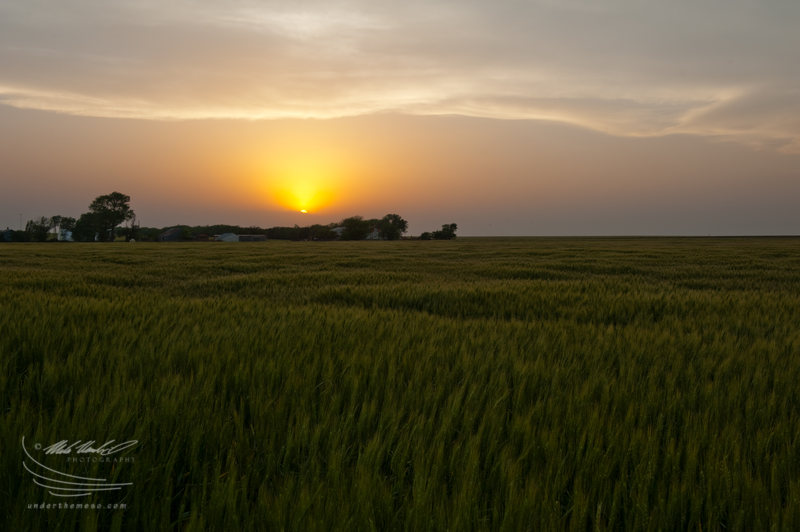
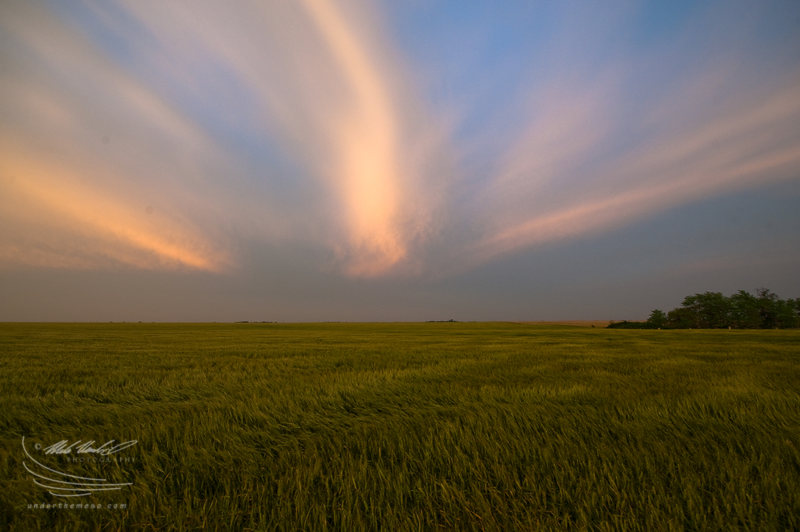
Summary & Images (part 2) | I was hoping for good sunset light to illuminate the under side of the
remnant anvil of the storms that were moving northeast into northern
Kansas. Unfortunately there was no remnant mammatus to speak of, but
the sunset was still quite impressive. I found a wheat field just
north of Otis, KS to shoot some sunset scenes from. The western
horizon had some smoke and dust in the atmosphere which provided for a
rather red sunset:
| (click on thumbnails for pop-up of larger images) |
Mon, 30 May 2011 15:42:57 -0500
Storm chase images from May 29 (3 of 3)
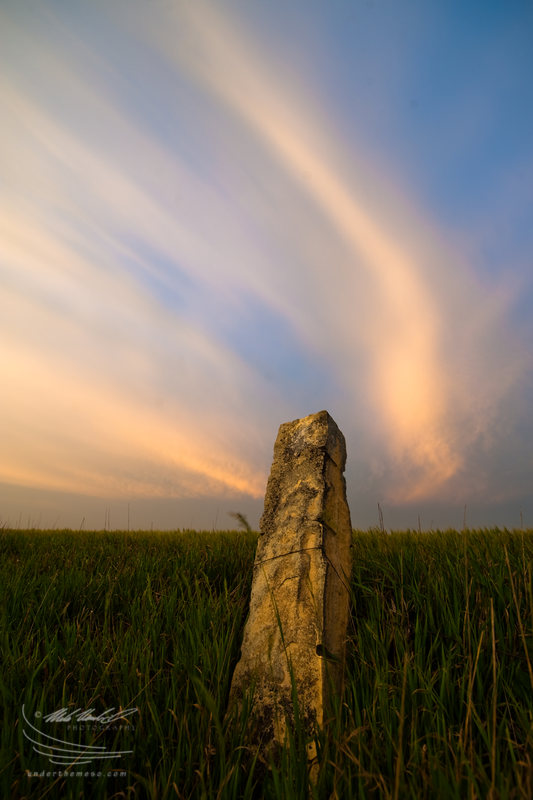
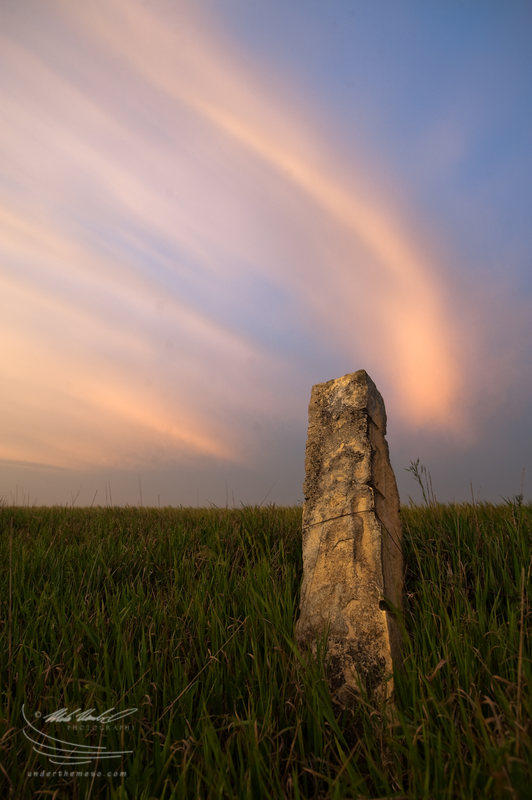
Summary & Images (part 3) | The highlight of this shoot was actually totally unplanned and
spontaneous. Just after leaving the scene where I shot the sunset
from...no more than about a half mile drive back south... I came
across some limestone fence posts along one of the wheat fields north
of Otis. The eastern sky was actually becoming more dramatic with
some of the virga streaks lighting up in pink and orange hues. I went
to work using one of the post rocks as a subject in some of the shots
scene below:
| (click on thumbnails for pop-up of larger images) |
Tue, 31 May 2011 20:32:50 -0500
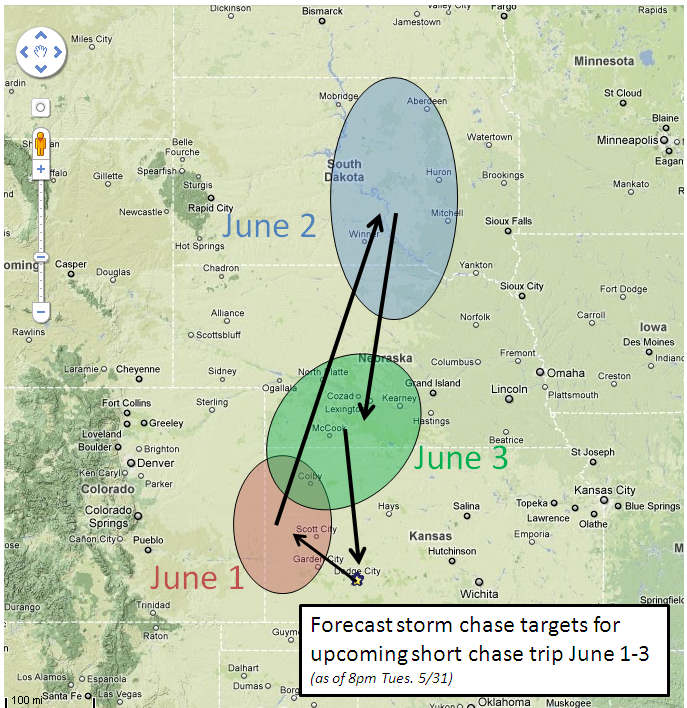
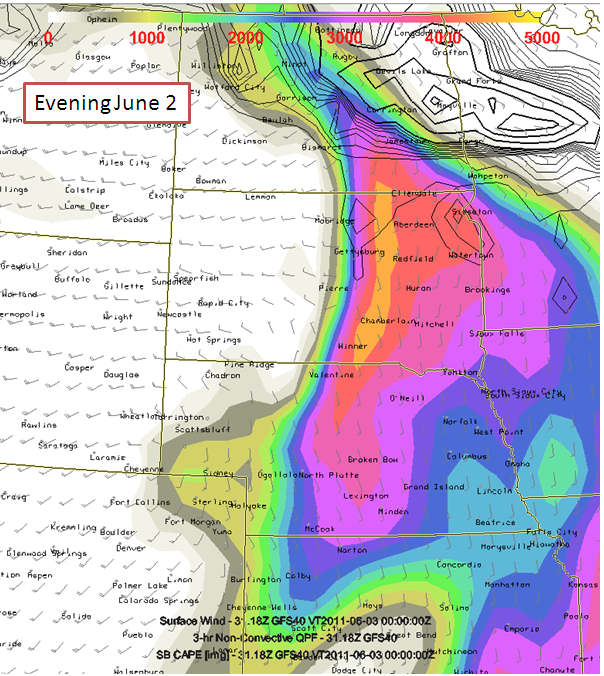
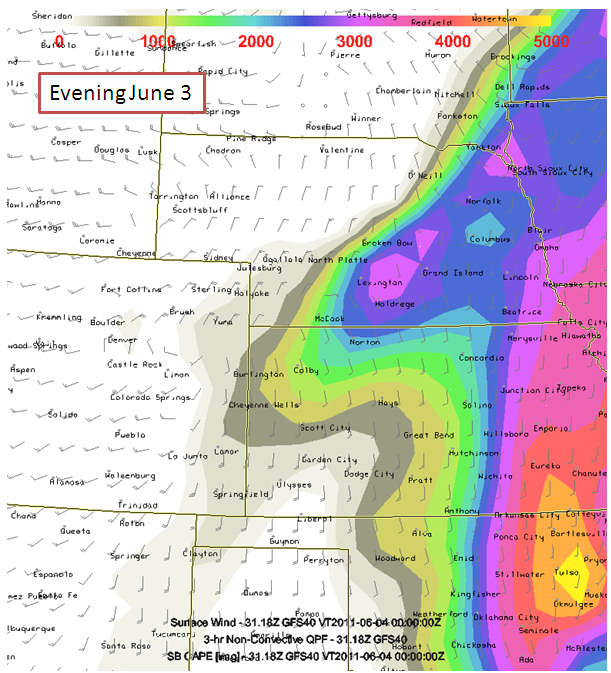
Updated storm chasing plans for June 1-3 | My short storm chase trip for June 1-3 is still a go. This will be a
solo trip, and given the possibility for a long drive during this
trip, I've prepared for "car camping" during this trip to save a
little bit of money given the gas prices. This will also give me the
flexibility to sleep whenever I wish (except for the evening hours of
course!) since my body clock will still be in "midnight shift" mode
for the most part since my last shift is overnight tonight.
June 1: Target is actually fairly close to home, which sill give me
an opportunity to sleep at least a little bit when I get off work at
6am. Good moisture is coming back into western Kansas tomorrow which
will yield about 2000 to 2500 J/kg of SBCAPE. A minor shortwave
disturbance will move across the Rockies nosing into western Kansas
which will likely aid in storm development near the Colorado-Kansas
Border. Target around Tribune, KS.
June 2: After the chase is done June 1, I will likely begin my drive
north to South Dakota, which appears to look quite good if a storm can
develop (which I think one will). It will be a long drive, so if it
cap busts... it will be a frustrating and EXPENSIVE one. I am taking
a risk that it WILL break, and I have confidence that it will. If
later model runs of the GFS show more of a potential for a cap bust
versus not... then I will scrub June 2nd chase up that far north. The
Instability and shear will be excellent with classic 50 knots
southwest flow coming into South Dakota at 500mb. Tentative target
Kennebec to Selby, South dakota
June 3: The front associated with the initial jet streak late June
2nd will move south into Nebraska. The front will slow down and
perhaps stall out in southern Nebraska with 60s dewpoints as far west
as southwestern Nebraska. Tentative target McCook to Lexington, NE.
I will drive back to Dodge City following this chase arriving home
late night, more than likely. I am due back to work Saturday morning
the 4th.
| (click on thumbnails for pop-up of larger images) |
Wed, 1 Jun 2011 11:13:50 -0500
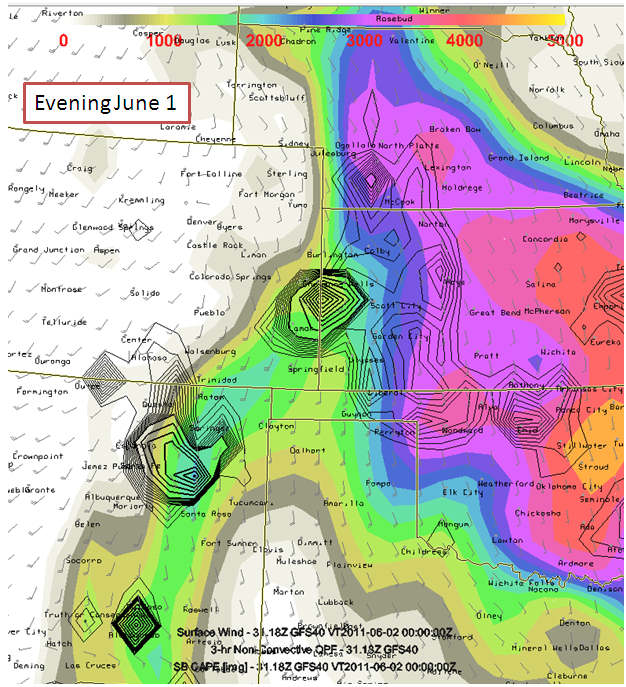
Chase target for June 1 (as of 11:15am) -- Springfield, CO to Johnson, KS | Difficult forecast today. I don't think the moisture farther south is
all that terribly deep, considering the mix out of moisture to varying
degrees depending on your model flavor. That being said, even the
most mixed-out moisture solution would still favor a photogenic
high-based supercell on the high plains of eastern CO/northeastern
NM/western KS. There are two areas I am watching right now. One is a
north-south convergence line that seems to be holding on (so far)
right along the KS-CO border (SW winds at springfield co, kenton ok,
clayton nm vs. SSE winds at elkhart-johnson-syracuse, ks). If this
convergence line holds through mid afternoon, this will be a focus for
initiation. Otherwise, will have my eye farther west for terrain help
along the CO/NM border along the Raton ridge southern Las Animas
County. I will likely head to Johnson, KS in the next hour or two.
|
Wed, 1 Jun 2011 17:44:10 -0500
538pm cdt chase update: south of Lamar, CO watching a piece of crap storm to my west-northwest... hope it develops further.. | It is frustrating that slow moving storms are thriving in scenic
terrain northwest of Clayton right over the mesas. I knew that was
going to be an area of nice storms, yet it wasn't my primary target,
and as such, I departed later from home. Another nice storm east of
Las Vegas, NM right where I thought as well. Yet I am here south of
Lamar a little west of my original target. There is 55 dewpoint
inflow air into the storm per springfield and lamar obs... Keep being
patient I guess.
|
Thu, 2 Jun 2011 08:32:09 -0500
Storm chase in western Nebraska today? | Western Nebraska has my interest. Morning surface analysis shows the
remnant outflow boundary (OFB) from last night's MCS across Kansas.
The OFB extended from near Hays northwest to Hoxie and into far
southwest Nebraska. North of this, winds were out of the southeast...
but south of it... winds were out of the south with dewpoints in the
mid 50s. It remains to be seen how this will evolve through the day,
but there are indications from the NAM, RUC, and HRRR that a surface
low will form over far northeastern Colorado which will allow winds to
back in an area along I-80 from Ogallala up to Alliance. Enhanced
convergence/frontogenesis in this area may lead to initiation of
storms... but it will be late. I'm okay with that. My plan is to go
ahead and chase this one... I am tentatively planning on departing
around 10am for an area between Imperial to Ogallala... and perhaps
points north from there into the sand hills.
|
Thu, 2 Jun 2011 16:07:45 -0500
400pm chase update: in Lamar, cumulus developing southwest. Storm forming over Raton Mesa moving northeast to SE CO. 50 degree T/Td spread. Good grief | Well I knew what I was getting myself into. Moisture at the surface
has mixed out... down into the 46-49 degree range as temperatures
approach 100 degrees. I just hope there are some updraft structures
with these storms before it all becomes one big downburst-fest toward
mid-evening. I foresee a repeat of last night with dry (or psuedo
dry) microbursts all over the place. Objectives are mainly lightning,
storm-in-landscape, and taking advantage of golden hour light for
landscape scenes with dramatic sky (crossing fingers on that one).
Will probably be following whatever develops toward Dodge City area by
late evening.
|
Mon, 6 Jun 2011 22:42:55 -0500
Chase account 1 June 2011 (Part 1) -- early frustration
Summary & Images (part 1) | My storm chasing target on June 1st was near the Colorado-Kansas
border. I set off for the Elkhart area initially, but when I arrived
at Rolla, I decided to head due west via county roads as storms
developing over the Raton Mesa were beginning to move northeast toward
southeastern Las Animas County and into western Baca County. I
figured that these storms would continue to roll off the mesas and
mature as they neared the Pritchett and eventually Springfield areas.
I finally arrived to Hwy 287 near Campo. The initial storms that
moved out of the mesas weakened, but there was new storm development
back farther southwest into the mesas again -- really too far for me
to try to intercept. To make matters worse, the storms were
organizing rapidly and not moving. They were still a good hour to
hour and a half intercept through the mesas to reach them. It was
either that or just try to be patient and let them come to me. Well,
as this was happening, severe storms were developing rapidly off to my
northwest. These storms were an easier intercept for me, so I decided
to head north for an intercept. As I approached Lamar, there was a
downtrend in strength occurring with these storms. I went west on a
county road about a mile or so and monitored one of the dying storms
to my northwest (image shown below). It didn't take long to realize
that this area of storms were toast. Frustrated, I went into Lamar
and stopped at the Wal-Mart to pick up a 8GB compact flash card since
I left two of my high storage cards at home (whoops!).
When I came out of the Wal-Mart, the storms to my south were
organizing into a decent cluster of severe storms as they were exiting
the mesas and heading into Baca County. Well, instead of going after
those, a new storm was rapidly forming back to the west of Lamar again
near La Junta. Obviously, this was a much easier intercept, and I
liked the fact it was more discrete than the storms farther south --
offering perhaps a better photography opportunity. Well, I went
west...and once again...upon my arrival the storm absolutely died a
horrible death. So now, I was really out of position to get back to
the south to intercept the now ongoing severe cluster in Baca County.
This was extremely frustrating. Every decision I was making seemed to
be the wrong one. I pretty much gave up at this point and started my
drive back to Dodge City empty-handed. (continued in Part 2...)
| 
(click on thumbnail for pop-up of larger image) |
Tue, 7 Jun 2011 23:22:46 -0500
A sunset in smoke -- Dodge City, KS on 7 June 2011 | A massive wildfire continued to burn out of control and was 0%
contained along the Arizona-New Mexico border. This fire spread a
substantial smoke plume northeast in the prevailing mid and upper
level wind flow toward western Kansas on June 7th. The dense mid and
high level smoke nearly completely blocked out the sun for a short
time period during the afternoon in Dodge City with shadows only
barely discernible. Visibility was reduced to 3 miles at one point
during the afternoon in Dodge City and Garden City. By late afternoon
and evening, the thickest of the smoke moved east toward central
Kansas, but a new wildfire emerged in Las Animas County, Colorado,
likely spawned by a dry thunderstorm from the day before. This fire
sent a thick plume of smoke toward far west-central and southwest
Kansas around sunset. Meanwhile, the massive "Wallow Fire" along the
Arizona-New Mexico border had sent another huge plume of smoke
northeast through central and northern New Mexico, which will no doubt
reach southwest Kansas overnight tonight and into the day on Wednesday
(June 8th). I decided to photograph the setting sun in this unusual
smoky sky. The sunset was rather amazing with no other clouds around.
The red, magenta, and orange color right at sunset where the sun was
setting was rather intense. I found a farmstead to use as a
foreground subject for this shoot about 10 miles north of Dodge City.
| 
#1 | 
#2 |
(click on thumbnails for pop-up of larger images) |
Thu, 9 Jun 2011 00:49:25 -0500
A few images from northwest Oklahoma chase 8 June 2011 | Images of lightning with remnant supercell updraft structure as it was
waning after sunset near Freedom, OK. I also shot a few images of a
significant smoke plume from a wildfire that was started by lightning
north of US Highway 64 along N2230 Road in northwestern Woods County,
OK.
| (click on thumbnails for pop-up of larger images) |
Fri, 10 Jun 2011 00:56:57 -0500
Prelim crudely processed images of the high-based supercell Strong City to Foss Lake, OK | I don't have much time to process images the way I like them, plus the
fact I'm on my laptop with crappy color gamut so it's tough to work
with these. In due time, I'll post better versions of these,
especially the saucer-shaped updraft at sunset overlooking the pond.
These will require some more involved dynamic range increasing using
several exposures... fortunately I was shooting on a tripod at that
time. That was taken just west of Foss Lake (~ 5 miles southeast of
Hammon, OK). This was a very photogenic high-based supercell --
exactly what I was hoping for!
| (click on thumbnails for pop-up of larger images) |
Fri, 10 Jun 2011 16:10:14 -0500
chase update 406pm: some observations... | Still sitting here in Slaton. The storms to the south appear to be
forming on an east-west weak convergence line, but the stronger
convergence is up where I am just southeast of Lubbock (looping the
Lubbock radar you can see the stationary fine-line). As I type, there
are hard towers going up to my immediate west and also immediate
northwest... along that radar fine line. I am banking on this growing
into something formidable within the hour or so.
|
Fri, 10 Jun 2011 17:53:33 -0500
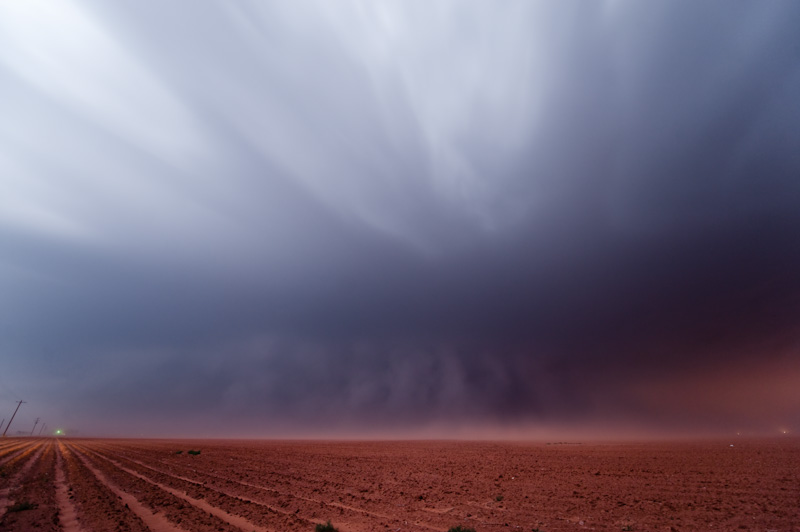
chase update 545pm. near meadow, tx sw of Lubbock. letting the big outflow dominant mess move on. watching the southwest now for redevelopment. | That was fun. Was in the little town of New Home as a big wall of
dust (kind of a miniature haboob) approached from the southwest. Was
able to get some storm images to the south of town before the dust
hit...and also some shots from in town as the dust hit. visiblity was
around 1/16 of a mile at its lowest point. There is new agitated
cumulus development now with a mesoscale triple point probably near
the town of Seagraves, TX to my southwest. It's still early and there
is hope that an isolated storm can form in the next hour or so in the
wake of this initial mess that is quickly growing up scale.
|
Fri, 10 Jun 2011 22:41:08 -0500
Images from 10 June 2011 chase in West Texas | Here are some images I shot from a fast-approaching outflow dominant
severe storm southwest of Lubbock early in the evening on June 10th.
This was just outside of the small town of New Home with the storm
approaching from the southwest. There was a fairly dark, scalloped
updraft base on the leading edge of the storm, but it quickly became
obscured by a surge of outflow winds and resulting dust. I let the
storm pass me by in the small town south-southwest of Lubbock, as
there was no way to stay ahead of this storm. In time, this storm and
a bunch of other storms coalesced into a big area of storms east of
Lubbock. I was hoping for more isolated redevelopment back to the
west-southwest... but the outflow from the complex was just too fresh
and cold any it killed any new development with cool inflow winds into
the new storms. Once I recognized this was happening, I gave up and
called the chase off in favor of driving north to get into position
for the next day's chase in Colorado.
| (click on thumbnails for pop-up of larger images) |
Tue, 14 Jun 2011 00:06:24 -0500
Images from June 12th of a small storm turned orphan anvil and virga shaft near Last Chance, Colorado
Summary & Images (part 1) | A small storm formed about 45 minutes prior to sunset near Deer Trail,
Colorado and moved northeast toward Last Chance. The storm was very
small, and I followed it north along Highway 71 to Highway 36 at Last
Chance before going east. The two images below are along Hwy 71 about
10 miles north of Limon:
| 
#1 | 
#2 |
(click on thumbnails for pop-up of larger images) |
Tue, 14 Jun 2011 00:12:05 -0500
Images from June 12th of a small storm turned orphan anvil and virga shaft near Last Chance, Colorado (Part 2)
Summary & Images (part 2) | Below is a sequence of images shot from along Hwy 36 east of Last
Chance just prior to sunset. By this time, the storm had completely
lost its updraft and all that was left was an isolated little orphan
anvil with incredible virga shaft remnant from the storm. The color
and contrast looking to the northeast was wonderful -- certainly
living up to eastern Colorado standards for high contrast and color!
| (click on thumbnails for pop-up of larger images) |
Thu, 16 Jun 2011 06:48:34 -0500
Chase Trip Day One forecast (June 16): Two targets >> first is near the colorado/kansas/nebraska tri-border and second is south-central KS | Today could be a fairly wild day for severe weather on the central and
western plains. This is the first of a number of chase days for me as
I am on AL until the 28th. I am torn between two targets right now.
Target #1 is extreme southwest Nebraska/northeast Colorado/extreme
northwest KS border region -- say Benkleman, Nebraska to Wray,
Colorado. I will be waiting for fresh storms in the 6-8pm time frame
in this area... as there will likely be storms by 4pm coming off the
Laramie Range given the upper tropospheric jet streak dynamics in play
farther northwest (right entrance region of jet). All the high-res
mesoscale models want to convect up there early... and by 7-8pm, I
fear that the western Nebraska Panhandle may already evolve into a
non-supercell severe cluster... so playing farther southeast may be
best.. right at the northern reach of the heat plume where 60s
dewpoints pull back to the west-north west north of the sfc low.
Target #2. South-central Kansas. Very interesting setup here. The
well-forecast MCS is underway as of 1140 UTC over northern KS/southern
NE. The NAM12 all along, and now the high-resolution WRF models,
indicate a signal for development of a honking, nearly stationary
supercell at the dryline/OFB intersection somewhere from like
Hutchinson to Wichita. While the mid and upper tropospheric winds
will be 20-30 knots in this area, the directional shear will be very
good and you gotta love the sfc-850mb flow...yielding very interesting
hodographs with a Bunkers storm motion near the origin. This target
is very tempting (despite the 100-degree heat). There very well could
be a tall tornado from a supercell in this environment if the dewpoint
is > 65F in this area.
At this point, I am kind of leaning toward Target #2 actually... but
this is as of the time of this post before 1200 UTC.
|
Thu, 16 Jun 2011 11:11:47 -0500
Supercell structure from the Garden City/Cimarron/Dodge City high-based storm of 15 June 2011 | I followed this storm to the east-southeast from as far west as about
15 miles northeast of Garden City. The light was fairly harsh to
shoot in with the low sun light and the high base of the storm which
was not precipitating a whole lot. After sunset, a new cell on the
southern end took over and produced a very impressive, dense
precipitation core looking to the southwest in twilight. The color
was revealed by this precipitation core was incredible! Pink and
orange colors glowed from the precip core -- a rather surreal scene
indeed and extremely photogenic.
| (click on thumbnails for pop-up of larger images) |
Fri, 17 Jun 2011 07:59:23 -0500
June 16 Chase Summary and Images (Day 1): Southwest Kansas -- Bucklin to Greensburg HP Supercell | The day started out with two targets in mind: One was around
northeast Colorado and adjacent far southwest Nebraska/northwest
Kansas and the other was along an outflow boundary from morning storms
with a minor disturbance in the mid levels moving into far southwest
Kansas. I decided to chase the southern target and had the luxury of
hanging out at my house most of the day to watch the atmosphere unfold
(both visually and remotely on the internet). Mid level altocumulus
(accas) and showers were developing over Baca County early in the
afternoon and were moving northeast into KS. The HRRR model was
aggressive and persistent in developing this area of mid level accas
and virga/showers by late in the afternoon. Soon, it became evident
that new surface-based cumulus was forming to the west and southwest
ahead of the accas. Storm chasers Brandon Sullivan and Mike Scantlin
stopped by my house to look at data, since this was their target area
as well. Separately, we departed south toward Minneola and along the
drive, towers were forming southeast along the outflow boundary.
Observations showed 66-67F dewpoint air on the northeast side of the
outflow boundary. The problem was, that surface-based air had high
inhibition since it was some 15 degrees cooler than the 104-106F heat
on the other side of the outflow boundary. This was a problem. These
storms that formed on the outflow boundary quickly moved northeast and
were essentially elevated above the outflow boundary. The storms
looked like crap, visually, and strong 25-35mph southeast winds...
very moist... were essentially blowing right underneath these storms
(one was north of Greensburg and the other was southwest of Pratt.
The storm northwest of Greensburg actually produced a small mid-level
funnel cloud, but it was totally benign. I saw this storm going
nowhere, and at the time, I was actually becoming a little more
interested in the Pratt storm since it was getting more aggressive on
radar... plus it was tail-end (even if it was slightly elevated).
Sometimes slightly elevated storms can transition to surface based if
the updrafts get extremely intense. I went to Pratt... got to the
other side of the storm...and it too looked like crap. This was
frustrating.
Then, in no time, the Dodge City storm all of a sudden back to the
west (which I had not originally gone after because I thought it was
becoming a linear piece of garbage) was taking on a different
character. I drove back west through Pratt and on my way to
Haviland-Greensburg. I arrived at Haviland and observed some fairly
decent HP supercell updraft structure to my northwest. I photographed
this for a little bit then continued on west to Greensburg as
supercell was really getting its act together near Bucklin. I drove
west on Hwy 54 to near Mullinville where I set up the tripod for the
first series of images. I then back-tracked to Hwy 183 at Greensburg
and shot south about 7 or 8 miles to a nice viewing point along a
county road. My best images of the day came from this spot with
fairly classic supercell storm structure. The storm went on to
produce a menacing lowering/wall cloud, but I never noted any
significant cloud base rotation (plus, the visibility back in there
was rather poor). After this sequence of events and the storm
continuing to move east... I decided to head south to the
Kiowa-Comanche county line and go east a bit where I took my last set
of images from along the county line east of Hwy 183. The supercell
structure was becoming a little bit less impressive and the rear flank
gust front shelf cloud was kind of overtaking the structure from my
perspective. I then proceeded to let the storm go by me as I drove
back north toward Greensburg on Hwy 183. As I approached Greensburg,
I was buffeted by 60+ mph east winds behind the storm... which was a
difficult cross wind to drive in (even at a reduced 50 mph). By this
time, the sun had already set, so I was too late for behind-the-storm
photography in waning sunlight. There were some nice anvil zits
(lightning) behind the storm, but low clouds were interspersed among
the storm's backside faint mammatus/lightning and unfortunately did
not make for good photography. I ended the chase at this point and
headed back home.
| (click on thumbnails for pop-up of larger images) |
Fri, 17 Jun 2011 09:44:39 -0500
Chase Trip Day 2 - June 17. Target: Eastern Colorado downwind of the Palmer Divide for early-mid evening high based supercell potential. | Day 2 target I will first drive out to Lamar for lunch and then
re-evaluate from there. More than likely I will drive northeast
toward Limon for the first storms coming off the Palmer Divide. CAPE
will be marginal at best for severe weather/supercells with 800 to
1200 J/kg expected in marginal moisture of mid 40s to near 50
dewpoint. The deep layer shear is great, however, and the early runs
of the HRRR model depicts supercell looking simulated composite
reflectivity "blobs" in east-central Colorado later this afternoon.
So there is some hope.
Outlook: Day 3 (Saturday) will be in the same general area, so
wherever I end up tonight, I will probably lodge near there for the
night (Burlington or Goodland?) instead of driving back to Dodge only
to go right back out there the next day. After Saturday's chase, I
will drive back to Dodge City to pick up Jay Antle who will drive to
my house late Saturday night or early Sunday morning. Sunday and
Monday look like definite chase days as a nice trough approaches the
plains. Tuesday could be another chase day farther south along the
trailing front in northwest Texas/southern Oklahoma or it could be the
beginning of a nice long drive to the northern High Plains (Montana?)
to get ready for the next Pacific jet to impact the northwest yielding
chase opportunities way up northwest by Thursday of next week. This
is still speculative, though, with a lot to potentially change (and it
probably will).
|
Sat, 18 Jun 2011 09:17:41 -0500
June 17 Chase Summary and Images (Day 2): Eastern Colorado to Southwest Kansas -- Long-lived High Precipitation Supercell from Calhan, CO to Tribune, KS | Day 2 was a successful day of storm chasing and photography. My
target was southwest of Limon where I thought the southeastern-most
storm would form and thrive in unrestricted east-southeast inflow air.
Once I arrived at the target area along Hwy 94 near Rush, CO, a storm
was already in progress. I first went north on a county road north of
Rush about halfway to Simla when the storm took on supercell
characteristics. It had classic structure at first and revealed a
slowly rotating wall cloud for a little bit as it approached my
location north of Hwy 94. It then became outflow dominant quickly as
it continued east-southeast south of Limon. I followed it east along
Hwy 94 stopping occasionally to photograph the shelf cloud structure
of the rear flank gust front of this now well-established HP
supercell. Some of the best HP supercell structure came when I
stopped at a location a couple miles northeast of Wild Horse on a
county road photographing the storm with a dilapidated looking wheat
field in the foreground. I then continued to Kit Carson and stopped
again a mile south of town to photograph the multi-tiered shelf cloud
and updraft of the HP supercell with the town in the foreground. I
continued south to Eads and met up with the storm again east of
Sheridan Lake. At this point, I went north and east on some dusty
farm roads with the menacing storm to the north. I stopped for a
quick "grab-and-go" shot of some outflow/shelf cloud structure and
then got my butt back south to Hwy 96 near Towner, CO. I stopped one
last time to photograph the incoming dusty storm with the town of
Horace in the foreground then let that storm finally go after chasing
it for 160 ground miles from roughly 2100 UTC (4:00pm CDT) to 0145 UTC
(8:45pm CDT).
To complete the chase, I stopped to get gas Syracuse, KS then
proceeded to follow another storm (to the southwest of the original
long-lived supercell) east to Lakin. At Lakin, I let the storm roll
over me with some pea size hail and 50 mph winds. Once the storm
cleared, I drove east of town about a mile or two and photographed
some amazing anvil/updraft lightning complete with mammatus and a
pristine clear sky in the storm's wake with stars visible. This was
quite the treat to complete this exhaustive chase! I drove back to
Dodge City watching a fairly amazing lightning display along the way
home.
| (click on thumbnails for pop-up of larger images) |
Mon, 20 Jun 2011 01:04:48 -0500
Chase Trip Day 4 (June 19) Summary: Northeast Colorado target failure leading to miss of Benkleman/McCook supercell from the inflow sector | Below are a few images from the backside of the Benkleman/McCook
supercell from south of McCook looking east-northeast at around the
time of sunset. It was all around a frustrating chase day as our
target around Last Chance to Akron failed to produce supercells.
Supercells did form east of the target and we were caught too far west
playing catch-up for a long time... and never really getting into any
good viewing perspective of the storm from the east/southeast side.
We ended the chase near Red Cloud and headed south to Wakeeney, KS for
the night. Managed to get a couple images that were decent from the
backside of that nice supercell, but the results of the day could have
been far better if we made a better forecast.
| (click on thumbnails for pop-up of larger images) |
Tue, 21 Jun 2011 12:23:49 -0500
Chase Account of Significant Tornadic supercell from near Hill City north to near Norton, KS (part 1)
Summary & Images (part 1) | Below is a map I have constructed of the route Jay and I took as we
followed and documented the significant, long-lived tornado from
northern Graham County into Norton County, Kansas. Also on this first
post is an image of one of the many dusty debris whirls we saw beneath
a significant rotating area very near our location as we drive north
and east along dusty county roads northwest of Hill City from 1:40pm
to 1:50pm CDT.
| 
#1 | 
#2 |
(click on thumbnails for pop-up of larger images) |
Tue, 21 Jun 2011 12:54:10 -0500
Chase Account of Significant Tornadic supercell from near Hill City north to near Norton, KS (part 2)
Summary & Images (part 2) | The sequence of images below are during a 1 minute and 40 second
period of time as the tornado strengthens rapidly and changes
character significantly as it approaches Highway 283 north of Hill
City. White specks in a couple of the images are distant giant hail
stones falling in front of the tornado(es). The lower left image
reveals one of the satellite tornadoes adjacent the large tornado.
| 
(click on thumbnail for pop-up of larger image) |
Tue, 21 Jun 2011 12:58:32 -0500
Chase Account of Significant Tornadic supercell from near Hill City north to near Norton, KS (part 3)
Summary & Images (part 3) | After driving north a couple miles on Highway 283, we stopped again to
photograph the now well-established wedge tornado after it had crossed
the highway behind us. This is looking south-southeast. Right about
the time of the third image in this sequence (2:03:30) is when we
turned east on Highway 9.
| 
(click on thumbnail for pop-up of larger image) |
Tue, 21 Jun 2011 13:04:30 -0500
Chase Account of Significant Tornadic supercell from near Hill City north to near Norton, KS (part 4)
Summary & Images (part 4) | Below are the sequence of images of the large tornado approaching
Highway 9 as we race east to get east of it's path. At 2:06pm, we
were in the tornadoes path at around Edmond, KS and maybe a mile or so
east. We safely made it far enough east before the tornado(es) made
it to the highway and the last image of this sequence of images at
2:12pm shows the incredible rain and hail-wrapped beast to the
west-northwest by only a few miles.
| 
(click on thumbnail for pop-up of larger image) |
Thu, 23 Jun 2011 09:41:51 -0500
Chase Trip Day 8 (June 23): Today is a chase day in south-central or central Montana. Will head to Billings by early afternoon and re-evaluate and go north or west from there. | Starting off the day in Buffalo, WY where Jay and I stayed at the Big
Horn motel... a favorite that Vince Miller and I frequented during
2007 and 2008 June chase trips.
Brief Summary of Chase Trip Day 6 and Day 7
Day 6 -- Tuesday June 21. Jay and I hung around Dodge City most of
the day as I had my windshield replaced out of my Jeep due to a very
large hail stone impact. We then decided to drive to Clayton, NM for
a couple of reason. A) we love Clayton and love green chili and we
heard that the Eklund Hotel and Saloon had re-opened. Jay and I were
very pleased to find out that that indeed is the case and we actually
stayed at the Eklund (despite $$). B) There was a chance at northwest
flow storms in eastern New Mexico and the TX Panhandle per the GFS and
the NAM that we were watching as a potential to chase for Day 7
(6/22).
Day 7 -- Wednesday June 22. After it became clear that the northwest
flow chase potential had dried up, we decided to make this a drive day
to what looked like a much better setup for severe storms over
southern Montana. We left Clayton mid-morning and drove north all day
reaching Casper early evening for a steak dinner then on to Buffalo,
WY for the night.
|
Sat, 25 Jun 2011 10:13:58 -0500
Chase Trip Day 9 (June 24) Summary: Part 1 -- Casper, WY Supercell, Guernsey left split storm, followed by Laramie Peak storms
Summary & Images (part 1) | Jay Antle and I intercepted the first storm of the day as we drove
south out of Buffalo, WY. We met the first storm near Casper and
followed it southeast along I-25 stopping occasionally for
photographs. At Douglas, we decided to continue south as the southern
end of the storm was supercellular and another more linear storm was
beginning to tear off more toward the east and northeast. This
northern storm actually ended up becoming dominant as it rolled east
through Lusk and Harrison (our original target area) and eventually on
into northern Nebraska later in the evening. Other storms forming off
of the southern Laramie Mountains were moving northeast while the
supercell we were following was moving southeast. This interacted
with the southern storms and the process ended up being destructive to
pretty much all convection in terms of supercell structure. A cool
looking left-split storm moved northeast quickly toward Guernsey which
had a pretty white hail core to our southeast. We let all this stuff
try to sort itself out around Guernsey, but it never did and it all
eventually just died. New storms were forming over the Laramie
Mountains near Laramie Peak which caught our eye, so we went back west
to the interstate at Dwyer Junction. We drove north a few miles and
stopped to watch one of the storms roll off Laramie Peak. The
cloud-to-ground lightning was infrequent, but I managed to capture one
of the flashes to the west with Laramie Peak in the background.
Afterwards, we followed this weak storm east as it sputtered along the
way to Torrington and Scottsbluff... where we ultimately called it a
chase and had mexican dinner. While eating, a new supercell formed
just southwest of Scottsbluff, and we took a peak outside every so
often during meal to observe the incoming storm. We drove back to the
motel and watched the storm roll over us with some 1/2" diameter hail
at our motel on the east side of Scottsbluff. Later in the evening,
new storms formed to the west of Scottsbluff which we set out to chase
for lightning photography. See part 2 below.
| (click on thumbnails for pop-up of larger images) |
Sat, 25 Jun 2011 10:30:17 -0500
Chase Trip Day 9 (June 24) Summary: Part 2 -- Scottsbluff, NE area late night supercells
Summary & Images (part 2) | Jay and I noticed new storms forming west of Scottsbluff at around
10:00pm CDT. We packed up the gear again and set off, first, for just
west of town as we tried our hand at lightning images with the first
storm. It was moving east fairly quickly and we followed it east of
town and let it go east of us. More storms were forming, though, to
our south and also again back to the west. We drove south from
Melbeta through some of the bluffs southeast of Scottsbluff and
stopped for awhile to photograph some nice lightning-illuminated storm
structure of multiple cells oriented west to east to our north.
Mammatus was visible through some of the flashes in the wake of the
first cell in this sequence. More organized storm structure was
photographed through lightning flashes with the bluffs in the
background through about 12:20am CDT. Once the storm structure lost
some of its interest photography-wise, we drove back to Scottsbluff.
This was a fun late-night shoot!
| (click on thumbnails for pop-up of larger images) |
Fri, 1 Jul 2011 21:20:35 -0500
Chase Trip Day 10 (June 25) Summary: Kimball-Sidney, Nebraska high-based supercell
Summary & Images (part 1) | Jay Antle and I intercepted an awesome supercell on Day 10 of this
storm chase trip. Our target was east of the Laramie Mountains as
fairly high CAPE was lurking over the eastern Nebraska Panhandle with
upslope winds increasing by late afternoon and early evening. After
spending some time at Scottsbluff National Monument early in the
afternoon, we set sights on mid afternoon storm development northeast
of Cheyenne. The first storms developed over northern Laramie county
and we drove southwest from LaGrange along Hwy 85 to observe these
first storms. The storms sputtered along as they moved east toward
the Harrisburg area. At Harrisburg, we had to make a decision what to
do next. There were storms trying to get organized up in the Lusk, WY
area well to the north, but what caught our eye more were new towers
forming to our southwest along the outflow boundary left behind from
the first storms that we were following. As a result, we went south
to Kimball. This ended up being a very good call as the group of
towers to our west-northwest organized into an awesome supercell. We
navigated farm roads northeast of Kimball with the storm updraft to
our west-northwest. We tried to remain in the sweet spot
east-southeast of the updraft about 8 to 10 miles to get the good
structure shots of the storm. The supercell cycled through numerous
mesocyclones with a number of wall clouds and occlusions observed. We
also saw a number of dusty spin-ups, mostly caused by RFD hitting the
surface, but one or two of them were fairly intense and cold have been
tornadic. Several persistent mid-level funnel clouds were also seen,
particularly as we were driving south back to Highway 30 northwest of
Sidney. But it was the structure of the storm itself that stole the
spotlight with amazing hues of aquamarine. The bell-shaped nature of
the updraft and the vault just downstream of the updraft itself were
amazing. As the sun was getting lower in the sky, we dropped south
toward the Cheyenne Ridge south of Sidney. More laminar banding of
the updraft was evident, taking on the classic "mothership" appearance
to the northwest. Anvil lightning was frequent overhead with the
persistent, harmonic sound of grumbling going on way up in the upper
troposphere. We continued to stay ahead of the storm south and east,
through the very large Peetz wind farm, and eventually down to Hwy 138
with darkness increasing after sunset. The supercell eventually faded
away late in the evening as it approached the Julesburg, CO and Big
Springs, NE area, but not before putting on a nice display of anvil
zits (short, intense spurts of lightning within the anvil). This
ended up being, for me, the most photogenic supercell of the 2011
season to date.
Below is a sequence of images of the early stages of the supercell
from north of Kimball to northwest of Sidney while we were on the farm
road grid north of Hwy 30:
| (click on thumbnails for pop-up of larger images) |
Fri, 1 Jul 2011 22:58:37 -0500
Chase Trip Day 11 (June 26) Summary: Shelf cloud in the Sandhills (near Hyannis, NE)
Summary & Images (part 1) | Overall, this was a rather frustrating day in terms of supercell
interception. A day that started out with a lot of hope and potential
with very high moisture leading to extreme CAPE over western Nebraska
turned out to be largely a dud of an event. The atmosphere decided to
convect early in the day in the sandhills of northern Nebraska with a
large area of elevated severe storms that moved southeast across
central Nebraska and leaving in its wake a rather large cold pool.
The best surface-based airmass was found to be over extreme
northeastern Colorado and southwestern Nebraska, but this area was
very capped. Jay Antle and I decided to target the area from Oshkosh,
NE to Julesburg, CO. In this area, towering cumulus flirted with
development into storms at times during the afternoon, but the low
level convergence was weakening due to winds responding more to the
elevated heating over the Laramie mountains. Cold frontogenesis was
occurring over central Wyoming, and storms eventually formed over the
Laramies along this front. We gave up on the capped airmass from
Oshkosh to Julesburg and drove west toward towers forming near
Cheyenne. Other storms were visible in the distant northwest through
north. Ultimately, we decided to go after a nice looking storm (both
visually and on radar) well to our northeast near Rushville, NE
entering the sandhills. It was supercellular in nature, and visually
it revealed rock-hard towers with some corkscrewing to the convection.
We blasted east on Hwy 2 from Alliance to make an intercept on this
southeastward moving storm and would be in good position by the time
we reached Hyannis. Problem though. It was moving into the cooler
airmass left behind the earlier day storms. In fact, the airmass was
so moist and not all that warm that low stratus was developing ahead
of the storm. Bad news for photography!! This was really
frustrating. Nevertheless, we continued north to intercept the storm.
It became more elongated on radar, and we were finally greeted to a
wonderful multi-tiered shelf cloud about 15 miles north of Hyannis.
We stopped for a bit to photograph the approaching shelf cloud over
the landscape of the sandhills. We then backtracked to Hyannis and
continued south on Hwy 61 stopping again to let the storm approach us.
We found a decent spot to pull off that had some adequate views
looking west amidst grazing cattle and a small pond. At sunset and on
the other side of the approaching shelf cloud, the sky lit up in
intense orange and magenta hues. The light was incredible, but I wish
it was a bit closer to us! Nevertheless, we got some good photos of
this amazing light with the shelf cloud approaching. This would be
the last of photography for this chase, but at least we managed to
photograph something out of this overall frustrating day. We headed
back to Ogallala, NE for the night.
Below is the sequence of images when we stopped north of Hyannis, NE
for the first look at the approaching storm and shelf cloud:
| (click on thumbnails for pop-up of larger images) |
Mon, 11 Jul 2011 20:30:46 -0500
Chase Trip Day 12 (June 27) Summary: Northeast New Mexico supercell from near Raton to near Gladstone
Summary & Images (part 1) | On the second to last day of my storm chase/photography vacation with
Jay Antle, we decided to target the area around the Raton Mesa for the
potential for supercell storms by late afternoon and early evening as
a cold front pushed south overnight and during the day down the high
plains with post-frontal moist upslope winds developing. From
Ogallala, Nebraska, we made the long drive down I-76 and I-25 down to
Raton, arriving mid-afternoon. Showers and weak storms were
developing over the mountains and we decided to monitor this
development from just south/southwest of Raton. Finally, a strong
storm did emerge southwest of Raton which visually had a
well-developed base. It was moving east-northeast toward us, but the
track of the storm appeared to be such that it would go between Hwy 64
and Hwy 56. We decided to take the northern route once the storm
approached I-25. This took us, unfortunately, out of position for
quite awhile, as the storm turned more to the right and was moving due
east if not south of due east a bit. Once we reached Capulin along
Hwy 64, we took an unpaved road south, which we could only average
about 30 mph on due to the rocky nature of the road. We were well out
in front of the storm, but as we headed south on this road, the storm
was rapidly approaching. As Jay drove, I managed to capture a few
images of the storm approaching to the west with decent supercell
structure and dense precipitation core. Once it was clear we were
south of the track of the storm, we finally were able to stop and take
some photos. The storm was on a downtrend, however, as it was getting
close to sunset. We let the storm continue on to the east as we
reached Hwy 56 finally and photographed the backside of the weakening
storm. This essentially sealed the chase day and we drove back west
on Hwy 56 back toward I-25. Before that, however, we stopped one more
time to watch and photograph the world's smallest rotating updraft.
This was rather bizarre, but it was so small, yet the updraft revealed
some barber-pole twisting structure to it. All in all, it was a
successful day in that we photographed a supercell storm, however, I
believe that we would have had a better perspective of the storm had
we dropped south early in the chase south to Hwy 56. We were
positioning ourselves for later in the chase once the storm got into a
better road network, but it just wasn't to be since the storm died
sooner than we had hoped.
| (click on thumbnails for pop-up of larger images) |
Wed, 13 Jul 2011 22:36:01 -0500
Chase Days July 14-15. A couple decent severe weather days expected from northeastern Colorado into northern Nebraska (Sandhills?). Objectives are storm-in-landscape scenes/golden hour light/dramatic lightning | During this 3 day trip, I am hoping for 2 or 3 more fine art/dramatic
storm images to compete with some other dramatic images I've capture
during the 2011 season. I think the opportunity is pretty good to
land some decent storm images with strong/severe photogenic storms a
good possibility each day. The first day, Thursday July 14, I have my
eye on far northeastern Colorado into the Sidney-Big Springs, Nebraska
area. I will be getting off work in Dodge City at around noon and
will drive north toward my target area for evening storms. The
following day, Friday July 15, I have my eye on an area a bit farther
northeast, perhaps centered on the sandhills north of North Platte,
NE. Saturday, the upper ridge really begins to build in a bit more,
which may limit severe weather opportunity a bit with the southern
edge of the upper level southwesterly flow shifting a bit north and
west, but there should still be some terrain-initiated storms off the
Laramie Mts or along a subtle surface trough axis in the southern
Dakotas. Sunday July 17 I will drive back home to Dodge City as I
resume shift work on Monday July 18.
|
Tue, 26 Jul 2011 09:52:07 -0500
Summer storms north-central KS into south-central NE (Part 1)
Summary & Images (part 1) | The first set of images are from the first storm I intercepted on 15
July near Kirwin, KS. This first storm showed some promise at
developing into a formidable storm, and while it did briefly reveal
some decent storm structure, it never really made it to the next level
and quickly became outflow dominant (not surprising with temperatures
over 100 degrees). The deep moisture was still just a little bit to
the east of the Kirwin area at this time. I manage to photograph a
decent rainfoot to my southeast from near the north side of the Kirwin
Reservoir:
| (click on thumbnails for pop-up of larger images) |
Tue, 26 Jul 2011 09:56:53 -0500
Summer storms north-central KS into south-central NE (Part 2)
Summary & Images (part 2) | After the initial Kirwin storm more or less dissolved with a bunch of
other weak storms developing all around it... the focus turned more
toward lightning. I managed to capture some decent daytime
cloud-to-ground flashes with the lightning trigger as I followed the
cluster of storms east across Smith County, KS southeast of Smith
Center from about 4:15pm to shortly after 5:00pm:
| (click on thumbnails for pop-up of larger images) |
Tue, 26 Jul 2011 10:12:41 -0500
Summer storms north-central KS into south-central NE (Part 3)
Summary & Images (part 3) | It became quite clear that the storms in north-central KS were just
not going to mature into something worth chasing. An outflow boundary
from the small cluster of storms I was chasing was really spreading
east well ahead of the actual storms. The northern outflow boundary
surged north into south-central Nebraska, and a severe storm
eventually formed along this outflow boundary to the north. I decided
to go after this storm, but it was an extremely frustrating intercept.
I never really did get any good images of the storm itself as it
moved north at a fairly decent clip toward Hastings, NE. I finally
managed to stop somewhere between Hastings and Ayr, but when I got out
of the car to set up to shoot, my glasses and my camera lenses
immediately "fogged over". The dewpoint temperature was near 80
degrees!! It was extremely humid, accentuated by the very tall corn
growing around this part of Nebraska. This made stopping to
photograph a very tough task since the 9-foot tall corn stalks were
obscuring the horizon line in many areas. This was extremely
frustrating. Finally, I decided to just bust it west to get on the
other side of the storm to see what kind of scenes I could photograph
on the back side. A brilliant rainbow emerged about 10 miles west of
Hastings, but when I went south on a paved road down to Holstein,
there was a) no place to pull off to shoot and b) the east wind
driving the rain made it impossible to shoot this rainbow in
incredible light without drenching my gear and getting a rain drops on
the lens effectively making any clean shot an impossible task. So as
I drove south, the rainbow ultimately faded away without one image of
it. I wish I had that back, because the corn field and a few
beautiful barns with this vivid rainbow would have made calendar-type
images. I continued west with flanking towers developing to my north.
Other storms developing over northwestern Kansas were moving
northeast toward the Beaver City, NE area and I had decided to just
head west in hopes that these would further develop. They eventually
died, and I turned around to try and keep up with the backside of the
Hastings, NE storm complex, which was now approaching I-80. I drove
all the way up to Grand Island and pretty much called it a chase at
that point. Although it wasn't before I got one last image of a
decent cloud-to-ground lightning flash adjacent a power plant and tall
corn field in the foreground. I got some dinner in Grand Island and
decided to make the long drive back to Dodge City, ending this two-day
chase trip. But there was one last photography opportunity awaiting
on my way back home to Dodge City!
See the July 16 chase account
| (click on thumbnails for pop-up of larger images) |
Tue, 26 Jul 2011 11:27:55 -0500
Luray, KS lightning at 4:00am! (Images Part 1 of 2)
Summary & Images (part 1) | On my way home to Dodge City following the previous night's chase in
southern Nebraska, I came across nocturnal storms that were rather
electrical... making for a very nice photography opportunity! Because
of this, however, I didn't roll into my driveway until about an hour
after sunrise shortly after 7:00am! It was worth it :)
| (click on thumbnails for pop-up of larger images) |
Fri, 29 Jul 2011 11:21:10 -0500
Chase Trip Day 13 (June 28) Summary: Far SE Colorado/Far SW Kansas/Oklahoma Panhandle High-based photogenic storms and lightning
Summary & Images (part 1) | June 28th was the final day of my 2011 storm chase trip with Jay
Antle. We departed Raton, NM late morning and made a leisurely drive
through the mesas east of Raton, including Johnson Mesa as well as a
trip to Capulin Volcano (always a favorite). We then took the scenic
drive along Highway 456 just south of the Colorado border... east to
Kenton. We transitioned into chase mode as we set sights on the
Springfield, CO area where we were conveniently greeted to the first
storm of the day with decent cloud-to-ground lightning (first image in
the sequence below). We followed these storms east toward Walsh and
continued on into far southwest Kansas when storms really started to
get their act together northwest of Richfield. A series of formidable
gustnadoes developed in front of us along one of the dirt roads we
were traveling along. We continued east on pavement along Hwy 27 and
eventually reaching Hwy 51. At that point, the storm evolved into a
series of high-based storms in a psuedo-linear fashion, but had nice,
organized updraft structure and a lot of blowing dust action beneath
(continued in Part 2...)
| (click on thumbnails for pop-up of larger images) |
Fri, 29 Jul 2011 11:40:29 -0500
Chase Trip Day 13 (June 28) Summary: Far SE Colorado/Far SW Kansas/Oklahoma Panhandle High-based photogenic storms and lightning (Part 2)
Summary & Images (part 2) | Jay and I continued to follow this storm south during the mid to late
evening hours southeast of Rolla, KS into the Oklahoma panhandle north
of Guymon. The sequence of images shown here span about 20 minutes or
so from about 8:15 to 8:40pm showing the striated structure of the
high-based updraft as we were near the Oklahoma-Kansas border. New
storms were forming farther to the west which would eventually put on
an amazing cloud-to-ground lightning show in the saturated twilight
(see Part 3 below).
| (click on thumbnails for pop-up of larger images) |
Fri, 29 Jul 2011 13:01:18 -0500
Chase Trip Day 13 (June 28) Summary: Infrequent lightning near Plains, KS on the way back home (Part 4)
Summary & Images (part 4) | We were hoping for some lightning images after dark, and we finally
got some... although very infrequent... from a real small storm near
Plains, KS between 12:30 and 12:45am. There was maybe one flash every
4 or 5 minutes... but each one was fairly dramatic. There was one
brilliant cloud-to-ground flash that I just missed by seconds after
the shutter clicked off (I had the camera set up on 30 second
exposures instead of bulb.. d'oh!)
| (click on thumbnails for pop-up of larger images) |
Wed, 10 Aug 2011 16:44:22 -0500
...Chase Days August 11-12...
Aug 11: NW Nebraska to EC Colorado
Aug 12: Central Kansas | A very nice pattern for supercell storm photography has been underway
for several days now, and it will continue Thursday Aug 11 and Friday
Aug 12. A jet streak in the west-northwest flow aloft will nose into
Wyoming, northern Colorado and western Nebraska on Thursday setting
the stage for supercell development anywhere from the Black Hills
southward into east-central Colorado. The best area looks to be
southeast of the Black Hills from, say, Martin SD then down into
Cherry County NE in the Sand Hills. This is very rough terrain for
chasing, but the photography opportunities would be very good. A more
favorable location from a chasing standpoint would be
Ogallala-Julesburg-Imperial area and points south from there. All the
models show storms forming in these areas with very good directional
shear and CAPE 2000-2500 J/kg. I am kind of leaning toward chasing
farther south for reasons of being closer to home and also better
terrain. The NAM has been showing an aggressive QPF signal in
east-central CO off the Palmer Divide area. This would be another
area to target. I will make a final decision probably late tonight...
for if I choose to drive all the way up north, I would need to leave
by 6 or 7am. A target in eastern Colorado would allow more time,
obviously, and I could leave around 10am for that target.
Friday. The jet will be nosing into southern Nebraska and into Kansas
with a more northwest to southeast orientation. Outflow boundaries
from the previous night convection would push the effective front well
down into Kansas. It is unclear how far south this will go, but the
convective signal from all models are very good with high CAPE
available. This could be an excellent northwest flow supercell day
somewhere in Kansas. Looking forward to it! Stay tuned for updates
on both days! -Mike U
|
Tue, 11 Oct 2011 10:07:12 -0500
Chase Day 11 October 2011. Target: Eastern Texas Panhandle from Pampa to Turkey | I left Dodge City early this morning for a lunchtime destination of
Amarillo. After lunch, I will hone in on a more defined target
somewhere not too far east of Amarillo. Today appears to be a good
storm day with excellent deep layer directional shear, some surface
moisture, and cool mid level temperatures (around -14C at 500mb). This
is expected to result Surface-based CAPE around 1000-1300 J/kg. If
higher moisture can be realized (like what the RUC and HRRR suggest),
then SB CAPE may approach 2000 J/kg locally... especially southeast of
Amarillo. Storms should form in surface convergence near or just east
of Amarillo by 4 or 5pm and become supercells shortly thereafter. At
least that is the hope, and the reason I decided to make a run at this
autumn storm chase. Plus, the prospects of photographing a nicely
structured storms in the canyon lands is too good to pass up. So here's
to some October Panhandle Magic! -Mike U
| 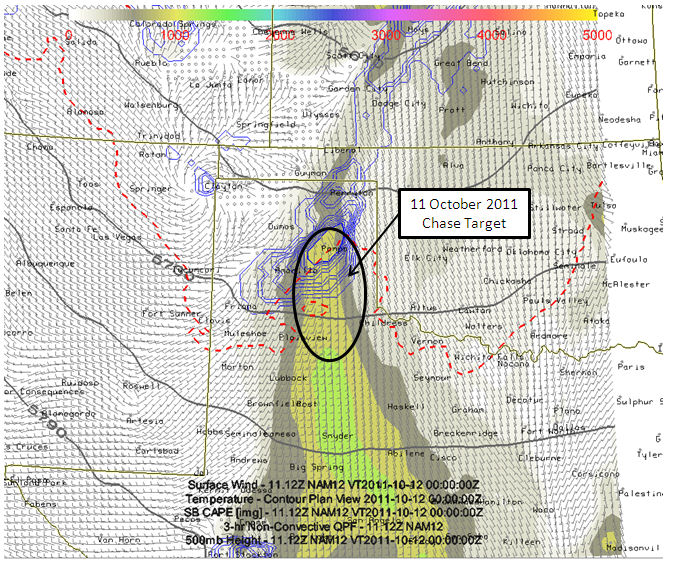
(click on thumbnail for pop-up of larger image) |
Fri, 14 Oct 2011 03:40:19 -0500
Pampa hailstorm
Pampa-Lefors, TX Supercell Summary & Images (part 1) | |
Pampa hailstorm. After a hearty lunch in Amarillo and a
brief visit to Palo Duro Canyon S.P., I began my chase by heading
north back into eastern Amarillo then east on I-40 to Conway. I was
most interested in a cluster of towering cumulus to my north about
20 to 30 miles away. These towers festered for awhile as I watched
from a truck stop at Conway along I-40 and Highway 207. An echo
soon became apparent on radar tied to the healthiest looking updraft
tower to my north-northeast, so I drove north toward Panhandle.
This was the birth of the initial hailstorm that went on to affect
Pampa. I followed the storm northeast on Highway 60 toward Pampa,
experiencing some pea size hail along the way from Kings Mill to the
southwestern portion of Pampa. I decided to head north just a
little bit on the west side of town on Ranch 282 and found a place
to observe the onslaught of hail near the intersection of Ranch 282
and Highway 152. The hail lasted 5 to 7 minutes around 5:45pm or so
and covered the ground for a brief period of time with the hail only
as large as penny to nickel size at the largest.
| (click on thumbnails for pop-up of larger images) |
A new, more significant updraft emerges south of Pampa. Go south or southeast?
Pampa-Lefors, TX Supercell Summary & Images (part 2) |
So, I departed Pampa after the hail ended, but
I wasn't entirely sure whether to go southeast or due south. I saw
the new big updraft base to my immediate south/southwest and had a
strong feeling that would be supercellular very soon... and move
straight southeast or even south-southeast. I also weighed in the
possibility that photography light might be better being due south
or even southwest of the primary updraft. I was on Highway 273 just
south of Pampa and decided to take Highway 70 south...instead of
Highway 273 southeast to Lefors. Here are a few images of the early
stages of the updraft base about to really ramp up and take on
supercellular characteristics... at around 6:20pm... about 5 miles
south of Pampa just east of Highway 70:
| (click on thumbnails for pop-up of larger images) |
Supercell structure emerges to the northeast.
Pampa-Lefors, TX Supercell Summary & Images (part 3) |
I continued my
drive south on Highway 70 south of Pampa to stay ahead of the main
updraft area, and in doing so, the structure of the supercell became
much improved. As viewed from the south-southwest, the storm
structure was quite impressive with a long rear-flank gust front
approaching me along Highway 70 and multi-tiered banded structure of
the main updraft area farther to the northeast. Here are a few
images during that stage shortly after 6:30pm:
| (click on thumbnails for pop-up of larger images) |
A formidable wall cloud emerges
Pampa-Lefors, TX Supercell Summary & Images (part 4) |
About 10 to 15 minutes later, farther south along Highway 70 (probably 12 miles or so south
of Pampa), I stopped again to photograph the storm structure to my
northeast. The sun was getting lower and the light was improving
(becoming softer). To my surprise, a big, blocky wall cloud emerged
beneath the base of the supercell. For a moment, the bottom portion
of the wall cloud was being illuminated by the sun. I used a
distant farm house to my advantage as a foreground subject to the
wall cloud farther back. The rear flank gust front had a rather
striated look to it as it extended a good distance
west-southwestward from the wall cloud area. Time of the following
images around 6:45pm:
| (click on thumbnails for pop-up of larger images) |
Using a windmill to my advantage as storm structure consolidates
Pampa-Lefors, TX Supercell Summary & Images (part 5) |
I wanted to drive east a little bit off of
Highway 70 to try to get a little closer to the primary updraft
area, so I took one of the several unpaved roads that went east a
couple miles before dead-ending. Along the way on one of these
roads, I came across a windmill -- one of my favorite subjects to
shoot with storms -- and just went to town photographing the awesome
scene at around 6:50pm:
| (click on thumbnails for pop-up of larger images) |
Wide angle storm structure
Pampa-Lefors, TX Supercell Summary & Images (part 6) |
From the same location, I also
photographed a few wide angle images with the windmill at
around 7:00pm as the supercell storm continued to move southeast
near Lefors, TX:
| (click on thumbnails for pop-up of larger images) |
The mothership at sunset!
Pampa-Lefors, TX Supercell Summary & Images (part 7) |
After photographing the sequence
at the first windmill, I continued south on Highway 70 a few more
miles and went east on Ranch 2477 (the road to Lake McClellan). I
stopped again when I came across another windmill, only this one
without blades... and used this as a foreground subject to
photograph what was now becoming an incredible striated barrel
updraft to my east. It was right around sunset time at about 7:10
to 7:15 when I photographed the sequence of images below:
| (click on thumbnails for pop-up of larger images) |
Structure at twilight near Lake McClellan
Pampa-Lefors, TX Supercell Summary & Images (part 8) |
I continued east
and southeast on Ranch 2477 stopping intermittently along the way to
I-40 after sunset to photograph the structure of the supercell off
to the east. There was a left-split storm moving northeast to
eventually merge with the main supercell storm, although this ended
up being more of a destructive merger (in combination with the fact
that instability was rapidly declining with loss of insolation).
When I got to I-40, I continued east to Alanreed and went south on
Ranch 291, but by this point, the storm was not photogenic anymore
and the rising full moon was in a bad position providing harsh light
in the direction of the decaying and departing storm. All in all,
this was one incredible chase for October -- probably the most
impressive supercell, structure wise, I have photographed in the
month of October.
| (click on thumbnails for pop-up of larger images) |
Mon, 20 Feb 2012 09:08:24 -0600
Chase Day Feb 20 Target: I-70 corridor Hays to Russell, KS area | A classic, compact and fast-moving upper low with an intense mid level
potential vorticity anomaly will be moving across Kansas today. 500mb
temperatures around the center of the closed low will be down to -30C!
It is so cold aloft that the surface warm nose of mid to upper 50s degF
over mid 40s degF would yield 500-700 J/kg of surface-based CAPE.
During the critical 20-22z time frame, the best potential vorticity
advection and resultant lower tropospheric response will most likely be
from Hays to Great Bend, KS. I am starting off at Goodland, so I will
be hitting the road here shortly at 9:30am or so in order to get down to
Hays-Russell by 12:30pm or so. Attached is a morning run of the RUC
model valid 21z with simulated reflectivity and the mid level PV anomaly
with surface winds. The other image is last night's NSSL WRF simulated
reflectivity run showing an arc of convection developing across central
KS by late afternoon.
| 
#1 | 
#2 |
(click on thumbnails for pop-up of larger images) |
| Today is a chase day.. the 2nd one in February! | I made a last-minute decision to decide to chase this setup now that it
appears upper 40s/near 50 dewpoint may make it as far northwest as
southwest Nebraska beneath the cold 500mb temperatures and near the nose
of the 400mb potential vorticity anomaly (the red contours in the
attached image). The image is from the 11z RUC model valid 22z which
shows a favored area for the so-called "cold core" setup for low-topped
supercells near the mid level potential vorticity anomaly and resultant
surface low/enhanced surface vorticity max. If any short-lived
tornadoes can occur in this setup, this would be the ideal place for
them to occur. I need to also be mindful of a bit farther east
translation of activity as the morning HRRR would suggest, but usually
the farther west play is best in these setups... especially looking at
satellite this morning and seeing the upper wave making a beeline for
the Nebraska Panhandle/southwest Nebraska by afternoon. I will be out
the door by 7am for a target somewhere near Ogallala, NE by Noon or so
(with adjustments likely)
| 
(click on thumbnail for pop-up of larger image) |
Tue, 28 Feb 2012 09:13:10 -0600
chase update 910am |
This post contains audio. Use the embedded QuickTime plugin below to play.
(The audio file is in 3GP format sent via smart phone and requires QuickTime plugin to play)
|
Tue, 28 Feb 2012 11:33:04 -0600
chase update 1130am |
This post contains audio. Use the embedded QuickTime plugin below to play.
(The audio file is in 3GP format sent via smart phone and requires QuickTime plugin to play)
|
Tue, 28 Feb 2012 12:59:06 -0600
chase update 1255pm |
This post contains audio. Use the embedded QuickTime plugin below to play.
(The audio file is in 3GP format sent via smart phone and requires QuickTime plugin to play)
|
Tue, 28 Feb 2012 14:10:32 -0600
chase update 210pm |
This post contains audio. Use the embedded QuickTime plugin below to play.
(The audio file is in 3GP format sent via smart phone and requires QuickTime plugin to play)
|
Tue, 28 Feb 2012 15:41:17 -0600
chase update 255pm |
This post contains audio. Use the embedded QuickTime plugin below to play.
(The audio file is in 3GP format sent via smart phone and requires QuickTime plugin to play)
|
Tue, 28 Feb 2012 16:00:34 -0600
storm with rotation at 3pm |
This post contains audio. Use the embedded QuickTime plugin below to play.
(The audio file is in 3GP format sent via smart phone and requires QuickTime plugin to play)
|
Tue, 28 Feb 2012 16:39:56 -0600
Tornado!! |
This post contains audio. Use the embedded QuickTime plugin below to play.
(The audio file is in 3GP format sent via smart phone and requires QuickTime plugin to play)
|
Sat, 17 Mar 2012 18:31:53 -0500
Likely chase day Sunday 3/18. Target: Eastern TX Panhandle to Southwest KS | Sunday is the last day of my three day weekend, and since I have this
day off (barring an overtime request from work), I will make a chase day
out of it. There is quite a bit chatter amongs the facebook chasing
community regarding a more specific target of the Childress-Shamrock, TX
area... and justifiably so. The CAPE/Shear combination looks fantastic,
especially for mid/late March as some of the initial jet streak energy
begins to impinge on the high plains by early Sunday evening. The
corridor of good looking parameters for supercells will extend northward
into Southwest Kansas, and since this is obviously a much closer
potential target to chase, I will strongly favor a more north bias. On
paper, the parameters for tornadoes look a bit better farther south,
simply because 58-61F dewpoints will probably be closer to initiation
versus in southwest KS where immediate supercell inflow moisture may
have dewpoints of, say 55 to 58F. There will likely be a lot of storm
chasers out Sunday given the first classic looking chase event of the
season for the Great Plains.. which is another reason why I, personally,
am favoring a secondary target of opportunity to chase (OK Panhandle
into Southwest KS vs. Childress/Shamrock, TX area).
| 
(click on thumbnail for pop-up of larger image) |
Sun, 18 Mar 2012 10:08:46 -0500
Storm chase target 3/18: Eastern OK Panhandle into SW Kansas | Not much has changed in my storm chase target decision. Now that the
short term higher resolution models are within range of the event,
confidence is increasing regarding the target forecast. It looks like a
very broad area of supercell chasing prospects today all the way from
west-central KS south-southeastward all the way down into West Texas
(perhaps down to Midland, TX). My target is Liberal to Garden City, KS
simply by virtue of my starting point: Dodge City. This could be a
so-called "gentlemans" chase or "backyard" chase... just driving
southtwest about a half hour with supercells very near Dodge City by
sunset. This is quite possible and in fact seems quite likely,
therefore I will be making this my number one target area of choice.
Show in the image on this post is the 13z RUC model valid 00z showing
the model generated convection (in black) along the dryline with
surface-based CAPE of 2000-2500 J/kg in the warm, moist sector ahead of
the dryline extending up to Garden City-Dodge City.
| 
(click on thumbnail for pop-up of larger image) |
Sun, 18 Mar 2012 15:20:50 -0500
chase update 315pm |
This post contains audio. Use the embedded QuickTime plugin below to play.
(The audio file is in 3GP format sent via smart phone and requires QuickTime plugin to play)
|
Sun, 18 Mar 2012 16:25:45 -0500
update 420pm |
This post contains audio. Use the embedded QuickTime plugin below to play.
(The audio file is in 3GP format sent via smart phone and requires QuickTime plugin to play)
|
Sun, 18 Mar 2012 17:20:10 -0500
chase update 515 pm |
This post contains audio. Use the embedded QuickTime plugin below to play.
(The audio file is in 3GP format sent via smart phone and requires QuickTime plugin to play)
|
Sun, 18 Mar 2012 17:27:04 -0500
chase update 515 pm |
This post contains audio. Use the embedded QuickTime plugin below to play.
(The audio file is in 3GP format sent via smart phone and requires QuickTime plugin to play)
|
Sun, 18 Mar 2012 17:49:57 -0500
update 550pm |
This post contains audio. Use the embedded QuickTime plugin below to play.
(The audio file is in 3GP format sent via smart phone and requires QuickTime plugin to play)
|
Sun, 18 Mar 2012 17:53:34 -0500
update 550pm |
This post contains audio. Use the embedded QuickTime plugin below to play.
(The audio file is in 3GP format sent via smart phone and requires QuickTime plugin to play)
|
Sun, 18 Mar 2012 18:14:37 -0500
update 610pm |
This post contains audio. Use the embedded QuickTime plugin below to play.
(The audio file is in 3GP format sent via smart phone and requires QuickTime plugin to play)
|
Sun, 18 Mar 2012 20:31:52 -0500
chase recap.. heading home |
This post contains audio. Use the embedded QuickTime plugin below to play.
(The audio file is in 3GP format sent via smart phone and requires QuickTime plugin to play)
|
Wed, 11 Apr 2012 15:27:12 -0500
chase update 225 pm |
This post contains audio. Use the embedded QuickTime plugin below to play.
(The audio file is in 3GP format sent via smart phone and requires QuickTime plugin to play)
|
Wed, 11 Apr 2012 14:48:58 -0500
chase update 245pm |
This post contains audio. Use the embedded QuickTime plugin below to play.
(The audio file is in 3GP format sent via smart phone and requires QuickTime plugin to play)
|
Wed, 11 Apr 2012 12:53:57 -0500
chase update 1250 pm 2 targets |
This post contains audio. Use the embedded QuickTime plugin below to play.
(The audio file is in 3GP format sent via smart phone and requires QuickTime plugin to play)
|
Wed, 11 Apr 2012 16:38:45 -0500
chase update 435pm cdt |
This post contains audio. Use the embedded QuickTime plugin below to play.
(The audio file is in 3GP format sent via smart phone and requires QuickTime plugin to play)
|
Wed, 11 Apr 2012 20:37:56 -0500
4/11 chase recap: Frustration!! |
This post contains audio. Use the embedded QuickTime plugin below to play.
(The audio file is in 3GP format sent via smart phone and requires QuickTime plugin to play)
|
Thu, 12 Apr 2012 17:06:21 -0500
chase update 5pm |
This post contains audio. Use the embedded QuickTime plugin below to play.
(The audio file is in 3GP format sent via smart phone and requires QuickTime plugin to play)
|
Thu, 12 Apr 2012 17:37:59 -0500
chase update 535p |
This post contains audio. Use the embedded QuickTime plugin below to play.
(The audio file is in 3GP format sent via smart phone and requires QuickTime plugin to play)
|
Sat, 14 Apr 2012 12:15:58 -0500
chase target strategy |
This post contains audio. Use the embedded QuickTime plugin below to play.
(The audio file is in 3GP format sent via smart phone and requires QuickTime plugin to play)
|
Sat, 14 Apr 2012 13:51:18 -0500
chase update 146pm |
This post contains audio. Use the embedded QuickTime plugin below to play.
(The audio file is in 3GP format sent via smart phone and requires QuickTime plugin to play)
|
Sat, 14 Apr 2012 14:44:11 -0500
close call at home north of Dodge! |
This post contains audio. Use the embedded QuickTime plugin below to play.
(The audio file is in 3GP format sent via smart phone and requires QuickTime plugin to play)
|
Sat, 14 Apr 2012 14:57:58 -0500
chase update 257pm |
This post contains audio. Use the embedded QuickTime plugin below to play.
(The audio file is in 3GP format sent via smart phone and requires QuickTime plugin to play)
|
Sat, 14 Apr 2012 18:34:39 -0500
chase update 445 pm |
This post contains audio. Use the embedded QuickTime plugin below to play.
(The audio file is in 3GP format sent via smart phone and requires QuickTime plugin to play)
|
Sun, 29 Apr 2012 11:38:47 -0500
chase update 1135 am |
This post contains audio. Use the embedded QuickTime plugin below to play.
(The audio file is in 3GP format sent via smart phone and requires QuickTime plugin to play)
|
Sun, 29 Apr 2012 15:08:00 -0500
chase update 305 pm |
This post contains audio. Use the embedded QuickTime plugin below to play.
(The audio file is in 3GP format sent via smart phone and requires QuickTime plugin to play)
|
Sun, 29 Apr 2012 16:28:41 -0500
chase update 430pm |
This post contains audio. Use the embedded QuickTime plugin below to play.
(The audio file is in 3GP format sent via smart phone and requires QuickTime plugin to play)
|
Sun, 29 Apr 2012 17:54:45 -0500
chase update 550pm |
This post contains audio. Use the embedded QuickTime plugin below to play.
(The audio file is in 3GP format sent via smart phone and requires QuickTime plugin to play)
|
Sun, 29 Apr 2012 19:49:29 -0500
wild!! |
This post contains audio. Use the embedded QuickTime plugin below to play.
(The audio file is in 3GP format sent via smart phone and requires QuickTime plugin to play)
|
Mon, 30 Apr 2012 14:57:38 -0500
chase update 3pm |
This post contains audio. Use the embedded QuickTime plugin below to play.
(The audio file is in 3GP format sent via smart phone and requires QuickTime plugin to play)
|
Mon, 30 Apr 2012 17:29:56 -0500
chase update 530pm |
This post contains audio. Use the embedded QuickTime plugin below to play.
(The audio file is in 3GP format sent via smart phone and requires QuickTime plugin to play)
|
Mon, 30 Apr 2012 21:42:08 -0500
storm chase recap April 30 |
This post contains audio. Use the embedded QuickTime plugin below to play.
(The audio file is in 3GP format sent via smart phone and requires QuickTime plugin to play)
|
Thu, 17 May 2012 17:57:51 -0500
chase update 555pm |
This post contains audio. Use the embedded QuickTime plugin below to play.
(The audio file is in 3GP format sent via smart phone and requires QuickTime plugin to play)
|
Fri, 25 May 2012 15:29:42 -0500
chase update may 25 330 pm |
This post contains audio. Use the embedded QuickTime plugin below to play.
(The audio file is in 3GP format sent via smart phone and requires QuickTime plugin to play)
|
Fri, 25 May 2012 19:38:35 -0500
chase update 735pm |
This post contains audio. Use the embedded QuickTime plugin below to play.
(The audio file is in 3GP format sent via smart phone and requires QuickTime plugin to play)
|
Sat, 26 May 2012 11:21:07 -0500
chase target discussion for May 26 |
This post contains audio. Use the embedded QuickTime plugin below to play.
(The audio file is in 3GP format sent via smart phone and requires QuickTime plugin to play)
|
Sat, 26 May 2012 22:35:39 -0500
chase recap May 26 |
This post contains audio. Use the embedded QuickTime plugin below to play.
(The audio file is in 3GP format sent via smart phone and requires QuickTime plugin to play)
|
Sun, 27 May 2012 17:39:20 -0500
chase update 535pm |
This post contains audio. Use the embedded QuickTime plugin below to play.
(The audio file is in 3GP format sent via smart phone and requires QuickTime plugin to play)
|
Sun, 27 May 2012 21:14:42 -0500
chase recap May 27 |
This post contains audio. Use the embedded QuickTime plugin below to play.
(The audio file is in 3GP format sent via smart phone and requires QuickTime plugin to play)
|
Fri, 01 Jun 2012 19:28:50 -0500
chase recap June 1 |
This post contains audio. Use the embedded QuickTime plugin below to play.
(The audio file is in 3GP format sent via smart phone and requires QuickTime plugin to play)
|
Sat, 02 Jun 2012 16:45:46 -0600
chase update 545 pm |
This post contains audio. Use the embedded QuickTime plugin below to play.
(The audio file is in 3GP format sent via smart phone and requires QuickTime plugin to play)
|
Sun, 03 Jun 2012 15:01:45 -0500
chase update June 3 at 3pm |
This post contains audio. Use the embedded QuickTime plugin below to play.
(The audio file is in 3GP format sent via smart phone and requires QuickTime plugin to play)
|
Sun, 03 Jun 2012 21:23:05 -0500
chase recap June 3 |
This post contains audio. Use the embedded QuickTime plugin below to play.
(The audio file is in 3GP format sent via smart phone and requires QuickTime plugin to play)
|
Chase Account 31 May 2010 Pritchett-Campo, CO [Part 3 of 3]
Summary & Images (part 3) | The long-lived, significant tornadic supercell of 31 May 2010 will go down as probably my most thoroughly and successfully documented significant tornadic supercell in my 13 years of storm chasing. There were three distinct phases of this storm chase, and as such, I will document this account and share my images in 3 parts. The first phase (Part 1 of 3) was the time frame from roughly 2:45pm to 4:30pm which included a 20-minute tornado southwest of Pritchett, Colorado. The second phase was a long period from 4:30pm to about 7:00pm when the supercell was non-tornadic but still cycled through several significant occlusions, one of which was very close to being tornadic (Part 2 of 3). Lastly, the Campo, Colorado significant tornado, the hallmark moment of this supercell, will be documented in Part 3 along with the post-tornado sunset structure as the storm rolled southeast into the Oklahoma Panhandle northeast of Boise City.
Part 3 of 3. 7:00 to 9:00pm CDT (The Campo Tornado)
 
(times CDT unless otherwise noted. numbers in brackets refer to the image number in the embedded image album at the end of this post)
Once I reached Hwy 287 again after spending some time just east of there on County Road C, I decided to just find a nice viewing area along the highway and pull off to watch the structure evolve to my north. I was actually observing the new lowered area directly up the road to my north initially... and not the more occluded area behind it and to the west a little bit [1,2]. The occluded area behind was showing a marked increase in rotation and just moments after noticing thing and it catching my interest, a nub funnel had developed [3]. Well in just 10 to 15 seconds, this initial nub funnel cloud continued to stretch, becoming a much more formidable funnel cloud [4-7], and eventually a fully condensed funnel all the way to the surface. Initially, I was shooting with just my D3 and the 14-24mm ultra wide lens, but once I saw the funnel develop, I grabbed the D200 with the 18-70mm lens and and both wrapped around my neck to shoot with. I didn't realize until after the fact that my D200 was about a minute and a half ahead of my D3, which made chronological sorting my images in Lightroom a challenge. I remained at this location for the first 10 minutes of the tornado, and little did I realize the first 6 or 7 minutes that the tornado was closing in on my location. The first stage of this tornado from about 7:09 to 7:11 or 7:12 featured this absolutely glorious, tall elephant's trunk that angled slightly to the west from cloud based [9-14]. This offered wonderful composition opportunities at around 50 to 70mm, both vertical and horizontal.

Times on map are Mountain Daylight Time. Numbers refer to image numbers in the embedded album at the end of this post.

At around 7:13pm or so, it finally kicked up a nice visible dust cloud at about the time the condensation funnel widened and become ever so slightly truncated near the ground [15-24]. This stage lasted until around 7:15pm or so and then a very dark, dusty debris cloud formed as the tornado was approaching Hwy 287 to my north-northwest [25-29]. Since the tornado was getting a little closer, the condensation funnel was becoming a little more spectacular. As the tornado was approaching the highway, there were more and more chasers bailing south, and since I stayed put a little bit longer, I got a number of wide angle images of the tornado with storm chaser (and non chaser) vehicles going south on the highway.. as well as the green highway mileage sign "Springfield 29, Campo 7". At around 7:17pm or so, the tornado crossed Hwy 287, and around this time, a huge surge of dust from the field in front of me blasted across the highway in a 60-75mph west RFD [34,35]. In image 34, you will see a vehicle's headlights totally immersed in this RFD dust advancing east immediately ahead of the tornado itself. I was still outside of my Jeep photographing all of this just right up the road, and after Image 35, I bailed ass south about a half a mile, but not before getting in on some of that dust. The wind was so strong, I could hardly open my driver side door and my glasses wanted to blow off my face. I estimated the wind to be about 65 to 70 mph or so. This was just a narrow RFD jet, and I got out of this RFD surge only about a quarter to half mile south on the highway, where I stopped again.

Times on map are Mountain Daylight Time. Numbers refer to image numbers in the embedded album at the end of this post.
The tornado was now getting into a bit better light as I photographed it just east of the highway to my northeast [36-40]. At times, the foreground lit up in brilliant saturated greens/yellows with a wonderfully contrasted white/light gray tornado condensation funnel in the background complete with a dark brown dusty debris cloud. This was just simply amazing! Soon, though, another big RFD surge can rotating around the tornado and I got blasted again with 60 to 70mph wind gusts from the west-northwest. This time, I had to take my glasses off and just carry them in fear of them being blown off onto the highway and break. This wind was damn strong, slightly exceeding the crazy inflow winds I experienced with the Bowdle supercell on May 22nd. I am guessing the peak wind gust there where I was at was near 75mph. It was time to move south again. The tornado either dissipated or completely wrapped in rain, and I stopped again a couple miles south before re-emerging again shortly after 7:30pm to my east-northeast as a white tornado somewhat wrapped in rain with a rainbow off to its south. I had totally filled up my compact flash cards, mainly due to the fact that I still had some images from a previous chase on there that I forgot to delete off a couple of the cards. I finally lost sight of the tornado shortly after this time and I made my way down toward Boise City then drove east to catch back up with the storm. Sunset light was simply amazing with beautiful hues of gold, orange, and pinks as the high-based supercell continued to march east. I finally ended the chase as I approached Hwy 136 and made my way back home...completing the most amazing high-based tornadic supercell intercept in my 13 years of storm chasing. | 
#1 | 
#2 | 
#3 | 
#4 | 
#5 | 
#6 | 
#7 | 
#8 | 
#9 | 
#10 | 
#11 | 
#12 | 
#13 | 
#14 | 
#15 | 
#16 | 
#17 | 
#18 | 
#19 | 
#20 | 
#21 | 
#22 | 
#23 | 
#24 | 
#25 | 
#26 | 
#27 | 
#28 | 
#29 | 
#30 | 
#31 |
#32 | 
#33 | 
#34 | 
#35 | 
#36 |
#37 | 
#38 | 
#39 | 
#40 | 
#41 | 
#42 | 
#43 |
(click on thumbnails for pop-up of larger images) |
Chase Account 31 May 2010 Pritchett-Campo, CO [Part 2 of 3]
Summary & Images (part 2) | The long-lived, significant tornadic supercell of 31 May 2010 will go down as probably my most thoroughly and successfully documented significant tornadic supercell in my 13 years of storm chasing. There were three distinct phases of this storm chase, and as such, I will document this account and share my images in 3 parts. The first phase (Part 1 of 3) was the time frame from roughly 2:45pm to 4:30pm which included a 20-minute tornado southwest of Pritchett, Colorado. The second phase was a long period from 4:30pm to about 7:00pm when the supercell was non-tornadic but still cycled through several significant occlusions, one of which was very close to being tornadic (Part 2 of 3). Lastly, the Campo, Colorado significant tornado, the hallmark moment of this supercell, will be documented in Part 3 along with the post-tornado sunset structure as the storm rolled southeast into the Oklahoma Panhandle northeast of Boise City.
Part 2 of 3. 4:30 to 6:55pm CDT (Non-tornadic phase)
 
(times CDT unless otherwise noted. numbers in brackets refer to the image number in the embedded image album at the end of this post)
After the south of Pritchett tornado dissipated, the supercell entered a non-tornadic phase, which lasted from roughly 4:30pm until about 7:00pm. After photographing the tornado, I drove east about a mile and a half then south two miles photographing the storm structure at various points along the way through 4:50pm. The storm appeared to be taking on a high-precipitation supercell structure with a large mass of precipitation descending from near the main updraft area looking off to the west [1,2,3,4]. I was expecting the storm to approach my location... but it simply wasn't doing so. It was moving straight south. So instead of just sitting there waiting for the storm to approach, I decided to head west again and then drift south. I sat for awhile at a county road intersection as lightning activity was increasing abruptly. I set up the tripod with the D200 in hopes of capturing a cloud-to-ground (CG) flash with the storm structure to my west northwest. I didn't capture any CG's, so then I went south. There is one county road that goes into the far western Oklahoma Panhandle to Black Mesa Park, and I was seriously considering taking this road considering the storm motion straight south... so I made my way south and west through 5:15pm, stopping along County Road 13 about 5 miles north of the Oklahoma border.

I photographed some of the high-based storm structure from here [5] and then drifted back to the north to the road intersection with County Road G where I met up with a group of Canadian storm chasers. We sat here at this road intersection for a good 10 to 15 minutes or so [6,7,8]. It was at this time that the storm appeared to be making more of a southeast track instead of the due south track it had been taking. The decision now was to head east back to highway 287 at Campo. I was in no hurry, though, since the storm was still just crawling at around 5 mph. At around 5:45 to 5:50pm or so, a high-based rear-flank downdraft clear slot was developing to the north [9]. I drove about three miles east or so and stopped to photograph a new wall cloud to my north-northwest. This wall cloud in the RFD occlusion was classic [10], and I was preparing for another tornado, setting the tripod up with my D200 zoomed in to about 70mm for some up-close images [11,12]. Right at about 6:00pm, a laminar funnel developed within the tightening wall cloud [14,15,16], making up the tornado cyclone scale rotation.

It came very close to producing a tornado here, and it is quite possible there could have been unseen ground-based rotation beneath the laminar funnel. I could never confirm a tornado, nor did any other chaser that I know of. About three or four minutes later, this laminar funnel became a little more stretched out and diagonally oriented [19] as it began to dissipate. The whole wall cloud area then became wrapped up in rain around 6:10pm [20,21], and I continued east toward Campo. There were quite a few people from town, including local spotters, watching the storm from the west edge of town on County Road J.
At 6:20pm, I reached Hwy 287/385 and headed south from Campo about 3 miles before stopping along another county road adjacent the highway. I met up with the College of Dupage group at this location and photographed the structure with some wildflowers to the northwest [23,24,25]. I photographed from this location for about 10 or so minutes before continuing on. At this point, I was quite content with the chase and decided not to get too cocky in positioning. It was all about finding the right light at this point since the sun was getting lower. I didn't want to shoot into the light to the west. I took a county road (County Road C) east about a mile or so and found a high spot to shoot from. There was a fairly well-developed high-based "swirl" marking the new mesocyclone to my northwest [26,27,28]. I sat here for about 10 minutes as well watching this feature approach. Time was about 6:45 to 6:55pm or so.

With the light pretty harsh to the west, I got tired of shooting to the northwest, so I went back west to Highway 287/385 then south about 1/2 of a mile or so before stopping again along the shoulder of the highway. Again, up to this point, the chase day was going perfectly, and I was very content with what I have seen up to this point. Little did I know what I was about to photograph from this very location. Details of this... the so-called "Campo Tornado"... in Part 3!
| 
#1 | 
#2 | 
#3 | 
#4 | 
#5 | 
#6 | 
#7 | 
#8 | 
#9 | 
#10 | 
#11 | 
#12 | 
#13 |
#14 | 
#15 | 
#16 | 
#17 | 
#18 | 
#19 | 
#20 | 
#21 | 
#22 | 
#23 | 
#24 | 
#25 | 
#26 |
#27 | 
#28 | |
(click on thumbnails for pop-up of larger images) |
Chase Account 31 May 2010 Pritchett-Campo, CO [Part 1 of 3]
Summary & Images (part 1) | The long-lived, significant tornadic supercell of 31 May 2010 will go down as probably my most throroughly and successfully documented significant tornadic supercell in my 13 years of storm chasing. There were three distinct phases of this storm chase, and as such, I will document this account and share my images in 3 parts. The first phase (Part 1 of 3) was the time frame from roughly 2:45pm to 4:30pm which included a 20-minute tornado southwest of Pritchett, Colorado. The second phase was a long period from 4:30pm to about 7:00pm when the supercell was non-tornadic but still cycled through several significant occlusions, one of which was very close to being tornadic (Part 2 of 3). Lastly, the Campo, Colorado significant tornado, the hallmark moment of this supercell, will be documented in Part 3 along with the post-tornado sunset structure as the storm rolled southeast into the Oklahoma Panhandle northeast of Boise City.
Part 1 of 3. 2:30 to 4:30pm CDT (Pritchett, Colorado tornado)
 
(times CDT unless otherwise noted. numbers in brackets refer to the image number in the embedded image album at the end of this post)
I left Dodge City shortly after 11:00am and decided to head toward Springfield, Colorado. I deliberated for quite awhile... even up until I had to make the turn west of Dodge City... whether to fully commit to the far southeast Colorado target or to head to Lamar first before re-evaluating. I ultimately decided to take the new South Bypass to get on Hwy 56 and eventually 160 (instead of staying on Hwy 50 to go to Lamar). Looking at the visible image and seeing the low stratus across southwest Kansas, eastern Oklahoma, and the eastern Texas Panhandle... with clearing to the west -- while there was an absence of thin morning stratus farther north -- was a clue to stay south (better, deeper moisture). This was the good kind of morning stratus -- the thin stuff the burns off fairly easily by mid-day. Thin, broken stratus on the western plains is a good sign for late day severe weather when there are southeast surface winds and westerly flow aloft... in late May.
Before I even reached Ulysses, KS, towering cumulus was developing in the target area of far eastern Las Animas County between Kim and Pritchett. Instead of taking a leisurely stop and eating lunch, I just grabbed some fast-food and continued on my merry way west to Springfield. I reached Springfield around 1:45pm with a small storm to my west near Pritchett. The initial storms would develop and dissipate only to reform in the same spot. After a quick pit stop in Springfield, I continued west on Hwy 160 to Pritchett. My first stopping point was a couple miles northwest of town on an unpaved county road, where I sat there and watched the genesis of the soon-to-be supercell [1]. I sat there from roughly 2:15 to 2:45pm watching the storm updraft mature to my west a few miles.

Shortly before 3:00pm, I observed the first of two distinct funnel clouds with the initial mesocyclone occlusion looking west from about 4 miles west of Pritchett [2]:
- "persistent well developed funnel cloud about 1/3 to surface from cloud base. too far away to tell if it was a tornado or not, but it was in the cyclonic shear side of the RFD occlusion... it just dissipated at 1:55pm mdt... lasted a couple minutes"
After that SpotterNetwork report, I drifted south and observed the next funnel cloud [3], with its condensation funnel reaching a bit closer to the surface than its predecessor:
- "another funnel cloud at 2:02pm mountain looking west-northwest from my position... 1/2 way to surface possibly a tornado cannot see debris cloud"
A secondary cell was developing immediately south of the original updraft which was producing the funnel clouds..and its rain core was beginning to come over me while on the unpaved road. I made it a point not to go very far off of Hwy 160 just in case it started raining... also making sure that the unpaved road I was on was a hard-surface, well-graded road...which it was... so I made my way east a couple miles to Hwy 160 where I continued south. The time between 3:15 and 3:30pm or so was when the storm was really beginning to blossom with that southern cell now merging with the former cell and essentially taking over.

After a brief bout of nickel size hail and rain, I re-emerged into the inflow sector and was greeted to a nice broadly rotating cloud base lowering to my west. I noticed Roger Hill's tour group at the corner on 160 south of Pritchett, and I set up shop probably 1/4 of a mile south of him. I sat there from 3:30 to 3:45pm or so before continuing south. In that time, I photographed the storm structure [4,5,6] with, at times, well-developed rotating wall cloud to my west northwest. Inflow at my back facing the wall cloud was sustained 30-40 mph at times from the east-southeast. I had to stand in front of my tripod just to make sure it wouldn't fall over in the inflow.

I drove south a couple miles to County Road U where I then continued east about one mile in order to get a better view of the overall structure of the supercell. The area of rotation to my northwest a few miles was becoming a little more consolidated [7,8,9] with some semi-transparent precipitation falling in the RFD area of the supercell to the southwest of the wall cloud. At around 3:58pm, a nice laminar funnel developed [10] from the wall cloud which hovered around a third of the way to the ground. In a matter of a minute or two, this funnel was likely making ground contact, although I could not confirm this for sure, but the motion in the funnel cloud, the well-established tip of the condensation funnel and the overall organization of the clear slot... all were a pretty good clue that this was likely a tornado. It was also persistent. [11,12]
- "looking northwest, fairly stout well developed condensation funnel over 1/2 to the surface from my perspective about 5 S Pritchett"
At 4:03pm, the tip of the condensation funnel reach over halfway to the surface from cloud base [13]...and by 4:04pm, a fairly large triangular-shaped condensation funnel was established. I photographed both wide-angle (14 to 18mm on the full frame D3) [14,15] to capture the entire structure with the tornado as well as zoomed-in 50 to 70mm on the DX sensor (Nikon D200) to focus on the tornado itself. Finally, condensation whisps were visible beneath the bowl-shaped condesation funnel at around 4:05pm [16]. At 4:07pm, the tornado was a large bowl-shaped funnel cloud with a small tip condensation funnel with numerous condensation and/or dust whisps looking to the northwest [17]. This then evolved into a more classic truncated cone shape [18,19] with condensation filaments at the tip of the funnel with a small debris cloud beneath at around 4:08pm. The rear-flank downdraft/occlusion was classic from the southeast vantage point...with a hint of aquamarine color around the occluding tornado cyclone at cloud base [20,21,22].

I called the Pueblo NWS office to give them an update on my observation. Right as I was making this call, looking off to the west was another very impressive funnel cloud/likely tornado (given the size/laminar shape of the funnel) [25,26]. This was probably 3 or so miles south of the main tornado looking to my northwest. I believe this was an anticyclonic tornado given its position on the anticyclonic shear side of the rear-flank downdraft. Shortly after I hung up, I posted another SpotterNetwork report:
- "two tornadoes. main tornado looking northwest about a mile or two... and another slender tornado to my west.. photographed both in one frame. main tornado has been periodically on the ground for a number of minutes... perhaps up to 10... it's a cigar-shaped funnel now with debris whisps observed at times."
At 4:10pm, the main tornado to the northwest was a vertical cigar-shaped funnel with continued periodic suction spot spin-ups at ground level [29]. I was easily able to capture both tornadoes in one frame with my 14-24mm lens on the D3 [27,28]. The anticyclonic funnel/tornado lasted until about 4:12pm before it finally dissipated. Meanwhile, the main tornado was still in progress to my northwest. The entire storm was moving at a snail's pace, and I was still sitting at the same location as I was 15 minutes prior watching and photographing this entire event unfold. By 4:15pm, the entire condensation funnel was beginning to shrink and stretch more. Briefly, the condensation funnel reached all the way to the surface at 4:15pm [31,32,33]. The tornado finally dissipated about a minute or so after that -- for a total of just under 20 minutes for this tornado. After this tornado dissipated, it was time to reposition.
Part 2 of 3 will document the non-tornadic phase of this incredible supercell storm between 4:30pm and 7:00pm -- the moments before the Campo tornado.
| 
#1 | 
#2 | 
#3 | 
#4 | 
#5 | 
#6 | 
#7 | 
#8 | 
#9 | 
#10 | 
#11 | 
#12 | 
#13 |
#14 | 
#15 | 
#16 | 
#17 | 
#18 | 
#19 | 
#20 | 
#21 | 
#22 | 
#23 | 
#24 | 
#25 | 
#26 | 
#27 | 
#28 | 
#29 | 
#30 |
#31 | 
#32 | 
#33 |
(click on thumbnails for pop-up of larger images) |
Tue, 12 Jun 2012 11:11:21 -0500
Chase Day June 12 Target: Northeast NM to East-central CO. Stage in Lamar, CO by early afternoon with final target decision by around 230pm CDT | I am still a bit torn between the Raton Mesa/Clayton area and the Palmer
Divide/east-central CO area. Despite the early morning MCS in the TX
Panhandle/W TX this morning, moisture is still hanging around the
southern TX Panhandle. The RAP and NAM both show a tongue of moisture
and CAPE extending northward through the central High Plains beneath
westerly mid level flow. It's not the greatest moisture in the world by
any stretch of the imagination, but I think that 1500 to perhaps 1800
J/kg SBCAPE will reach the eastern edge of the Palmer Divide (areas just
east/southeast of Limon). All the high-res models generate some storms
off the Palmer Divide and roll them east-southeast into the moist axis
by early evening. There is a suggestion of more isolated activity in
this area, whereas there is the suggestion in the convection allowing
models of things growing into a small MCS off the Raton Mesa/Clayton
area southward by early evening. I will leave DDC and head to Lamar, CO
for lunch by around 1930 UTC and make a final call at that point.
|
Tue, 12 Jun 2012 13:17:35 -0500
chase update 115pm |
This post contains audio. Use the embedded QuickTime plugin below to play.
(The audio file is in 3GP format sent via smart phone and requires QuickTime plugin to play)
|
Tue, 12 Jun 2012 23:33:46 -0500
chase recap June 12 |
This post contains audio. Use the embedded QuickTime plugin below to play.
(The audio file is in 3GP format sent via smart phone and requires QuickTime plugin to play)
|
Wed, 13 Jun 2012 14:36:52 -0500
Beginning of the late June chase trip within range of numerical prediction scrutiny! | Today is Wednesday, June 13th -- still a solid 10 days away from Day One
of my annual storm chase trip -- and the time has come to begin
speculating on how the beginning of the trip will look as far as storm
chasing/photography prospects go. I will be chasing with Evan
Bookbinder and Jay Antle... leaving Kansas City either late night Friday
Night the 22nd or first thing in the morning on the 23rd. Attached to
this post are 6 images showing this morning's 12z run of the GFS valid
June 23rd through June 28th. The GFS is hinting at a very well-defined
trough off the coast of Washington-British Columbia... bring multiple
days of southwest flow across Montana and into Alberta and southern
Saskatchewan.
The images are of the GFS 500mb Heights, CAPE, Surface Wind, and QPF
valid 00z June 24th (Image 1) through 00z June 29th (Image 6)
This would be a dream setup if it were to pan out this way... but this
is the 240-368 hours out and models have next to no skill at synoptic
features. However, the good global models to have just a little bit of
skill in the longwave pattern... and the continued notion of low heights
in the Pacific Northwest/northeast Pacific Ocean with an extended
Pacific Jet is probably a noteworthy signal in the models June 23-June
26th time frame.
| (click on thumbnails for pop-up of larger images) |
Thu, 14 Jun 2012 17:58:17 -0500
chase update 555pm |
This post contains audio. Use the embedded QuickTime plugin below to play.
(The audio file is in 3GP format sent via smart phone and requires QuickTime plugin to play)
|
Thu, 21 Jun 2012 04:11:31 -0500
Latest chase forecast thinking for June 23 (Day 1) through June 27 (Day 5) |
Day One (Sat, June 23): (GFS Composite Chart, See Fig. #1)
The BIG drive day. After a hopefully incredible night in the dugout
suites at the Royals vs. Cardinals baseball game in KC, Evan
Bookbinder and I will begin the big drive with an estimated time of
departure around midnight. I am fresh of my midnight shifts, so I
will be pulling the majority of the overnight driving. We plan to
make the 20-hour, nearly non-stop drive to Great Falls, MT with an
estimated time of arrival around 7:30 or 8pm MDT (0130-0200 UTC).
If we do indeed make it there by that time, we will still have
around two hours of photographic daylight to work with for any
storms that may be ongoing in the Great Falls-Conrad, MT vicinity.
If we do indeed manage to photograph a storm on Day One, it will be
quite the incredible feat after starting in Kansas City the night
before. Day One is largely a positioning day to get ready for what
looks to be a fairly impressive stretch of storms from far northern
Montana into southern Canada
Day Two (Sun, June 24): (GFS Composite Chart, See Fig. #2)
We will likely begin this day in Great Falls, MT or something like
that. Day Two looks like the same area as Day One, so the driving
may be kept to a minimum... which would be good! The main upper low
will still be sitting off the coast of Oregon-Washington with
south-southwest mid level flow over the Montana and Alberta
Rockies. Good dewpoint air in the upper 50s to lower 60s will yield
1800-2200 J/kg CAPE with both the GFS and ECMWF suggesting supercell
storms from west of Great Falls off the mountains northward to west
of Lethbridge, AB.
Day Three (Mon, June 25): (GFS Composite Chart, See Fig. #3)
More storms are expected in the same general vicinity as the
mentioned upper low inches very slowly toward the Oregon-Washington
coast. The GFS model suggests even higher moisture and CAPE
spreading northward into Alberta. This may be the first day to
chase in Canada from Lethbridge to Medicine Hat.
Day Four (Tue, June 26): (GFS Composite Chart, See Fig. #4,
ECMWF 500mb/MSLP Chart, see Fig #5)
This is where the GFS and ECMWF models really begin to diverge in
how fast it ejects the upper low northeastward. The GFS is much
faster than the ECMWF model... and in fact the ECMWF model has
slowed down even more than the previous runs. Where the GFS
suggests the best play will be well into southeastern Saskatchewan
(east of Swift Current to Assiniboia, SK), the ECMWF suggests yet
another day (perhaps the best day of the bunch) back in southeastern
Alberta from Lethbridge to Medicine Hat. This is still quite a ways
away, but the trend of slower is certainly promising for additional
chasing without a substantial amount of driving.
Day Five (Wed, June 27):
The GFS model, given its faster speed, is suggesting a down day
Wednesday, but the slower ECMWF would suggest yet another chase day
farther east in Canada from southeastern Saskatchewan to
southwestern Manitoba.
| (click on thumbnails for pop-up of larger images) |
Sun, 17 Jun 2012 15:24:53 -0500
GFS model charts from the 12z Sunday 6/17 run | Composite chart of 500mb heights, CAPE, 700mb temperature, and QPF:
#1 valid 7pm CDT, Saturday 6/23
#2 valid 7pm CDT, Sunday 6/24
#3 valid 7pm CDT, Monday 6/25
#4 valid 7pm CDT, Tuesday 6/26
#5 valid 7pm CDT, Wednesday 6/27
#6 valid 7pm CDT, Thursday 6/28
#7 valid 7pm CDT, Friday 6/29
#8 valid 7pm CDT, Saturday 6/30
#9 valid 7pm CDT, Sunday 7/1
Impressive, large scale upper low off the coast of Washington/British
Columbia may yield plentiful chase opportunities in Montana...and
eventually North Dakota... perhaps a day or two in southern
Alberta/Saskatchewan! A lot can still change in the models, and
probably will, so it's still quite a bit of speculation at this point.
| (click on thumbnails for pop-up of larger images) |
Sat, 23 Jun 2012 06:31:03 -0500
Chase Trip Day One, June 23 Target: Harlowton to Great Falls, MT | The time is almost 6:30am and we are less than an hour from North
Platte, NE after driving all night. Well, Evan has been doing all the
driving so far, but I'm about to take over so he can get some sleep.
We are still planning on continuing the drive as far northwest as we
have daylight, as the best area for severe storms/supercells will be
up in the Great Falls area. The NSSL WRF model shows a nice supercell
signal around or just north of Great Falls from 00-03z. At our
current pace, we can reach Great Falls by 01z... which is 7:00pm
mountain time. Sunset in Great Falls is about 9:30pm MDT (0330z). So
that's the plan as of right now... another update later on today.
|
Sat, 23 Jun 2012 13:17:17 -0500
1 PM Update: Onward Through Wyoming | 13 hours
into the epic drive from Kansas City to Great Falls, Montana has landed
us in Casper, WY for the moment as of noon MDT. Incredibly hot airmass
has pushed well into the interior with a noon reading of 95 degrees in
Casper, and highs of 110F are possible over western Kansas today. Wow!
Our thought process hasn't changed since early this morning with a plume
of quality moisture (characterized by mid-upper 50F dewpoints) funneling
westward through Montana, beneath steep lapse rates and strengthening
mid-upper flow. Powerful trough that will bring us a string of opportune
days remains off the Oregon coast per early afternoon water vapor
imagery. Forecast soundings and shear profiles still look fantastic for
rotating storms across western Montana early this evening as the
increasing moisture/daytime heating couples with strong, veering flow
with height. Really the only lingering concern is with the placement of
synoptic scale lift. The HRRR/RAP hold the lead wave further west,
yielding an arc of supercells along the MT/ID border across the higher
terrain. Without a 120 mph speed limit, this is simply unreachable, so
we remain hopeful of additional evening development 00-03Z toward GTF.
Already one dust devil across the rolling hills and Cu development over
the higher terrain to the north. Stay tuned! -
Bookie |
Sat, 23 Jun 2012 20:22:28 -0500
7:15 PM MDT Chase Update - Target Storm | Things are changing quickly as the lead shortwave impulse has come across
the higher terrain of Montana in concert with peak heating, the return of
abundant low level moisture (55-60F dewpoints) and strong vertical shear.
Visually, one very impressive/isolated cell has developed a very crisp,
back-sheared anvil northwest of Great Falls. This storm is about 100 miles
NW of our current location, and a right moving supercell should afford a
slow eastward turn. With its slow movement we hope to be in place to
intercept before 9 PM. (This leaves us a good 2 hours of daylight). This
storm is quite impressive on radar for so early in its life cycle as well,
and appears well underway to acquiring supercell structure if not already.
Very excited! - Bookbinder
| 
(click on thumbnail for pop-up of larger image) |
Sun, 24 Jun 2012 23:23:03 -0500
chase update 1105pm cdt. Driving back to Great Falls after an awesome day at Glacier NP. Back to storm chasing tomorrow we hope! | When we get back to the hotel in Great Falls, I will upload a few
images from today at Glacier NP, including a bizarre scene that
unfolded right in front of us along the Going to the Sun Road at
Glacier NP. There was quite a bit of snow along the road in many
places through the heart of Glacier NP where elevation rose above
6,000 feet near the Logan Pass. There was a remnant pillar of snow
right adjacent the rock face, probably up to 20 feet tall, which had a
temporary "unstable snow" sign that the park rangers put there next to
it.. as they knew that it was probably about to fall. Well, sure
enough it did... and we were there to hear it. Evan and I both have
before and after pictures of this moment. In fact, I have a picture
of Evan standing next to the sign before it fell (but not in the
direct line of the pillar of snow should it finally collapse). When
it fell, it fell directly onto the road, effectively blocking it. As
more cars approached the scene, people got out to help move big chunks
of the old snow and ice until a 4x4 vehicle was able to start a path
through to open a lane up to get through. The waterfalls all through
the park were awesome from all the snow melt that was going on. There
was one instance along the road where multiple water falls were
crashing down right on the edge of the road which provided some of the
most unusual scenes I've ever seen. All in all, this was one heck of
a fun trip through Glacier NP!!
Tomorrow, June 25 (Day Three) looks to be a chase day, but the
potential target is fairly broad at this point from southwestern
Saskatchewan down into northern Montana. More details on that
tomorrow morning.
|
Mon, 25 Jun 2012 10:50:29 -0500
Chase Trip Day 3 Target Medicine Hat to Kindersley, SK | Evan Bookbinder and I will be departing Great Falls by 1030am or so and
heading into Canada. 700mb temperature zone of +10 to +12C will be up in ca
nada, so that's our target. We should be up in the target area by aroun
d 4pm mdt. High instability with cape approaching 4000 j/kg as far north
as northeast of medicine hat
|
Mon, 25 Jun 2012 15:07:09 -0500
6/25 2 PM MDT Chase Update - Canadian Bound | | After a 30 minute chit chat with the Wilson Creek, SK border officers about
the ins and outs of photography, we finally did it! CANADA!!! First time f
or the both of us and we are very excited. We are headed to Maple Creek (ar
rival time about 3:30 PM) for analysis and targeting.A northwest moving
gravity wave (possibly generated by an early moning supercell), has ignited
an arc of elevated convection along the SK/AB border between Cavedish and
Kindersley, and the models actually had this early activity. The real show
should commence much later this afterno/evening as a strong shortwave troug
h lifts from Idaho across theCanadian border. High temperatures in the l
ow to perhaps mid 80s (sorry, we are staying with US units) and unseasonabl
y moist dewpoints in the mid 60s should yield a very unstable airmass with
3000-3500 J/kg of MLCAPE. Strong convergence along the western edge of the
low level easterlies, coupled with mid level height falls and increasingly
favorable shear profiles should yield an environment primed for scattered s
upercells along the NW edge of the cap. Activity may initiate in SE AB or S
W SK, with a northeast storm motion. We should have ample daylight to 11 PM
. More to come later. BOOKBINDER/UMSCHEID
|
Mon, 25 Jun 2012 19:48:42 -0500
CHASE UPDATE 6:45 PM MDT | | We crossed the Sask./Alberta border on Trans. CanadaHighway 1 and notice
d the winds had shifted from east to southwest, indicating a sfc low had de
veloped off to our north. Based on this,and the look of the cloud field,
we took Highway 41 north out of Medicine Hat, AB and watced Cu become tower
s and then several huge Cb in a matter of minutes. Currently racing toward
Oyen to intercept what, from the distance, looks to be a raging supercell.
Current temp 86F with a dewpoint of 67F. Pretty amazing for the interior of
eastern Alberta. With the lead wave aloft just now coming in from the sout
hwest, we are very hopefully about this intercept in the next 45 minutes. B
OOKBINDER
|
Tue, 26 Jun 2012 09:20:51 -0500
Chase Trip Day 4 Target (June 26): Swift Current, SK early afternoon storms.. then as far east as Weyburn, SK early this evening. Big day, tornadoes likely in southern Saskatchewan | The time is 8:15am MDT, and Evan and I are currently in Kindersley, SK.
At this time, there are already elevated supercells crossing the
US-Canada border northwest of Havre, MT. This trend will continue
through the late morning and into the early afternoon, so we need to get
moving here in a bit and head southeast to Swift Current to catch any
early afternoon supercells which could quickly become surface based.
Tornadoes could occur as early as 1:00pm MDT today as a very impressive
upper low lifts northeast into northwest Montana later today.
Outlook:
After today's chase, we will likely stay for the night somewhere just
north of the US-Canada border then make the trip back south into the
states Wednesday. Wednesday looks like a down day, but the
Thursday-Saturday time frame (June 28-30) looks pretty good from
northern Nebraska into central South Dakota for repeated supercell
possibilities in a zonal flow pattern with high instability/moisture in
place.
|
Wed, 27 Jun 2012 19:24:46 -0500
Chase Trip Outlook through end of trip (last possible chase day July 2) |
Right Now, Wednesday evening June 27 (Day 5):
Wednesday evening we are driving to our motel for the night in Belle
Fourche, SD. Evan and I should be there around 8pm MDT or so. The
sky has quite a milky appearance here in the western Dakotas with
smoke obviously in the air from fires way out west/southwest.
Tomorrow, Thursday June 28 (Day 6):
The NAM shows pretty good moisture/instability on post-frontal
easterly winds into western Nebraska. After a visit in the Badlands
east of the Black Hills in the morning, we will set our sights on
the Nebraska Panhandle somewhere, it would appear right now. I like
the aggressive QPF signal in the NAM model. There will be enough
westerly flow in the mid/upper levels (50 knots at 300mb as far
south as Alliance, NE), so organized severe storms appear likely.
It could be tough chasing as storms move into the desolate
Sandhills, but photography can be quite good. Status: Chase Day
Friday June 29 (Day 7):
The mid/upper flow still looks pretty good from almost the due west
across northern Nebraska/southern South Dakota. Low level
convergence will be maximized somewhere from central South Dakota
into north-central Nebraska. This also looks like a pretty decent
chance at chaseable severe storms given the forecast CAPE and wind
shear combination. Status: Chase Day
Saturday June 30 (Day 8)
The GFS shows a minor wave moving southeast around the periphery of
the central U.S. ridge into eastern North Dakota/Minnesota. This
will bring a weak front south into central South Dakota by evening
with a favored area for chaseable storms perhaps around the
Mobridge, SD area. The band of 50-70 knots at 300mb will be shifted
northward into northeastern SD and eastern ND, so it would appear we
will be farther north on Saturday. Meanwhile, a ridge will be
building over the high plains as a new trough forms along the
Pacific Northwest coast. Status: Chase Day
Sunday July 1 (Day 9)
The Pacific Northwest trough will move inland and the focus will
shift back west into Montana. So, as if right now, it looks like we
will potentially have one more Montana chase day as moisture is
pulled back northwest into this region as pressures fall in Montana
in advance of this shortwave trough. Status: Chase Day
Monday July 2 (Day 10, last day)
The last chase day looks to be a decent one, potentially, if the GFS
is right as Pacific jet stream energy enters the northern Dakotas
and interacts with abundant moisture with very high CAPE likely and
southwest mid/upper winds providing excellent shear. If we do
indeed chase in North Dakota this day, we will need to pull another
all-nighter drive back to Kansas City, as I need to be back sometime
early afternoon July 3. Status: Chase Day
|
Thu, 28 Jun 2012 12:45:33 -0500
June 28 Chase Update | After an excellent morning in Belle Fourche, SD, Mike and I are headed
into the Badlands region in search of landscape photography and
hopefully some wild bison (and other native wildlife). We will then head
south toward the Nebraska sandhills to meet back up with Jay and chase
some high-based severe convection. Models continue to focus a
post-frontal ribbon of moisture across western Nebraska with a nice
pocket of instability as temperatures warm into the lower 90s. Storms
should fire along the convergence driven by modest post-frontal upslope
flow across NW Nebraska. With very deep mixing to possibly 600mb,
coupled with decent cloud-bearing shear profiles, we are hopeful for
some nice storm structure across the barren sandhills region early this
evening. - Bookbinder
|
Fri, 29 Jun 2012 01:21:03 -0500
Chase Trip Day 6 (June 28) Recap and chase plan June 29-July 2 | Evan and I began the day in Belle Fourche, SD where we set off for the
Badlands to drive around and sightsee (Evan has never seen the
Badlands). After that, we drove down Allen Rd... a 28-mile unpaved road
south of the Badlands eventually stopping at Martin, SD. There, we
pretty much resigned our fate to a busted chase... that is until we
pulled up visible satellite image and noticed towering cumulus
developing about 100 miles to our south. We plotted a course to
intercept this area of congested cumulus... which eventually turned into
a storm, albeit rather small. We intercepted the storm around 7pm CDT
just south of Thedford, but all that was left by the time we got there
was a shriveled up updraft base. This eventually croaked completely and
we then headed north back to South Dakota. Along the way, we
photographed a beautiful red sunset over the sandhills and one of the
large ponds (around Valentine Nat'l Wildlife Refuge). along US-83. As I
type at 115am, we are coming into Rapid City and are staying in Belle
Fourche. We are hooking back up with Jay Antle at a motel he already
reserved at Belle.
Tomorrow, Fri 6/29 looks pretty good up in the Baker, MT to Bowman, ND
area... and will probably settle in to Belle Fourche again after
tomorrow night's chase... as Saturday looks pretty decent for chaseable
storms southeast of the Badlands (somewhere across central/southern
South Dakota). On Sunday, July 1, the focus turns back to
northern/northeastern Montana. Monday, July 2, the last potential chase
day, still looks to be perhaps the best day of the last half of the trip
somewhere in North Dakota.
|
Sat, 30 Jun 2012 17:28:07 -0500
Fwd: 4:30 PM CDT Jun 30 Chase Update | Had an awesome early afternoon at a park in Spearfish, SD and have made
our way down east of Rapid City. After watching a nice storm go up over
the Black Hills, we have decided not to go after it since it appeared to
be rooted in the terrain and driven by orographics and very weak shear.
Meanwhile, hi-res radar imagery shows strong cyclonic flow just east of
RAP with a number of feeder convective rolls spiraling in toward areas
just east of the city. The Cu field continues to grow with several areas
of strongly agitated Cu east and northeast of Rapid City. The deep layer
shear is also much improved with eastern and northern extent. Unlike
yesterday, the upper winds are from the northwest, which may lead to
storms struggling to maintain buoyancy as their anvil shadow is cast
downstream along the expected storm motion. Additionally, storm spacing
may be an issue with the entire axis of instability primed to go, so
mergers and outflow dominance may take over with time. Still hoping we
can maintain some discrete nature for a while, and that scenario looks
quite promising given the initial low level flow fields. Should be a fun
show regardless with maybe our first evening lightning photography
attempt afterwards. - Bookbinder
|
Sun, 01 Jul 2012 11:29:27 -0500
Jul 1 10:30 AM MDT Chase Update | As we turned the page to July, we finished night 4 in Belle Fourche and
were greeted by some sort of Miss South Dakota audition in the hotel
this morning. Sorry to have to leave! The forecast for today will take
us to northeast Montana as another large trough deepens off the NW
Pacific coast, sending several disturbances across this region. In the
wake of a remnant sfc trough over the eastern Dakotas, morning sfc data
shows a nice fetch of ESE winds across ern MT into the wrn Dakotas, with
favorable upper 50-low 60s dewpoints returning westward along a
developing warm front. This will occur beneath an increasing fetch of
strengthening SW flow aloft, yielding a nice combination of moderate
instability and favorable deep layer shear for a few supercells across
the eastern MT prairies late this afternoon and evening. Will stage near
Circle, MT this afternoon.
|
Thu, 23 Aug 2012 23:27:52 -0500
storm chase recap Aug 23 |
This post contains audio. Use the embedded QuickTime plugin below to play.
(The audio file is in 3GP format sent via smart phone and requires QuickTime plugin to play)
|
Mon, 08 Oct 2012 13:48:45 -0500
Storm chasing possible Fri 10/12 | Friday, Oct 12 continues to look impressive for severe weather (perhaps
a regional outbreak?) south of the quasi-stationary front. West Texas
along the dryline/Pacific cold front looks quite inviting for a storm
chase. I think anywhere from Springfield, CO south to Midland, TX is in
play at this point.
|
Mon, 08 Oct 2012 23:20:09 -0500
Fcst composite chart for Fri. aftn based on ECMWF from earlier today | Today's 12z morning run of the ECMWF model continues to suggest an
interesting storm chasing scenario across east-central NM into adjacent
far west Texas. The upper low will be slow to move out, and the northern
stream jet will likely be a little more amplified, which would suggest a
stronger push of colder air through the central Plains. The surface
front will likely become quasi-stationary across northeastern New Mexico
to the central or northern Texas Panhandle into northern Oklahoma by
late afternoon. Significant moisture advection of +14 to +16C dewpoints
into west Texas will likely suggest a lot of warm sector stratus cloud
development (it is October, after all), so this may complicate potential
instability development in the warm sector. Nevertheless, closer to the
dryline, low level thermodynamics will be better and the morning ECMWF
did suggest development of 1500 to 2000 J/kg CAPE across east-central
NEW Mexico where the low level thermal ridge of +22C temperature at
850mb noses northeast toward the moisture. I am liking the Fort Sumner
to Tucumcari, NM area for late-afternoon severe storms with tornado
potential developing through the evening across West Texas as low level
jet ramps up after sunset. This would be a pretty good drive from Dodge
City -- likely 6 hours -- so it will have to continue to look pretty
good to pull the trigger on a chase toward this potential target area.
Stay tuned!
| 
(click on thumbnail for pop-up of larger image) |
Fri, 12 Oct 2012 01:00:10 -0500
Storm chase status is GO for tomorrow Oct. 12 target Clovis, NM to Hereford, TX | I will be departing Dodge City early in the morning, sometime between 6
and 7am, for a destination southwest of Amarillo... perhaps as far
southwest as Clovis, NM for what continues to look like a fairly
impressive severe weather and potentially tornadic setup across West
Texas and/or the Texas Panhandle. The place to be tomorrow is just south
of the stationary front which will become warm frontogenetic late in the
day. Storms will likely form near or just west of the TX-NM border
around the Clovis area and move northeast into the Texas Panhandle
toward the advancing warm front where low level shear will be enhanced.
Fig. 1 shows the latest GFS model solution of the 500mb pattern valid
tomorrow afternoon at 21z (4pm CDT). Fig. 2 shows the latest surface
forecast from the RAP 04z model run valid 22z tomorrow (5pm CDT). I
outlined in blue my target area. I want to be in my target region by
early afternoon in order to give me flexibility for repositioning should
I need to do so.
| 
#1 | 
#2 |
(click on thumbnails for pop-up of larger images) |
Sat, 13 Oct 2012 08:39:19 -0500
Today 10/13 is a chase day. Target Kiowa to Kingman, KS | I had no intentions of storm chasing today, but since the upper level
trough as slowed down and there is a better mid level vorticity center
farther southwest than what models have shown over the past couple of
days, there will be an interesting play for late-day storms as far west
as Barber County, KS today. My target is Kiowa, KS and points northeast
from there toward Kingman, KS. I will be leaving Amarillo by 930am or
so for an early afternoon staging point around Woodward, where I'll
refine my target and grab some lunch.
| 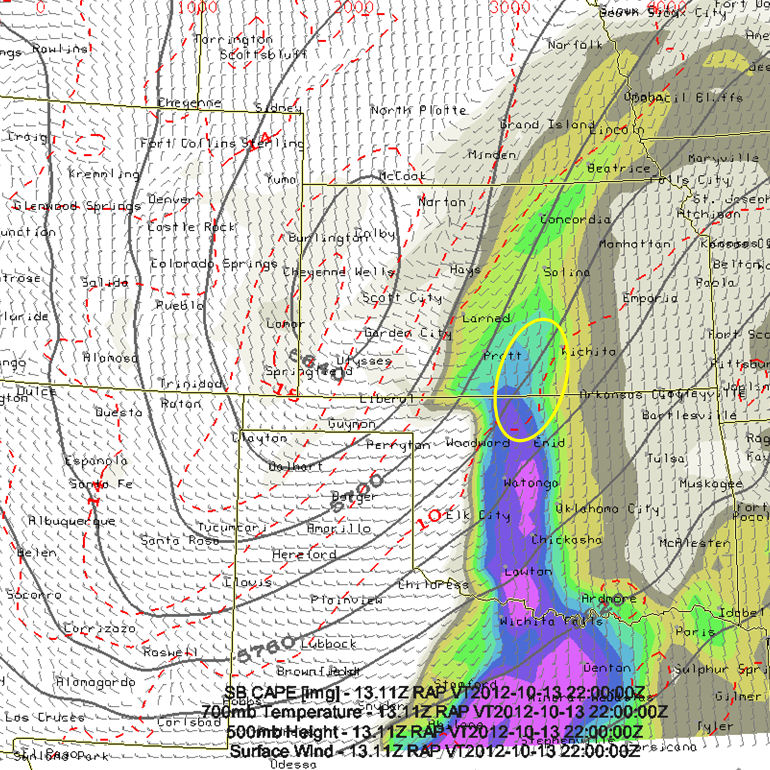
(click on thumbnail for pop-up of larger image) |
Mon, 22 Oct 2012 13:08:14 -0500
Reinvigorating my passion for wildlife photography with purchase of Nikon 600mm VR lens. | Not long after purchasing my first DSLR camera (Nikon D70) back in 2005, I discovered another subject I wanted to get good at photographing -- Birds. Particularly, large wading birds and smaller shore birds (as well as certain waterfowl like mallard ducks, wood ducks, snow geese, etc.). I am fortunate to live sort of close to a large wildlife refuge, Quivira NWR, about an hour and a half drive to my east. In 2006, I bought an 80-400mm VR lens and began making regular trips to Quivira NWR. This lens really gave me a glimpse of what I could do from a fine art component with wildlife. At Quivira, though, birds are seldom close, and I knew that if I wanted to improve my photography and get many more keeper shots, I would eventually need more telephoto reach. In 2006, I made two photography trips to New Mexico and Yellowstone/Grand Teton. These two trips made it even more difficult for me to not be shooting with the best out there. After 2006, I made it a point not to make a wildlife-specific photography trip unless I owned a 600mm lens (with 1.4 and 1.7x teleconverters). I knew that it would take a number of years before I could be at a point in my life to afford such a big purchase for a serious hobby -- especially considering the yearly financial expense and priority of storm chasing -- my primary photography passion. Between 2006 up until now, the 600mm Nikon prime lens was on top of my wish list. This nearly $10,000 lens is what it would take to get me out more to Quivira -- and to take more trips to other magical wildlife places that I love so much like Bosque del Apache in New Mexico and Yellowstone/Grand Teton. Now that I will be owning a 600mm prime lens with the proper mounting equipment (Wimberley Gimbal Tripod Head, eventually paired with new professional Gitzo Tripod legs to support this weight), I will be making trips back to Bosque.. back to Grand Teton/Yellowstone.. and other places over the coming years to get the absolute most out of this lens... along with the more frequent trips to my local wildlife refuge, Quivira. One of my local goals is to get the best images of migrating Whooping Cranes at Quivira anyone can possibly get. I've photographed the Whooping Crane, but from a long distance using the 80-400mm lens, and was really wishing I had more length and cleaner, crisper images. A couple of sample shots over the years using the 80-400mm lens with the Nikon D200:
#1: A pair of Whooping Cranes amongst a bunch of Sandhill Cranes and waterfowl at Quivira NWR (November 7, 2009)
#2: Sandhill Cranes along a dirt road at Bosque del Apache NWR (January 28, 2006)
#3: Bull Elk bugling on a crisp autumn morning at Grand Teton NP (September 24, 2006)
| (click on thumbnails for pop-up of larger images) |
Thu, 01 Nov 2012 16:22:30 -0500
Dark-eyed Junco series taken at Ford County State Park |
Now that I have a Nikon 600mm f/4 lens, I am
interested in expanding my nature photographic interests to include
songbirds. There are several reasons for this. One -- I don't have
to drive nearly as far to areas to photograph birds. Two --
songbird photography is extremely difficult, and I love a good
challenge. It's not just photographing the bird and trying to get
the sharpest image possible, but you have to take into account other
elements of an image to make it truly a good image. I have a LOT to
learn. Three -- this also allows me an excellent opportunity to
become more familiar and comfortable handling such a heavy and
intimidating lens. Repetition and practice in long lens technique
(both on the tripod AND handheld) is crucial to attaining the best
images. I did say handheld. Yes, using the 600mm f/4 is possible,
I've found. I have the Vibration Reduction (VR) version of this
lens, as well as using a camera, Nikon D3, that allows higher ISO
yet still very clean images so I can maintain a higher shutter speed
even at the focal length AND reduced light in the woods.
Ford County State Park, only 5 miles from my
house, has a fairly nice wooded area with dirt trails south of the
small lake and is a perfect local place to photograph songbirds in
their natural environment. Unfortunately since fall migration has
passed, only wintering birds are around to photograph, and there
aren't a lot of them around. Yesterday (October 31), I went on my
first small hike with the 600mm using the carry strap that came with
the lens, and I hiked with the lens without a tripod. I think there
is an advantage to doing this, because I like to be able to enjoy a
hike even if there aren't any subjects to photograph, and if an
opportunity arises, I can set up quickly without having to lug the
tripod around. Plus, the hike is a little more enjoyable while
carrying less. Granted, I probably won't be making this a regular
practice, and will probably only hike with a 600mm lens at Ford
County State Park since it's so close to home, but at the same time,
it does open up the gamut of things to shoot with the "quick draw"
mindset while on a hike .
Okay enough rambling. Very early in the hike
yesterday, a pair of Dark-eyed Juncos were perched close to ground
level on some small branches about 20 feet away next to the trail.
Fortunately, the birds were close to ground level so I could steady
the lens on my knee as I sat to shoot. I focused on the nearest
bird and after achieving initial camera focus with auto-focus, I
turned AF off and just tweaked focus with the huge focus ring. I
love the enormous focus ring on the 600mm. Despite the heavy
cropping, I was very pleased with how sharp the bird came out.
Attached to this post are the three best images from this shoot.
That was my only good opportunity on the 40 or so minute hike this
day.
| (click on thumbnails for pop-up of larger images) |
Mon, 05 Nov 2012 19:32:20 -0600
House finches on my deck rail - working on a pilot songbird setup for this winter |
About a week and a half ago, I decided to lay out
some wild bird seed on my back deck (in two seed trays I bought at
the hardware store), just to see if I could attract any songbirds at
all. I don't have any trees in my backyard or really anywhere close
for that matter, as I don't live in the typical urban neighborhood
with big tall trees and neighbors close by with a small backyard. I
figured that since I have a huge, open backyard with my neighbors
spaced out that it might be more difficult to attract songbirds. It
took about a week before I noticed the first bird feeding off the
seed I laid out on the deck. I went with the seed tray on the deck
rail route because I don't have a squirrel problem around my house
(for the reasons I mentioned above -- no trees!). I wasn't sure
which species was visiting my feeding station because every time I
got a glimpse of the bird, it would take off. The deck rail is
actually quite close to my back porch door.
So when I got off work this morning, I got the
brilliant idea to set up the camera (Nikon D3) on a tripod (I have
to use my 80-400mm lens, because the distance from my back door to
the seed trays is less than the minimum focusing distance of the
600mm lens!) and put it in interval timer shooting mode. This is
the first time I've tried this to try to capture the birds, so I
pre-focused the D3 on one of the seed trays and used 80mm focal
length so I could get a better idea of the bird behavior around the
seed tray. I set it up to start at 8:20am, firing every 20 seconds
for 200 total shots. This would span a little over an hour's time.
Once I got it all set up, I went to bed (I just got off my 10pm to
6am mid shift). When I woke up I took a look at the images, and I
was very pleasantly surprised to see two House Finches -- one male
and one female.
Now that this next step was a success, it was time
to move on to the next step, which was to create landing perches for
the birds above the seed trays so I could photograph the birds
without having evidence of feeders in the shot. I went to the
hardware store and bought some additional supplies to accomplish
this, as well as perusing the local creek to find some dead fall
branches to set up above the feed. So now the next minor goal is to
get a good zoomed in shot of one of the finches, or other common
backyard song bird, perched on one of the branches I set up above
the seed trays. I will try to perfect this setup over the next
couple of months during the winter season. My ultimate long-term
goal is to create a songbird photography setup in my backyard (where
I had my vegetable garden the past two seasons) and get some amazing
bird images with the 600mm lens.
| 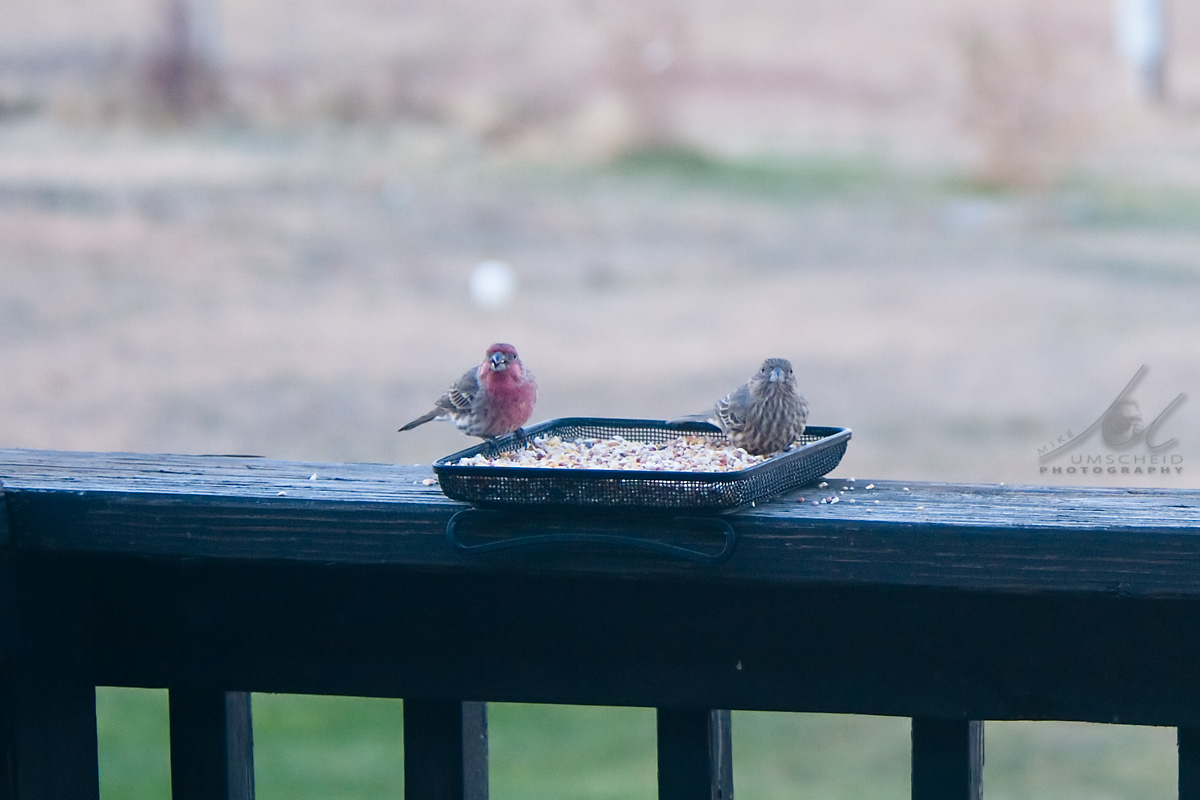
(click on thumbnail for pop-up of larger image) |
Mon, 19 Nov 2012 21:56:01 -0600
The Great Pumpkin Explosion 2012 -- Pumpkin #1
2012 Pumpkin Explosion Summary & Images (part 1) | I went out with my neighbors on Sunday afternoon to shoot & explode several pumpkins: from standard size ~20lb pumpkin all the way to a near 200lb pumpkin. Four pumpkins were shot at and exploded, including one of my 55lb pumpkins. My neighbor Ty and his boys took turns shooting with his AR-15 Rifle, targeting canisters of Tannerite that were placed beneath each of the pumpkins. The smaller pumpkin was shot at first, placed atop a 1-lb can of Tannerite.
I photographed each explosion using my Nikon D3 camera, which can fire off 9 frames per second in its high burst mode. I used the 600mm lens mounted with the Wimberly II gimbal head. It was unfortunately somewhat cloudy, but there was still plenty enough light to get nice stop action imagery at around 1/4000s shutter speed. That being said, in order to
achieve 1/4000s, I had to be shooting at 1250 ISO, which is really nothing for the D3. I kept the aperture at f/6.3 instead of wide open f/4 in order to preserve at least a little bit of depth of field. A countdown of "1-2-3-FIRE!" was yelled out for each shot, and I would hold down the remote cable release on "3" and capture about 2 seconds of images in the high burst mode, which would range anywhere from 18 to 25 frames or so. This worked well for 3 of the 4 shots. On the 2nd pumpkin, the trigger man (I forgot who it was on the 2nd pumpkin shot) actually fired right at "3" instead of "FIRE!", so I missed a few frames right at impact. Nevertheless, on the other three pumpkins this worked out fairly well.
On this post are the 6 frames right around impact/detonation of the smallest pumpkin atop 1-lb of explosives (spanning a whole 2/3 of a second total). The first frame of this sequence is the last frame I captured before impact, and image #2 is the first frame immediately (as in only a few milliseconds) after detonation. The frames that follow show the pumpkin fragmentation in lovely, high detail that Nikon 600mm optics can capture :) | (click on thumbnails for pop-up of larger images) |
Mon, 19 Nov 2012 22:16:41 -0600
The Great Pumpkin Explosion 2012 -- Pumpkin #2
2012 Pumpkin Explosion Summary & Images (part 2) | |
Here's the second pumpkin, which was actually my pumpkin
that weighed in at around 55 pounds. Again, for this pumpkin 1-lb
of Tannerite was used. Same camera settings used as in Pumpkin #1,
except I moved back just a little bit further because the outward
projection of the pumpkin fragments were occurring very quickly and
I wanted to get a little better pumpkin-to-dirt ejection ratio in
the frame. This was the pumpkin which was fired on just a bit
prematurely, so I didn't get the remote trigger shutter for my
camera released quite early enough. The first frame of this
sequence of images was an image of the pumpkin about two minutes
before being fired upon.
| (click on thumbnails for pop-up of larger images) |
Mon, 19 Nov 2012 22:38:02 -0600
The Great Pumpkin Explosion 2012 -- Pumpkin #3
2012 Pumpkin Explosion Summary & Images (part 3) |
This is pumpkin #3 sequence. First frame is the last
frame before impact/detonation and the second frame of this sequence
is the first frame moments after impact/explosion. This pumpkin was
one of the two biggies -- pumpkins that Ty got from a grower down in
the Ensign area I believe. These pumpkins were at around 150 lbs
each (I think). 1-lb of Tannerite on this one too.
| (click on thumbnails for pop-up of larger images) |
Mon, 19 Nov 2012 22:59:30 -0600
The Great Pumpkin Explosion 2012 -- Pumpkin #4
2012 Pumpkin Explosion Summary & Images (part 4) |
And finally, here is the last pumpkin, exploding with 2.5
lbs of Tannerite! This was a pretty fun shoot and largely a
success. Obviously, it would have sweet to have an ultra-high frame
rate camera for something like this. We found some pumpkin ejecta
about 275 feet down range from the crater. That's almost the length
of a football field! Thanks Ty and boys for putting on a good show!
| (click on thumbnails for pop-up of larger images) |
Wed, 02 Jan 2013 11:16:17 -0600
Holy crap! Look who just paid a visit to my deck feeding station. 2 January 2013 | Photographed through glass, just a quick snapshot. The kestrel was
perched about 8 feet away from my sliding kitchen door out to my deck
where the feeding station is. Wow!
Nikon D3 with 80-400mm f/4-5.6 VR lens
230mm focal length
1/8000s
f/5.6
ISO 500
| 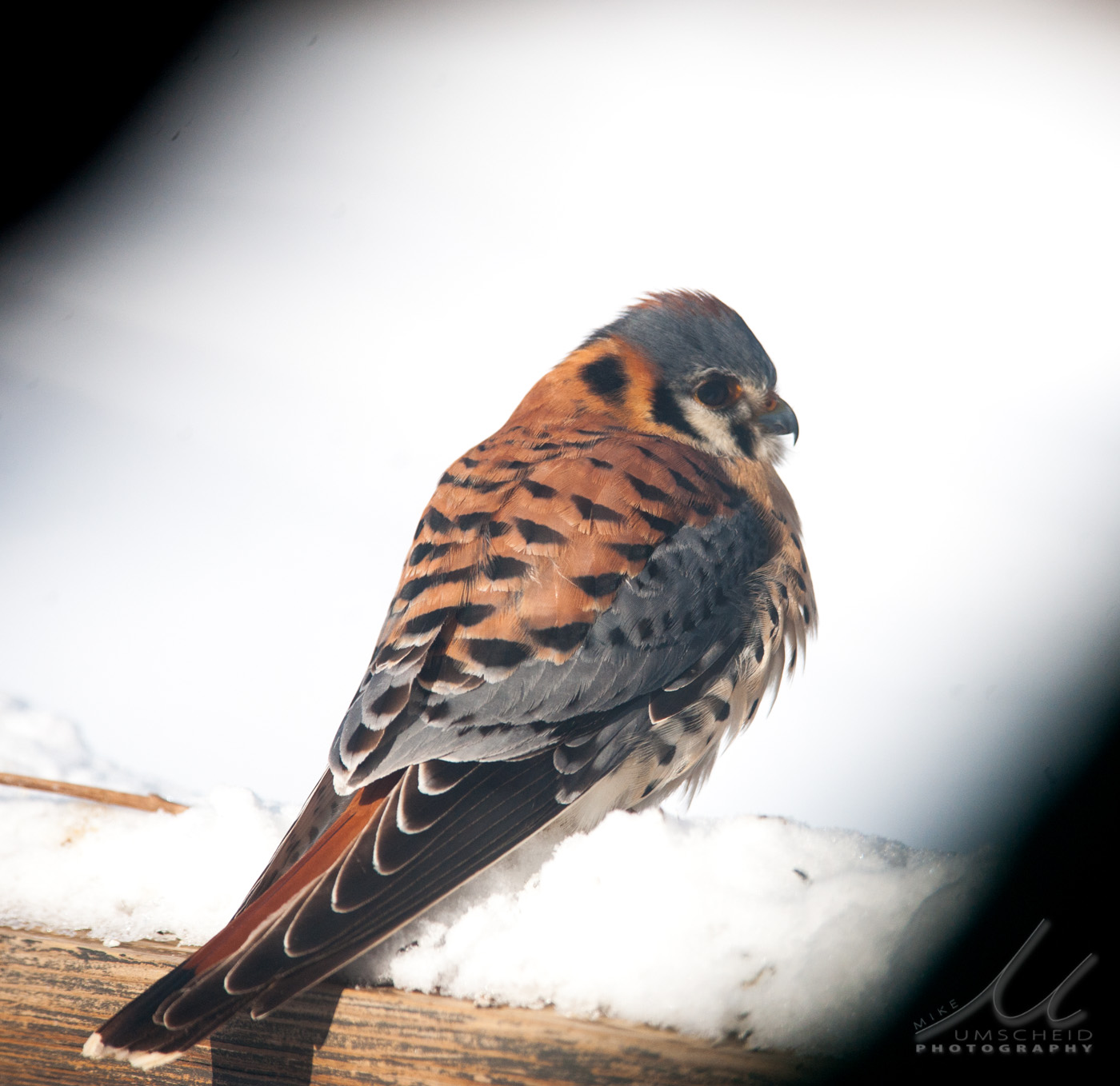
(click on thumbnail for pop-up of larger image) |
Fri, 04 Jan 2013 11:48:56 -0600
Wilson's Snipe in early morning light. 3 January 2013 | | I have a ground blind set up on some private land near Dodge City which has a spring fed pond. I also have a time lapse camera set up next to the blind to monitor wildlife around the blind pointed at the pond near where the spring feeds. Since around Christmas, I noticed that a shorebird was making a regular visit, foraging in the spring water very near the blind. I wanted to photograph this particular bird and see what kind of images I could come up with. The shorebird is a Wilson's Snipe, which usually migrates south during the winter, however a few do winter around Kansas if shallow water is open near any springs to forage through. The weather was very cold on the morning of the third (pretty much every morning right now, with the snow cover)... with a temperature between 10 and 15 degrees Fahrenheit. This made photography a little more challenging, but I managed to make it about 3 hours in the blind before completing the shoot satisfied with what I got. Here are the 19 images from this morning shoot. Enjoy! | 
#1 | 
#2 | 
#3 | 
#4 | 
#5 | 
#6 | 
#7 | 
#8 | 
#9 | 
#10 | 
#11 | 
#12 | 
#13 | 
#14 | 
#15 | 
#16 | 
#17 |
(click on thumbnails for pop-up of larger images) |
Wed, 09 Jan 2013 13:33:05 -0600
House Finch in flight. 9 January 2013 | Location:
My backyard feeder, 5 miles north of Dodge City, KS
Nikon D7000 with 600mm f/4 lens
1/2500s
f/8.0
ISO 640
| 
(click on thumbnail for pop-up of larger image) |
Sun, 20 Jan 2013 19:39:34 +0000
Bosque del Apache Photography Trip |
Everything is on track for my 6-day trip to the Rio Grande Valley to photograph wildlife: Sandhill Crane and Snow Geese, to be specific (as well as other attendant wildlife). My focus will be on the Bosque del Apache National Wildlife Refuge. I timed this particular trip around the approach of the full moon, which will be this Saturday (26th). I will be basing out of Socorro, NM, which is 20 miles north of the refuge. There are other smaller wildlife management areas that I will also photograph at along the Rio Grande. Wintering Sandhill Cranes use the entire Rio Grande Valley from Albuquerque down to El Paso, but are most concentrated from just south of Albuquerque to Bosque del Apache. I photographed Bosque 7 years ago in 2006, and it was an experience I will never forget. It was this trip that really got me hooked on wildlife photography. The incredible landscape with the mountain terrain, the phenomenal New Mexico sky, combined with flight of snow geese and cranes can make for amazing images. It is no wonder this is a destination for wildlife photographers. I decided to wait for my return visit to Bosque once I got my new 600mm lens. It was a long wait, but now that I have the lens and some other updated photography gear, I’m on my way back! Here’s hoping for some amazing images from the Bosque... (The image below is the NWS weather forecast; Highs in the 50s, lows in the mid/upper 20s works for me!)
Itinerary:
Sunday 20th... depart Dodge City after work (roughly 3pm) for Tucumcari, NM
Monday 21st... depart early morning from Tucumcari, NM for Socorro, NM (late afternoon/evening shoot)
Tuesday 22nd through Saturday 26th... Shoot days!
Sunday 27th... Sunrise shoot then depart Socorro, NM for Dodge City. | 
(click on thumbnail for pop-up of larger image) |
Wed, 23 Jan 2013 00:43:49 -0700
Bosque del Apache Day 2 - January 22 | 1461 frames combined from this morning and this early evening shoot at
Bosque del Apache. Again, it was mild with afternoon temperatures in the
upper 50s and not a cloud in the sky. SOME clouds will help enhance the
bird in-flight shots! Here are a few select keeper frames from today (in
addition to the -Snowbound- title I added earlier this evening):
| (click on thumbnails for pop-up of larger images) |
Wed, 23 Jan 2013 21:20:32 -0700
-Snowstorm- The unison liftoff of Snow Geese is one of the most awe inspiring wonders of nature. Bosque del Apache. 23 January 2013 | A little more about this shot-
This was photographed at a location called the South Crane Pond area that
is a part of the Bosque del Apache NWR. The typical routine at Bosque is
the morning (usually 10-25 minutes before sunrise) flyout of Snow Geese
from one of their traditional roosting spots around the Flight Deck area.
On this morning, I decided to focus my efforts on "birds in landscape" at
sunrise as morning light first hit the Chupadera Mountains west of the
refuge. Shortly before sunrise, a large flock of Snow Geese descended upon
the pool I was photographing. I was already set up for doing
birds-in-landscape shots, as I had my 80-400mm lens on the tripod with most
of my frames at the short end of this range. I was also shooting with a
large depth of field with the f-stop at f/13. So, I was already set up,
basically, for what was about to come my way. Without any warning
whatsoever (and this is usually the case), the large pile of geese shot up
in a thunderous wave. It's interesting how Snow Geese lift off. They all
don't lift off at once... they lift off in a wave... usually starting at
one end. At the time, I was focusing on trying to get some close Sandhill
Cranes in my landscape scene, but once I heard the initial "thunder" and
loud calling, I knew what was happening, so I swing the camera around on
the gimbal mount and went to work. I caught the liftoff fairly early,
capturing 7-frames per second. Since I was at f/13, every element of the
scene was pretty much in focus. I feel pretty lucky to have been at the
right place at the right time for this shot and capturing one of nature's
most amazing spectacles -- at very close range flying in my direction!
| 
(click on thumbnail for pop-up of larger image) |
Mon, 21 Jan 2013 23:56:50 -0700
Bosque del Apache Day 1 - January 21 | *I* arrived in Bosque del Apache early in the afternoon. This first day of
shooting was much better than expected -- a success all around. I started
my shoot traveling the South Loop where I photographed some Pintails, a
Northern Shoveler, Mallards. I then came across some mule deer, including
one buck. The buck was quite active, as I photographed him doing an antler
rub on a tree branch. Then he started playing around with a couple of
does. I then headed north as the sun was getting lower, and it was time to
focus on the light geese and Sandhill Cranes. After initially
photographing some in flight shots near the Farm Deck, I headed to the
shore of the west pool just north of the Flight Deck. This was where the
fly-in was occurring. The geese and cranes were very tolerant of the
growing crowd of photographers and bird watchers. The scenes prior to and
at sunset were just awesome.
*I* shot 1359 frames today... all on the D7000 and with the 600mm f/4 lens.
3 of those frames are included in this post of Sandhill Cranes. Enjoy!
More to come later! -Mike
| (click on thumbnails for pop-up of larger images) |
Thu, 24 Jan 2013 04:26:20 -0700
Bosque del Apache Day 3 - January 23 | 1739 combined total frames shot from the morning and afternoon/evening
shoot. It was another spectacular day highlighted by not one, but TWO
close encounter Snow Goose liff-offs. I was fortunate enough to
successfully capture both of them quite well. Other highlights of the
shoot included morning Sandhill Cranes in flight (shot with the 80-400mm
lens instead of the 600mm), male Shoveler in excellent light showing
iridescence in the head, and an interesting shot of Pintails splashing in
front light upside down under water with its webbed feet. The day was
capped off with a spectacular sunset as high cirrus clouds moved in. What
a day!
| (click on thumbnails for pop-up of larger images) |
Fri, 25 Jan 2013 11:37:57 -0700
Bosque del Apache Day 4 - January 24 (Evening Shoot) | On Thursday evening, I met up with a local photographer I met online. We
decided to shoot at another smaller refuge close to where he lives along
the Rio Grande Valley. It was a fun shoot, and Sandhill Cranes were
numerous. We were working with excellent direct light with a bunch of mid
level clouds to provide nice backgrounds. Then, the sun went behind the
clouds to never reappear (except for a brief moment right around sunset).
Here are a few images from that shoot:
| (click on thumbnails for pop-up of larger images) |
Fri, 25 Jan 2013 13:44:45 -0700
Bufflehead at Bosque | Okay, I need to find more of this duck, because the male Bufflehead is
brilliant when direct sunlight hits it right... it's an explosion of color
from the iridescence of the forehead and throat/neck of this bird. I need
to thank a birdwatcher that was standing next to me who pointed this duck
out.. as I was fixated on Snow Geese and Sandhill Cranes at the time. I
knew right away when she said Bufflehead that I needed to point my camera
on it, because I knew of the color explosion this duck has in the right
light.
| 
(click on thumbnail for pop-up of larger image) |
Mon, 28 Jan 2013 23:35:26 -0600
Bosque del Apache Day 6 - January 26 (Evening Shoot) |
This was probably the most unique shoot of the trip. Most of
the day was filled with poor light due to heavy clouds and scattered
rain showers. Late in the day, there was more sunshine poking
through, but not before one last heavy rain shower moved across
Bosque del Apache just prior to sunset. I shot from the Flight Deck
and set up at a spot I picked out a couple hours prior based on
where the cranes were favoring to land, the approaching flight path,
and wind direction for landing. It was good that there was a south
wind because then the birds would be landing with their fronts in
the good light. A fairly robust convective shower moved in and it
started raining quite heavily. I didnt back any rain gear, so I had
to use some makeshift cover to protect my gear while it was
raining. I knew the rain would not last all that long, but before
the heaviest of the rain hit, I managed to get a few shots in of
some of the first incoming cranes. As the storm was beginning to
end, a dramatic rainbow filled the eastern sky and the light was
improving rapidly. I grabbed my D700 which had my 24-70mm lens
attached to it and I shot away at the amazing rainbow with cranes in
the foreground. After the rainbow waned, I went back to work with
the 600mm lens on the Wimberly (after drying it off after getting
wet from the rain shower), and got some nice in-flights, portraits,
and other various poses in awesome light as the sun hit the water
and cranes for a short time before it dipped below the mountains.
Then, the clouds on the eastern horizon began to break up just
shortly after sunset and the full moon appeared!! I did not expect
this at all, so I quickly went to the car to grab my 80-400mm lens
and put it on the Wimberley to grab some wildlife-in-landscape
scenes with the full moon and its reflection off the water.
Awesome!
| (click on thumbnails for pop-up of larger images) |
Mon, 04 Feb 2013 17:36:45 -0600
Barn Owl photographed on a local birding run in Ford County. 3 February 2013 | I went out Sunday morning with fellow birder, Jeff Calhoun, of Dodge
City looking to do some county listing. Jeff knew of a location where
there was the potential for a Barn Owl south of Dodge City.. and the
location did not disappoint. The Barn Owl took flight and I was able to
get a few frames of it as it passed by in excellent morning light! What
a moment!
| (click on thumbnails for pop-up of larger images) |
Fri, 22 Feb 2013 14:23:52 -0600
Interesting Dark-eyed Junco behavior in the snow. 21 February 2013 | While out photographing the birds in the backyard last night after our
one-foot snowstorm, I noticed two juncos engaging in what I would guess
describe as "unison calling"... something that is far more common in
cranes. I am not sure exactly if this is a typical courtship/mating
behavior in juncos or not, but it was really interesting to observe and
photograph. I was very pleased to see that my images came out sharp.
It only carried on for about 20 seconds or so before they resumed their
normal foraging and frolicking in the snow. Attached to this post are
the three best frames:
| (click on thumbnails for pop-up of larger images) |
Mon, 11 Mar 2013 19:56:02 -0500
METAR Observations at Limon, CO during the March 9 Blizzard |
Blizzard event 5-6 hours during the afternoon/early evening hours of March 9th
Ground Blizzard forcing the re-closure of I-70 to Burlington
KLIC 102355Z AUTO 28007G14KT 10SM CLR M02/M08 A3003 RMK AO2 SLP198 T10221083 11006 21044 56004 PWINO FZRANO $
KLIC 102255Z AUTO 35007G21KT 10SM CLR M01/M09 A3003 RMK AO2 SLP196 T10111094 PWINO FZRANO $
KLIC 102155Z AUTO 35008G22KT 10SM CLR M02/M09 A3004 RMK AO2 SLP201 T10171089 PWINO FZRANO $
KLIC 102055Z AUTO 36019G24KT 10SM CLR M02/M09 A3004 RMK AO2 PK WND 36028/1956 SLP205 T10221089 58004 PWINO FZRANO $
KLIC 101955Z AUTO 36018G24KT 10SM CLR M03/M08 A3005 RMK AO2 PK WND 35034/1917 SLP211 T10281083 PWINO FZRANO $
KLIC 101855Z AUTO 36024G34KT 10SM CLR M04/M08 A3006 RMK AO2 PK WND 36034/1852 SLP216 T10391083 PWINO FZRANO $
KLIC 101755Z AUTO 35030G42KT 10SM CLR M04/M08 A3006 RMK AO2 PK WND 36042/1746 SLP213 T10441083 11044 21078 53006 PWINO FZRANO $
KLIC 101709Z AUTO 35026G35KT 3SM HZ CLR M05/M08 A3004 RMK AO2 PK WND 35035/1704 PWINO FZRANO $
KLIC 101655Z AUTO 35025G41KT 1SM HZ CLR M06/M08 A3004 RMK AO2 PK WND 35041/1649 SLP207 T10561083 PWINO FZRANO $
KLIC 101637Z AUTO 35027G36KT 1 1/4SM HZ CLR M06/M09 A3004 RMK AO2 PK WND 34036/1628 PWINO FZRANO $
KLIC 101617Z AUTO 35023G35KT 2 1/2SM HZ CLR M06/M09 A3005 RMK AO2 PK WND 34035/1617 VIS 1 3/4V5 PWINO FZRANO $
KLIC 101555Z AUTO 35027G34KT 1SM HZ CLR M07/M09 A3004 RMK AO2 PK WND 35037/1519 SLP208 T10671094 PWINO FZRANO $
KLIC 101539Z AUTO 35026G34KT 1SM HZ CLR M07/M09 A3005 RMK AO2 PK WND 35037/1519 PWINO FZRANO $
KLIC 101525Z AUTO 35029G37KT 3/4SM HZ CLR M07/M09 A3004 RMK AO2 PK WND 35037/1519 PWINO FZRANO $
KLIC 101455Z AUTO 35020G33KT 1 3/4SM BR CLR M07/M09 A3004 RMK AO2 PK WND 34036/1443 SLP203 T10671089 52003 PWINO FZRANO $
KLIC 101430Z AUTO 35024G34KT 1 3/4SM BR CLR M07/M08 A3004 RMK AO2 PK WND 35034/1429 PWINO FZRANO $
KLIC 101405Z AUTO 34017G25KT 10SM SCT010 M07/M09 A3003 RMK AO2 PWINO FZRANO $
KLIC 101355Z AUTO 34019KT 6SM BR BKN008 M07/M09 A3003 RMK AO2 PK WND 34036/1325 SLP202 T10721089 PWINO FZRANO $
KLIC 101348Z AUTO 34022G31KT 3SM BR BKN008 BKN012 M07/M08 A3004 RMK AO2 PK WND 34036/1325 PWINO FZRANO $
KLIC 101328Z AUTO 34023G36KT 1 1/4SM BR BKN008 OVC013 M06/M07 A3003 RMK AO2 PK WND 34036/1325 PWINO FZRANO $
KLIC 101319Z AUTO 34019G28KT 1 1/2SM BR BKN010 OVC015 M06/M07 A3003 RMK AO2 PK WND 34035/1259 PWINO FZRANO $
KLIC 101255Z AUTO 34022KT 1 1/4SM BR FEW006 BKN015 OVC024 M06/M07 A3003 RMK AO2 PK WND 34035/1229 SLP201 T10611067 PWINO FZRANO $
KLIC 101231Z AUTO 35023G35KT 1SM BR BKN021 BKN026 OVC031 M06/M07 A3003 RMK AO2 PK WND 34035/1229 PWINO FZRANO $
KLIC 101221Z AUTO 34023G35KT 3/4SM BR BKN021 OVC031 M06/M07 A3003 RMK AO2 PK WND 34035/1218 PWINO FZRANO $
KLIC 101202Z AUTO 34022G33KT 1 1/4SM BR BKN029 OVC060 M06/M07 A3003 RMK AO2 PK WND 34033/1200 PWINO FZRANO $
KLIC 101155Z AUTO 34021KT 2SM BR BKN031 BKN043 OVC055 M06/M07 A3003 RMK AO2 PK WND 34033/1107 SLP197 60002 70019 T10561067 11050 21078 53000 PWINO FZRANO $
KLIC 101127Z AUTO 35021G32KT 3SM BR SCT035 BKN055 M06/M07 A3003 RMK AO2 PK WND 34033/1107 PWINO FZRANO $
KLIC 101120Z AUTO 35021G32KT 2 1/2SM BR BKN037 BKN055 M06/M07 A3002 RMK AO2 PK WND 34033/1107 VIS 1 3/4V3 PWINO FZRANO $
KLIC 101106Z AUTO 34021G32KT 1 3/4SM BR SCT030 BKN055 M06/M07 A3002 RMK AO2 PK WND 34032/1104 VIS 1 1/2V2 1/2 PWINO FZRANO $
KLIC 101055Z AUTO 34022G30KT 1 1/2SM BR BKN024 OVC050 M06/M06 A3003 RMK AO2 PK WND 34033/1035 SLP197 P0001 T10561061 PWINO FZRANO $
KLIC 101044Z AUTO 34023G33KT 1SM BR VV020 M05/M06 A3003 RMK AO2 PK WND 34033/1035 P0001 PWINO FZRANO $
KLIC 101018Z AUTO 34017G24KT 1/2SM FZFG BKN011 OVC029 M06/M06 A3001 RMK AO2 P0001 PWINO FZRANO $
KLIC 101011Z AUTO 34016G24KT 1SM BR BKN013 OVC029 M06/M06 A3002 RMK AO2 PWINO FZRANO $
KLIC 101004Z AUTO 34020G24KT 2 1/2SM BR BKN019 OVC029 M06/M07 A3002 RMK AO2 PWINO FZRANO $
KLIC 100955Z AUTO 35015G23KT 1 3/4SM BR OVC019 M06/M07 A3002 RMK AO2 SLP193 P0001 T10611072 PWINO FZRANO $
KLIC 100943Z AUTO 34013G22KT 1 1/2SM BR OVC019 M07/M08 A3002 RMK AO2 P0001 PWINO FZRANO $
KLIC 100928Z AUTO 34013KT 2SM BR OVC023 M07/M08 A3003 RMK AO2 PWINO FZRANO $
KLIC 100918Z AUTO 35012KT 3SM BR OVC029 M07/M09 A3003 RMK AO2 PWINO FZRANO $
KLIC 100855Z AUTO 34013KT 10SM SCT039 OVC049 M07/M10 A3003 RMK AO2 SLP200 T10671100 51018 PWINO FZRANO $
KLIC 100755Z AUTO 34015KT 10SM SCT070 M08/M11 A3002 RMK AO2 SLP198 T10781111 PWINO FZRANO $
KLIC 100655Z AUTO 34019KT 10SM CLR M07/M10 A2999 RMK AO2 PK WND 35028/0608 SLP186 T10721100 400061072 PWINO FZRANO $
KLIC 100555Z AUTO 34021G36KT 8SM BKN037 BKN046 M06/M08 A2996 RMK AO2 PK WND 34037/0519 SLP172 60002 T10561078 11022 21056 51028 PWINO FZRANO $
KLIC 100528Z AUTO 35026G37KT 3SM HZ BKN039 OVC047 M04/M07 A2996 RMK AO2 PK WND 34037/0519 PWINO FZRANO $
KLIC 100455Z AUTO 34029G36KT 2 1/2SM HZ OVC033 M04/M07 A2995 RMK AO2 PK WND 34037/0432 SLP163 T10441072 PWINO FZRANO $
KLIC 100355Z AUTO 34029G37KT 2SM HZ OVC055 M04/M07 A2991 RMK AO2 PK WND 34041/0311 SLP144 T10391067 PWINO FZRANO $
KLIC 100343Z AUTO 34028G39KT 2SM HZ OVC050 M03/M06 A2990 RMK AO2 PK WND 34041/0311 PWINO FZRANO $
KLIC 100336Z AUTO 35031G39KT OVC050 M03/M06 A2990 RMK AO2 PK WND 34041/0311 PWINO FZRANO $
KLIC 100322Z AUTO 34031G38KT 1 3/4SM BR BKN050 OVC070 M03/M06 A2988 RMK AO2 PK WND 34041/0311 PWINO FZRANO
KLIC 100255Z AUTO 34028G36KT 2 1/2SM BR BKN048 OVC070 M03/M05 A2987 RMK AO2 PK WND 34036/0247 SLP127 60002 T10281050 53018 PWINO FZRANO
KLIC 100155Z AUTO 34022G31KT 8SM OVC040 M02/M04 A2983 RMK AO2 PK WND 36042/0126 SLP113 T10221044 PWINO FZRANO
KLIC 100152Z AUTO 35020G35KT 5SM BR OVC038 M02/M04 A2983 RMK AO2 PK WND 36042/0126 PWINO FZRANO
KLIC 100139Z AUTO 36028G37KT 2SM BR OVC030 M03/M04 A2983 RMK AO2 PK WND 36042/0126 PWINO FZRANO
KLIC 100113Z AUTO 35030G39KT 1 3/4SM BR OVC020 M03/M04 A2981 RMK AO2 PK WND 36042/0056 PWINO FZRANO
KLIC 100106Z AUTO 35031G41KT 3/4SM BR VV017 M03/M04 A2981 RMK AO2 PK WND 36042/0056 PWINO FZRANO
KLIC 100055Z AUTO 35032G40KT 1/2SM FZFG VV014 M03/M03 A2980 RMK AO2 PK WND 35044/0019 SLP105 P0002 T10281033 PWINO FZRANO
KLIC 100043Z AUTO 35031G38KT 1/2SM FZFG VV010 M03/M03 A2980 RMK AO2 PK WND 35044/0019 P0002 PWINO FZRANO
KLIC 100023Z AUTO 35033G44KT 1/4SM FZFG VV007 M03/M03 A2978 RMK AO2 PK WND 35044/0019 P0001 PWINO FZRANO
KLIC 092355Z AUTO 35025G33KT 3/4SM BR VV009 M02/M03 A2977 RMK AO2 PK WND 35044/2256 SLP092 P0002 60014 T10221033 11017 21028 51023 PWINO FZRANO $
KLIC 092332Z AUTO 35024G34KT 1/2SM FZFG VV006 M02/M03 A2976 RMK AO2 PK WND 35044/2256 P0002 PWINO FZRANO $
KLIC 092255Z AUTO 35035G44KT 1/4SM FZFG VV008 M03/M03 A2974 RMK AO2 PK WND 36044/2254 SNEMM SLP082 P0002 T10281033 PWINO FZRANO $
KLIC 092230Z AUTO 34024G33KT 1/2SM FZFG VV008 M02/M03 A2973 RMK AO2 PK WND 34037/2158 SNEMM P0001 PWINO FZRANO $
KLIC 092206Z AUTO 35028G37KT 1/4SM +SN FZFG VV008 M02/M03 A2973 RMK AO2 PK WND 34037/2158 P0000
KLIC 092155Z AUTO 34023G30KT 1/2SM SN FZFG VV009 M02/M03 A2972 RMK AO2 PK WND 35041/2058 SLP078 P0002 T10221028
KLIC 092055Z AUTO 35031G44KT 1/4SM +SN FZFG VV007 M03/M03 A2969 RMK AO2 PK WND 35046/2013 SNB23 SLP069 P0003 60008 T10281033 53006 $
KLIC 091955Z AUTO 34028G36KT 1/4SM FZFG VV006 M02/M03 A2966 RMK AO2 PK WND 34036/1955 SNEMM SLP056 P0004 T10221028 PWINO FZRANO $
KLIC 091907Z AUTO 34027G35KT 1/4SM +SN FZFG VV006 M02/M03 A2967 RMK AO2 PK WND 34035/1907 P0001
KLIC 091855Z AUTO 35023G34KT 1/4SM +SN FZFG VV012 M02/M02 A2967 RMK AO2 PK WND 33037/1832 SLP055 P0001 T10171022
KLIC 091853Z AUTO 35021G34KT 1/4SM +SN FZFG FEW010 OVC013 M02/M02 A2967 RMK AO2 PK WND 33037/1832 P0001
KLIC 091852Z AUTO 35024G34KT 1/2SM SN FZFG FEW010 OVC013 M02/M02 A2967 RMK AO2 PK WND 33037/1832 P0001
KLIC 091844Z AUTO 35022G34KT 1 1/4SM -SN BR FEW010 BKN021 OVC026 M01/M02 A2966 RMK AO2 PK WND 33037/1832 P0001
KLIC 091832Z AUTO 34027G37KT 2 1/2SM -SN BR FEW010 BKN021 OVC032 M01/M02 A2966 RMK AO2 PK WND 33037/1832 P0001
KLIC 091822Z AUTO 34023G34KT 1 1/2SM -SN BR FEW010 BKN023 OVC037 M01/M02 A2966 RMK AO2 PK WND 34034/1816 P0000
KLIC 091805Z AUTO 34023G32KT 1/2SM SN FZFG FEW009 BKN017 OVC039 M01/M02 A2965 RMK AO2 PK WND 34032/1805 P0000
KLIC 091755Z AUTO 34020G34KT 1SM -SN BR FEW009 BKN027 OVC038 M01/M02 A2965 RMK AO2 PK WND 34035/1742 SLP047 P0001 60001 T10111022 10006 21011 53010
KLIC 091735Z AUTO 34018G26KT 1SM -SN BR SCT009 BKN027 OVC034 M01/M02 A2964 RMK AO2 PK WND 34031/1724 P0000
KLIC 091723Z AUTO 33022G27KT 3/4SM -SN BR SCT009 BKN020 OVC050 M01/M02 A2964 RMK AO2 PK WND 33027/1718 P0000
KLIC 091702Z AUTO 33021KT 1 3/4SM -SN BR BKN009 BKN040 OVC050 M01/M01 A2963 RMK AO2 PK WND 33026/1657 P0000
KLIC 091655Z AUTO 34021G30KT 2SM -SN BR BKN009 BKN038 OVC050 M01/M02 A2963 RMK AO2 PK WND 34031/1641 SNB18 SLP038 P0000 T10061017
KLIC 091645Z AUTO 34018G31KT 2 1/2SM -SN BR SCT009 BKN013 OVC048 00/M01 A2963 RMK AO2 PK WND 34031/1641 SNB18 P0000
KLIC 091631Z AUTO 34021G27KT 2 1/2SM -SN BR BKN009 OVC015 00/M01 A2963 RMK AO2 PK WND 34027/1630 SNB18 P0000
KLIC 091604Z AUTO 34017G24KT 6SM BR OVC007 00/M01 A2963 RMK AO2 CIG 005V010
KLIC 091555Z AUTO 34018G26KT 6SM BR OVC005 00/M01 A2963 RMK AO2 PK WND 34026/1548 UPB24E54 CIG 004V008 SLP034 P0000 T00001011
|
Sun, 07 Apr 2013 05:40:35 -0500
Storm Chasing target areas April 7-9, 2013 | The first real good looking storm chasing setup of 2013 will be unfolding Sunday through Tuesday across the central plains. I just so happened to have this time period off work thanks to some well-timed Annual Leave. Unfortunately, I had to cancel out of some plans with friends in Kansas City for the Royals home opener -- the original reason for taking Monday and Tuesday off. Once it became increasingly likely that a multi-day chase setup was going to unfold, I had to make the decision on plan changes to take advantage of what the atmosphere was potentially going to provide from a fine art storm photography perspective.
A major spring low will be moving into the four-corners region and the Rockies during this time frame. Gulf of Mexico moisture will be transported northward into the central plains beginning today (Sunday), setting up the first of three good-looking storm chase days. Sunday/s target will be close to Dodge City, so I will have the luxury of getting some stuff done around the house before setting out to chase. I like the area from Dodge City south toward Woodward, OK as a target area for later this afternoon/early this evening.
On Monday, a warm front will be lifting north across western Kansas. A triple point will likely set up somewhere in western Kansas marking the convergence of warm moist, hot dry, and cool moist airmasses. Right now, I like the area from Burlington, CO down toward Scott City, KS as an initial target area. I will probably drive back to Dodge after this chase. Tuesday is still somewhat complicated depending on the strength of what looks like an incredible cold front (with temperatures in the teens and lower 20s behind it in western Nebraska!) If this front charges southeast quicker, it will wipe out a potential tornado outbreak with storms evolving into a squall line or quasi-linear structures early in the game. A large target from northern Kansas into central/southern Oklahoma is fair game at this point for a Tuesday chase. I am due back to work Wednesday morning, so herever I go Tuesday, I will have to drive back after the chase that night.
| 
(click on thumbnail for pop-up of larger image) |
Mon, 08 Apr 2013 10:24:30 -0500
Chase Day April 8, 2013 -- Southwest Kansas Region | Two targets in mind today...
#1: This the primary chase target with lowest risk, on paper. Most
models generate convective QPF (storms, for the lay person) in this area
where convergence will be fairly strong as the synoptic dry intrusion
and highly mixed "hot" lifts northward into cooler, moist air with
southeast winds. This area will be closer to the upper level support
for large scale atmospheric lift.
#2: Despite the dearth of convective QPF on most of the traditional
models... there are ensemble members of the SREF and even the NCEP GFS
model are generating some convection on the dryline. This area
highlight is the traditional "hot spot" on the dryline from Lipscomb, TX
to Buffalo, OK. Many great long-lived supercell storms in similar
environments have initiated in this corridor. It is a favored meso-beta
scale convergence max on the dryline, especially by late in the
afternoon and early evening as the dryline ceases its eastward push and
begins to retreat. It will be hot, by early April standards, along the
dryline in this area with temperatures rising into the mid to upper 80s.
This warmth will be enough to erode convective inhibition, especially
right at the dryline (where the dewpoint gradient is). The key is how
much of a convective inhibition gradient there will be east of the
dryline. The RAP and NAM models suggest good warm east of the dryline a
good 60 to 100 miles, so any convective plumes that do go in the
convergence hot spot will have a chance to survive and grow into a
supercell thunderstorm.
Right now, as of 1030am, I am 50/50 on #1 or #2. I will likely make my
final call right before I depart later this afternoon.
| 
(click on thumbnail for pop-up of larger image) |
Thu, 02 May 2013 00:05:24 -0500
Songbird fallout forecast for Thursday May 2 |
Songbird migration
fallout forecast for Thursday, May 2:
The radar mosaic
as of 11:00pm this evening was showing a significant movement of
birds ahead of the front at migration altitude (3000-6000 ft). The
Tulsa, OK, Springfield MO, and Pleasant Hill, MO radars in
particular are showing a fairly good concentration of migration
movement. These birds will eventually become grounded when they
hit the front. The image attached shows my forecast of where the
most likely "accumulation band" will be and fallouts may occur.
Birders along or very near the red outlined band should be on the
lookout for an enhancement of bird concentrations Thursday....
particularly from just east of Wichita to Emporia to the Kansas
City area. There were some storms occurring from Kansas City south
to Mound City at around Midnight which is likely causing a
grounding of birds that are showing up on radar nicely across
southwest Missouri. Good luck out there!
Mike Umscheid, meteorologist & bird photographer
5 N Dodge City
| 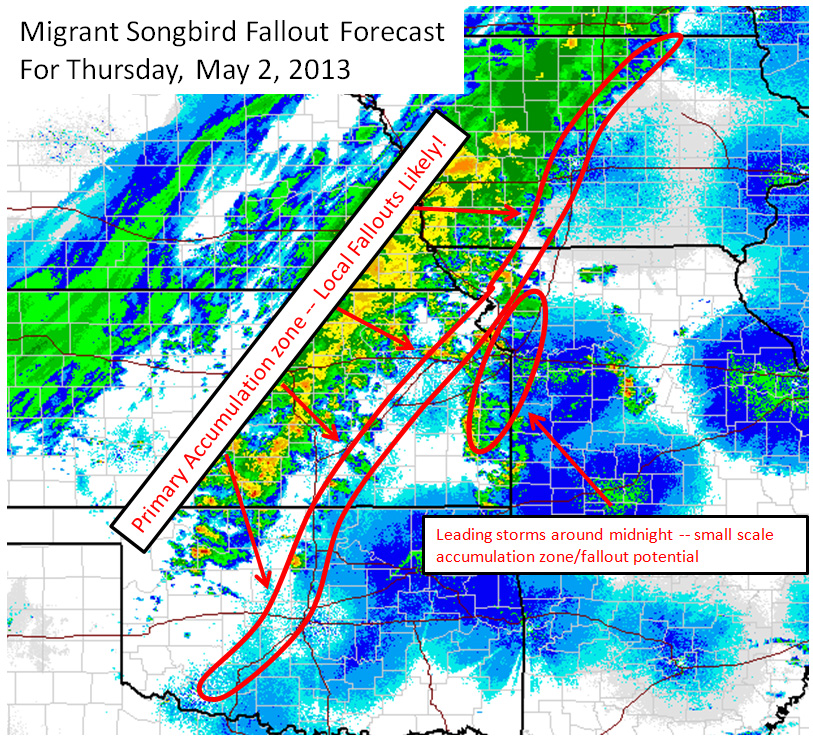
(click on thumbnail for pop-up of larger image) |
Fri, 03 May 2013 21:09:38 -0500
Yellow-rumped Warbler and Lazuli Bunting at Ford County Lake. 3 May 2013 | #1 -- Lazuli Bunting. This was one of three birds I saw. The quality
is not up to my standards, but this is a rather uncommon bird, so I
included it in on the blog.
#2 and #3 -- Yellow-rumped Warbler hopping around from branch to branch
in very good light (note the catch light in the eye). Something a bird
photographer should always strive for in their images!
| (click on thumbnails for pop-up of larger images) |
Sun, 19 May 2013 09:12:20 -0600
Chase Summary May 18, 2013 | I met up with Jon Smith, Rob Mitchell, and Mitch and Candice Daszewski for
a 3-day chase. Our target area was Greensburg to adjacent far northwest
OK. It largely ended up being a day to forget, as we chose the wrong
storm... opting for a storm farther southwest moving into our target area
versus a storm developing in our target area and eventually exiting it. We
saw the initial, small updraft base with the eventual Kinsley-Rozel
tornadic supercell, but radar was showing a nice uptrend in convection down
in the Laverne, OK area which was moving northeast toward mid-upper 60s
dewpoints. When we got down there, it just ended up being a
northeast-southwest oriented cluster of junk storms with too much cold
outflow. We called off the chase near Freedom, OK. On the way back north,
we stopped briefly, meeting up with JR Henley and Dave Douglas at a small
rest area watching anvil lightning and some mammatus just after sunset. A
small consolation to an otherwise frustrating chase.
May 19 Forecast:
We are in Pratt, KS and are eyeing the Winfield-Ponca City area and perhaps
down toward the Oklahoma City area. There should be a couple decent
supercell storms with tornadoes a strong possibility.
May 20 Forecast:
Southern Oklahoma looks pretty good! The last of this 3-day chase.
| 
(click on thumbnail for pop-up of larger image) |
Mon, 20 May 2013 08:32:55 -0600
Chase Summary May 19, 2013 | We started the day in Pratt with a broad target in mind from south-central
Kansas down to Oklahoma City. We staged early afternoon in Blackwell, OK,
but the early consensus of the group (myself, Jon Smith, Rob Mitchell,
Mitch and Candice Daszewski) was to head down toward the OKC area. At
Blackwell, though, things started to happen quickly, with two areas to
decide on. Do we blast south toward the towers just west of OKC or do we
hang out where we were at. Long story short, we stayed north despite.
There was some disagreement in this decision. We went west from Blackwell
and intercepted the South Haven storm, somehow missing the brief tornado
that was embedded in some precipitation. We must have been driving south
at the time to get into the updraft region. There was another disagreement
on what to do next... but since we made the early call to stay north, I
wanted to stay up here because I was seeing some signals that perhaps a
non-supercell tornado would occur. Rob, Mitch, and Candice broke off and
they tried to catch one of the dryline tornadic supercells... while Jon and
I stayed north. Neither camps saw any tornadoes. Rob, Mitch, and Candice
ended the day in Tulsa and Jon and I are in Ponca City this morning. We
had a fulfilling mexican dinner and afterwards enjoyed a wonderful
lightning display just southeast of Ponca City. I managed to get some nice
images of that... which ended up being my best shots of the day, ironically
enough.
Forecast May 20:
We are leaving soon, before 10am, heading south to the Red River region..
with an early staging location Ardmore, OK. The dryline looks good today
with all the models showing storms developing...even down into North Texas
and perhaps Central TX. We are hoping something goes tornadic along the
Red River.
| 
(click on thumbnail for pop-up of larger image) |
Wed, 22 May 2013 14:16:15 -0500
Chase Summary May 20, 2013 | Jon and I started the day in Ponca City while Rob, Mitch, and Candice started off in Tulsa. We had a general target of the Red River in mind -- farther south where hopefully storms would remain more isolated and stay as supercells for a longer duration of time. We were concerned that the area between the Red River and the Oklahoma City metro would evolve into non-supercell type structures quickly, so we opted for the later development down along the Red River. We met back up with Rob, Mitch, and Candice in Norman and continued south at about 11:30am. On the drive south, we totally ignored the incipient towering cu noted on visible satellite back to our northwest (one of which becoming the eventual Moore, OK EF-5 tornado) that started going up around 1:30 or so. We noticed a mesoscale area of interest between Mineral Wells and Wichita Falls, so we made our way all the way to Denton before heading west. After a quick bite to eat in Decatur, we headed northwest toward a rapidly growing supercell just east-northeast of Wichita Falls. On the way, in the town of Bowie, I got a call from Matt Crowther stating "May 3rd Part II" in Moore. We were totally oblivious to what was going on up there since I was so focused on what our next move was as we approached our target storm. The supercell storm we were after to our north-northwest as crossing the river at Ryan, OK and we made an intercept, finally, at this town. Unfortunately, this storm became HP and outflow dominant quickly.
About 12 miles east of Ryan along Hwy 32, we made the decision to blow off this lead storm in favor of vigorous development back east of Wichita Falls to our southwest. We drove back to Ryan then south to Ringgold, TX and came into a great position as significant rotation with this new storm was just off to our west. We stopped for about 10 minutes on the south side of Ringgold and watched tremendous, but fairly broad rotation to our west with awesome east inflow winds of 35 to 45 mph. There may have been a tornado buried back in one of the fairly opaque precipitation cores as the RFD region was becoming quite wet, unfortunately. We had to continue east-southeast on Hwy 82 to Nacona where we drove south on Hwy 175 to Montague. All the while during this drive, the radar velocity certainly suggested the possibility of a big tornado wrapped in thick RFD precipitation, but we never had any visual of an obvious tornado. We stopped again just south of Montague where I photographed the approaching HP storm structure, complete with the aquamarine color of the storms precipitation core. This was the best storm structure we would end up getting from this storm. The storm rapidly evolved into a mess with a storm merger occurring. We continued east and north on farm-to-market roads to the Muenster area before basically calling it quits and heading back to Gainseville. All in all a disappointing day. We never anticipated the massive, destructive tornado threat for Oklahoma City, but a more careful analysis of the surface observations and satellite would have drawn my eye to this area more. I was so keyed in on the Red River region and adjacent North Texas from the get go that I basically scoffed at anything farther north. This reluctance to change targets after a previous night and early morning forecast target area cost me on two of three days on this trip -- a very frustrating result. Jon and I said bye to Rob, Mitch, and Candice northwest of Gainesville, and Jon and I headed north so I could drop him off at his car in Wichita. On the way, we passed through Moore on I-35 about an hour or so after the interstate was re-opened. The sight and smell where the tornado crossed the interstate was sobering indeed.
A high-precipitation supercell approaching this cluster of windmills at Montague, TX on 20 May 2013: | 
(click on thumbnail for pop-up of larger image) |
Thu, 13 Jun 2013 06:22:13 -0500
Chase Day June 13 - Northeast Colorado, Nebraska Panhandle |
4-Day Chase Trip, June 13-16
June 13:
I will be departing Dodge City here in about an hour (around 7:00am)
heading for a general target region encompassing Northeast Colorado
and the Nebraska Panhandle. There are two specific areas within
this region I have my eye on. The first is the corridor from
Sterling to Julesburg to Wray, CO where the NAM and GFS have been
most aggressive in convective development for several runs now. This
area will be right at the area ahead of an advancing warm front
north through eastern Colorado this afternoon. 1500-2200 J/kg SBCAPE
will develop in this area. Negatives in this region include: south
of the 588 decameter height line at 500mb (Good supercells are less
likely in environments with such high mid level heights) and also as
a result weaker 500mb winds around 20 to 25 knots. That being said,
the directional shear will be good with 850-500mb forecast crossover
supportive of supercell storms. The other area I have my eye on is
the Chugwater-Scottsbluff hotspot for something initiating off the
Laramie Range. Several of the high-resolution WRF models support a
supercell signal off the Laramies in this corridor in stronger 500mb
winds/lower heights (below 588 decameters). The one negative I see
is a bit less moisture, but lower to mid 50s could still result in
the Sidney-Scottsbluff, NE region which is certainly enough for a
high-based, photogenic supercell.
June 14:
This looks like a pretty good Central Nebraska day if the cap can be
broken. GFS and NAM have shown a consistent signal of enhanced
surface convergence amidst 4000-5000 J/kg CAPE... at the southern
edge of adequate 500mb flow. I will probably stay somewhere along
I-80 (Ogallala?) after this evenings chase.
June 15-16:
Upslope returns on the 15th favoring the northeastern
Colorado/adjacent southern Nebraska Panhandle region again. The
same goes for the 16th, to a certain degree, as zonal flow at 500mb
will be in place and 588 decameter line displaced south into
southwest Kansas. It looks like a broad region of interest on the
16th, but I need to be back to Dodge City by the morning of the 17th
to resume day shifts.
Mike Umscheid
| 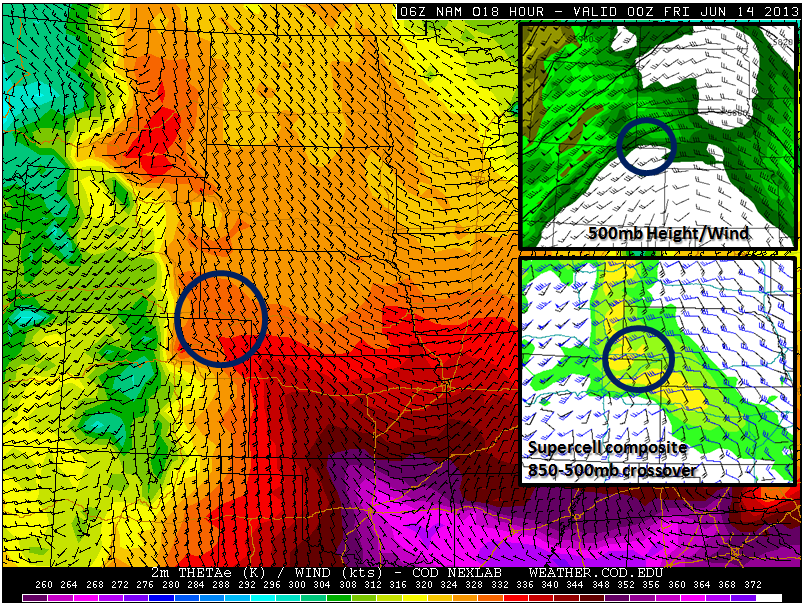
(click on thumbnail for pop-up of larger image) |
Thu, 13 Jun 2013 22:08:23 -0600
High-based severe storm developing west of Woodrow, Colorado on 13 June 2013 | This image was looking west-northwest at the developing severe storm which
would ultimately become a substantial dust storm with a large number of
gustnadoes when the storm reached Hwy 71. The image posted here is of the
cleanest look I had of the storm before it became a mess with a bunch of
blowing dust everywhere.
| 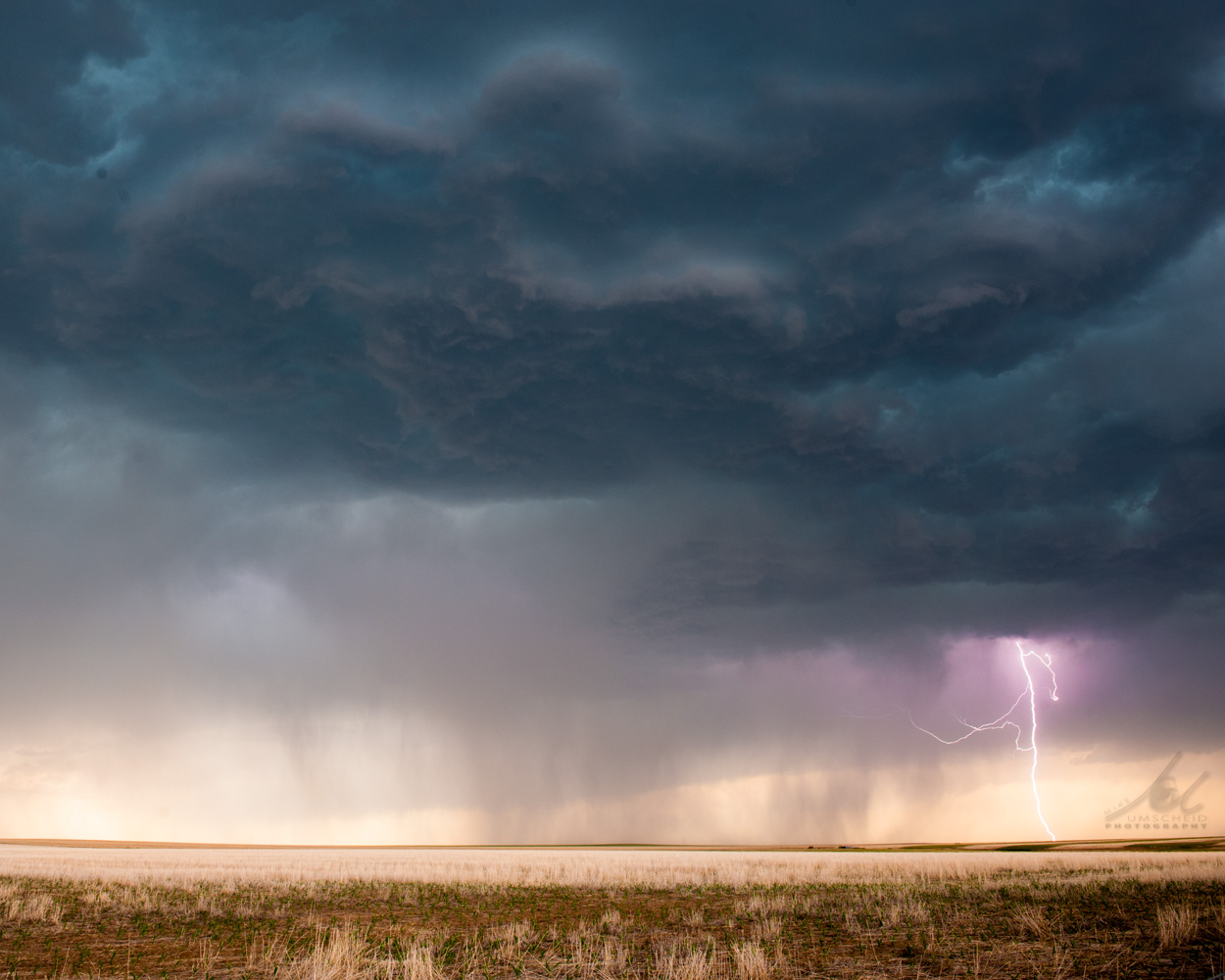
(click on thumbnail for pop-up of larger image) |
Fri, 14 Jun 2013 07:25:37 -0600
A gustnado formed about 100 yards of me near Woodrow, CO on 13 June 2013 | Looking off to the southeast a few miles southwest of Woodrow, CO when the
storm I was chasing and photographing become significantly
outflow-dominant, creating an environment for gustnado formation (not true
tornadoes), when the outflow winds from the storm interact with surface
inflow from the southeast.
| 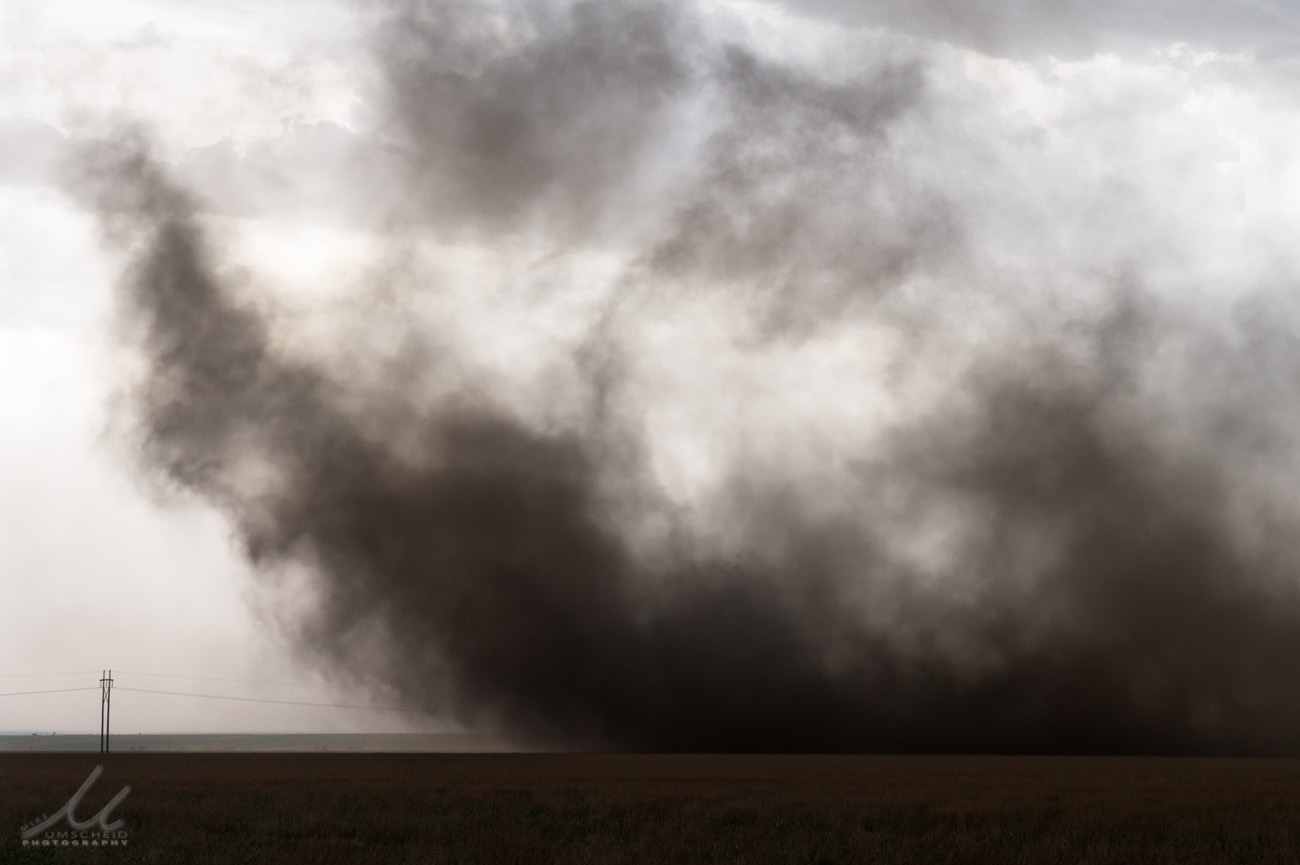
(click on thumbnail for pop-up of larger image) |
Fri, 14 Jun 2013 22:04:10 -0600
West Point, NE Supercell of 14 June 2013 | Awesome supercell structure looking west-northwest near West Point, NE...
The storm never produced a tornado, despite the significant amount of
rotation. This shot is handheld from in the car as a substantial amount of
anvil lightning was occuring very close to me. Not too long after this
image, the structure of the storm started to wane as storms to the south
merged with the supercell... ultimately leading to its demise.
| 
(click on thumbnail for pop-up of larger image) |
Mon, 17 Jun 2013 20:55:02 -0500
High-based supercell undergoing development with wicked scud cloud formation to the west
Atwood, KS HP Supercell Summary & Images (part 1) | | This sequence of images was from 3:42pm to 3:57pm CDT looking west from a location about 9 miles south of Highway 23 and 7 miles west of Highway 25 southeast of Grant, Nebraska (40.6985016,-101.2869034). Jay and I found this nice overlook at a county road intersection watching the outflow scud forming at ground level and lifting up into the strong updraft of the developing supercell storm. | (click on thumbnails for pop-up of larger images) |
Mon, 17 Jun 2013 21:18:04 -0500
Supercell storm moving south-southeast wrapping some rain curtains in high-based circulation
Atwood, KS HP Supercell Summary & Images (part 2) | | A little bit further south than the previous shooting location (40.6283913,-101.2885971), Jay and I observed the storm wrap some rain curtains in a developing rear-flank downdraft region of the storm. A few attempts at funnel cloud wannabes were observed. Cloud-to-ground lightning was frequent enough in the forward flank downdraft/downshear anvil region of the storm to attempt at some Lightning-trigger shots, with one good frame and one better CG that barely caught the right edge of a frame in another shot. | (click on thumbnails for pop-up of larger images) |
Mon, 17 Jun 2013 21:37:01 -0500
Storm taking on more of a linear appearance and less supercellular near Imperial, NE
Atwood, KS HP Supercell Summary & Images (part 3) |
This particular stopping location was halfway between Hwy 61
and 25, due east of Imperial, NE (40.5318909,-101.2875977) looking almost due west. Dual
precipitation cores were noted, which provided for some interesting
shots.. including a rainfoot on the northern rain shaft.
| (click on thumbnails for pop-up of larger images) |
Mon, 17 Jun 2013 21:53:54 -0500
High-based structure shots as we continue south through western Hayes County, NE
Atwood, KS HP Supercell Summary & Images (part 4) | | Time around 4:45pm CDT as we stopped briefly for structure shots looking to the west. The storm was taking on more precipitation in the rear-flank. A tall precipitation shaft was also rather cool to see to the northeast of the aforementioned rear-flank precip. Location west of Hayes Center (40.5107002,-101.2119980) | (click on thumbnails for pop-up of larger images) |
Mon, 17 Jun 2013 22:19:26 -0500
Storm structure and lightning with scenic foreground just north of Hamlet, NE
Atwood, KS HP Supercell Summary & Images (part 5) | The storm continued to exhibit non-supercell characteristics as it rolled south-southeast at 5:00pm. We found this nice scenic view on Hamlet Road just north of Hamlet, NE (40.411666, -101.223078) as we continued south on county dirt roads. I managed to capture one cloud-to-ground flash, which I cropped to a panoramic 3:1 image as shown here in Image #3
| (click on thumbnails for pop-up of larger images) |
Mon, 17 Jun 2013 22:32:23 -0500
Last set of images of Round #1 of this chase with Jay
Atwood, KS HP Supercell Summary & Images (part 6) | Time 5:20pm north of Stratton, NE (40.2526207,-101.2489014) as we watch our storm continue to move southeast approaching the Stratton, NE area. By this time, the MCS was beginning to take shape with numerous storms developing southwest of this storm...effectively killing off our original storm. Jay broke off the chase not too long after this stop at Trenton, NE... to continue his vacation in Wyoming. I continued to follow the storms south into Kansas, which was conveniently on my way back home to Dodge. I noted to Jay that the new storm, which appeared to be developing southwest of our original storm, was showing a scuddy lowering (not knowing at the time that this would end up being a much more interesting storm intercept not too long afterwards!)
| 
#1 | 
#2 |
(click on thumbnails for pop-up of larger images) |
Mon, 24 Jun 2013 01:36:36 -0600
Otis, CO Bow-echo approach after sunset. 23 June 2013 | This was a long drive of recovery to get back into position to at least
photograph a little bit of the Last Chance to Anton, CO storm. I caught the
northern end of the storm after being in southeast Wyoming earlier in the
afternoon/evening in hopes of catching an isolated storm off the Laramie
Range. I was racing north after this shot to stay ahead of the approching
bow-echo moving toward Otis, CO.
| 
(click on thumbnail for pop-up of larger image) |
Sat, 29 Jun 2013 08:54:36 -0500
New storm taking on impressive HP structure north of Atwood, KS
Fowler Quasi-stationary Storm Summary & Images (part 7) | Between about 6:07pm and 6:20pm, I photographed some developing high-precipitation storm structure to my west from a location about a mile west of Highway 25 about 4 miles south of the Kansas-Nebraska state line (39.9435806,-101.0740967). I found an old school house at the county road intersection and used it as a foreground subject. The storm was clearly in an uptrend in strength during this time as the structure of the storm was really improving nicely during this time frame here at this location.
| (click on thumbnails for pop-up of larger images) |
Sat, 29 Jun 2013 09:13:09 -0500
Menacing HP storm structure south of Atwood!
Fowler Quasi-stationary Storm Summary & Images (part 8) | Now south of Atwood, I decided to venture east on an unpaved county road grid across southeastern Rawlins County since the storm was moving southeast. This would afford some better storm structure shots, I thought, instead of just continuing south on Highway 25. This ended up being a good decision. This set of images was taken about a mile east of Highway 25 (39.7271690,-101.0402985) looking west as an impressive, blocky lowering developed at the edge of the advancing gust front.
| (click on thumbnails for pop-up of larger images) |
Sat, 29 Jun 2013 09:34:16 -0500
Storm beginning to gust out as cold outflow air becomes dominant
Fowler Quasi-stationary Storm Summary & Images (part 9) | Between about 6:58 and 7:11pm, I photographed the storm from a location about 6 S, 7 E Atwood (39.7124901,-100.8991013) as the storm was becoming a bit messier as cold outflow was really overwhelming with more of a shelf cloud structure evolving. This was the last decent sequence of images of this storm. After this, I made my way south and east on the unpaved county roads to Seldon, KS where I hit paved highway again.
| (click on thumbnails for pop-up of larger images) |
Thu, 11 Jul 2013 08:06:49 -0600
Day 0, July 10. Departure from Dodge and first lightning images of the trip near Trementina, NM | I left Dodge City for my 2-and-a-half week vacation and North American
Monsoon shoot early in the afternoon on July 10. My route was southwest on
Highway 54 down to Tucumcari and west on I-40. I was not planning on
shooting today, but it was certainly a possibility as storms were expected
to form over the higher terrain of central and northern New Mexico. I was
watching a cluster of storms on radar near Las Vegas, NM and figured I
might have an opportunity to photograph lightning from these if I ventured
off I-40 about 40 or 50 miles. That is what I did. I went north on state
route 129, then followed route 104 up to the Trementina area. The cluster
of storms drifted southward, and I photographed lightning for a couple
hours in this area. The best location I shot from was along an east-west
section of highway 104 southwest of the Conchas Lake State Park where I set
up the tripod along the highway and photographed lightning looking down the
road. I was able to do this because of the sparse traffic on this road. I
had one car every 15 or 20 minutes on average down this road. At around
sunset, these storms slowly dissolved, and I made my way toward Albuquerque
then south to Socorro. New storms formed after dark in the area between
Albuquerque and Socorro providing for a nice show of vivid lightning along
the way. I did stop once to photograph, but I didnt get much from this as
I was more focused on getting to the motel for the night after the long
drive.
| 
(click on thumbnail for pop-up of larger image) |
Thu, 11 Jul 2013 22:09:36 -0700
Day 1, July 11. Arrival in Tucson, but lightning activity was scant | Not much to report on the first day in Arizona. I arrived mid-afternoon in
Tucson after attempting to photograph really weak, pathetic storms along
the I-10 corridor. None of the showers produced any worthwhile
cloud-to-ground. I was hoping one cell before sunset near Sonoita would
eventually produce some decent lightning, but it died shortly after it
tried to organize. Great views from the Empire Ranch Rd. north of Sonoita.
I made note of this spot in case there are storms down there. I drove
back to Tucson at around sunset and was hoping to reach a pre-scouted spot
along Reddington Rd. where there are some switchbacks as it climbs
elevation just east of town. I did manage to make it to the switchbacks
just in time to catch the last colors after the sun had already set. The
image tied to this post is from that location.
| 
(click on thumbnail for pop-up of larger image) |
Fri, 12 Jul 2013 12:52:22 -0700
Day 2, July 12. Early day storms between Tucson and Three Points | I left Tucson heading southwest to intercept an organized cluster or storms
moving northward toward the Three Points area. I was hoping for some
decent lightning, but whatever lightning there was was embedded in the
heavy core. I let the rain core go over me along the Ajo Highway between
Three Points and Tucson. What followed looking north was a fairly awesome
scene of the departing storm with the fresh, wet desert landscape in the
foreground.
| 
(click on thumbnail for pop-up of larger image) |
Fri, 12 Jul 2013 20:20:45 -0600
Amazing!! | 
(click on thumbnail for pop-up of larger image) |
Fri, 12 Jul 2013 23:10:36 -0700
Day 2, July 12. Sunset magic along I-10 near the AZ-NM border | A breathtaking scene. I was so fortunate to capture a fabulous, branched
dual lightning flash with the southern end of the Peloncillo Mountains
becoming absorbed by the rust-colored dust moving west.
| 
(click on thumbnail for pop-up of larger image) |
Sun, 14 Jul 2013 09:11:54 -0700
Day 3, July 13. -Speed of Light- Nighttime lightning near Willcox, Arizona | Battling nuisance light rain and trying to keep drops off the lens proved
to be a losing battle... except for this one frame looking north at the
intersection of I-10 and US Highway 191 northeast of Willcox, AZ. The
mountains on the left side of the frame are the Pinaleno Mountains.
| 
(click on thumbnail for pop-up of larger image) |
Tue, 16 Jul 2013 08:22:50 -0700
Day 5, July 15. Successful lightning shoot, centered mostly around Willcox, AZ area | Most of my images were taken from near the Willcox area, but this
particular shot was taken on a brief jaunt north close to the Safford area
(Swift Trail Junction, to be specific) as a storm was rolling off the
Pinaleno Mountains to my immediate southwest.
| 
(click on thumbnail for pop-up of larger image) |
Thu, 18 Jul 2013 08:47:31 -0700
Day 6, July 16. Frustrating day all around/drive through Tucson Mts. | A surge of mid level moisture was moving west from New Mexico which aided
in the early eruption of storms southeast of Tucson. I tried to photograph
lightning from the initial early afternoon convection in the Sonoita area,
but it soon became very messy with too many storms and rather low cloud
bases by Arizona standards... which is actually not all that ideal for
lightning photography. I finally gave up on that stuff and headed to Benson
to reset and figure out what to do next. I decided to head to Kitt Peak,
but when I got there, the road to Kitt Peak was closed at 4pm! That was
extremely frustrating and disappointing, because it would have yielded
great views of storms developing over the Tohono O'odham Nation. I did
drive southwest on the Ajo Highway toward Sells, but I turned around given
the fact that the terrain down there was rather thick with tall mesquite
brush and much in the way of overlooks. I turned around, but in retrospect
should have continued on as storms just south of Sells really organized
into profuse lightning machines close to sunset. Instead, I drove around
Gates Pass Road checking that out for the first time. Some showers and
some isolated lightning developed between Tucson and Casa Grande, but
nothing really came of this stuff.
| 
(click on thumbnail for pop-up of larger image) |
Thu, 18 Jul 2013 10:28:43 -0700
Day 7, July 17. Dissipating storm with colorful sunset east of Quartzsite, AZ | First day out chasing with Evan Bookbinder. After picking him up at the
airport and a quick lunch in Tempe, we watched storms form well off to our
north/northwest from South Mountain on the south side of Phoenix. We were
hoping for a dust storm to roll into the northern part of Phoenix, but that
never panned out as the convective activity was shifting well west of the
city. We high tailed it west on I-10 and storms kept redeveloping west,
resulting in us playing catch up all the way to the early evening hours.
Our best photography of the day came from the I-10/US60 interchange east
of Quartzsite as a storm to our west developed a nice core and
lightning...but the lightning activity was on a downtrend as we finally
made our stop. We did manage to capture a couple of the last
cloud-to-ground flashes...then focused on the amazing sunset colors before
calling it a day and making the long drive back to Tucson.
| 
(click on thumbnail for pop-up of larger image) |
Fri, 19 Jul 2013 11:24:28 -0700
Day 8, July 18. Catalina Mts/Summerhaven, Saguaro NP, Late night lightning over Santan Mts | July 18th was slated as a down day as we decided to venture up toward
Summerhaven and enjoy the mountain drive up the Catalina Highway. After a
lunch at the Sawmill Run restaurant, we drove back down into Tucson and
decided to photograph in the Saguaro National Park (The Rincon/east Unit).
We did have some interesting clouds to incorporate into some shots, but the
sun only made sporadic appearances with good light. Later that night we
noticed storms moving southwest out of the Globe area moving toward the
southeast Phoenix metro with tons of lightning. We decided to make a run
at this despite being so late after 11pm. We intercepted what was left of
the storms near Sacaton hoping for lightning with the Santan Mountains in
the background. The lightning activity was very low, but I did manage to
get one decent frame of some non-cloud to ground lightning over the
mountains.
| 
(click on thumbnail for pop-up of larger image) |
Sat, 20 Jul 2013 10:13:50 -0700
Day 9, July 19. After dark lightning between Sacaton and Coolidge, AZ | Evan and I started the day observing initial showers from Windy Point on
the Catalina Highway above Tucson. After those moved off to the west,
there was nothing else to go after, so we made a brief stop for ice cream
and stopped by the hotel real quick then set off for the northwest toward
Casa Grande. We encountered quite a bit of dust along I-10 near Casa Grande
from strong south winds. After tracking a weak shower that rolled over us
along Hwy 387 close to sunset we noticed new development back to the east
which was also tracking to the west-southwest. We found a spot along
Highway 87 with widely scattered saguaro cactus for a nice foreground for
lightning. The lightning was fairly distant and rather infrequent as far as
cloud-to-ground flashes went, but we did manage to capture a few, albeit
somewhat soft (not perfectly tack-sharp focus thanks to the wind).
| 
(click on thumbnail for pop-up of larger image) |
Mon, 22 Jul 2013 00:27:32 -0700
Day 11, July 21. Storms over Dos Cabezas Mountains | Evan and I started the day with a leisurely drive south through Sonoita
along Hwy 83 then across the beautiful wine country of Elgin, AZ then over
to Whetstone. We briefly monitored weak showers/attempts at storms form off
the Huachucas, until giving that up and heading to Benson for a break and
some lunch. We then set our sights on the Willcox area where we came
across several nice dust devils, including one which came right up on us
(Evan has some cool video of this!) at the Cochise exit of I-10. We finally
chased some storms down coming toward I-10 in the San Simon area. We sat
at a location south of San Simon for up to two hours watching several
storms congeal into one area of bigger storms until ultimately dissipating
all together. We had a really nice looking shelf cloud develop from the
southern storm that came north off Dos Cabezas Mountains. We stopped
briefly for a rainbow shot at the Bowie interchange and made an attempt at
photographing new storms right after sunset down on the other side of Dos
Cabezas Mountains... only to have those storms stop producing lightning as
we got all ready to set up.
| 
(click on thumbnail for pop-up of larger image) |
Tue, 23 Jul 2013 10:54:59 -0700
Day 12, July 22. Brown Mountain hike, Lightning from Chiricahua Range storms | Evan and I started the day with a 3-mile out and back hike up Brown
Mountain late morning/midday as temperatures rose through the mid to upper
90s. After the hike we ventured east on I-10 to Benson then onward through
the northern Dragoon Mountains to the Wilcox Basin where we ended up
photographing several decent storms with lightning that popped up in the
basing between the Chiricahua and Dos Cabezas Mountains to the east and the
Dragoon Mountains to the west. We ended up with several decent
cloud-to-ground lightning flashes, especially around the Pearce, AZ area.
Unfortunately, the storms did not survive past sunset with the good
lightning ending before the good sunset light started. Nevertheless, it was
a fun shoot!
| 
(click on thumbnail for pop-up of larger image) |
Wed, 24 Jul 2013 23:29:18 -0700
Day 14, July 24. Willcox area delivers again! | Evan and I sat at a location just southeast of Willcox for a solid hour and
a half photographing two storms. The first one over Willcox was prolific
with lightning early on, and I managed to capture a few nice
cloud-to-ground flashes (including the one posted here). A second storm
formed to our southwest which was moving northwest and was a much more
prolific lightning producer for us to photograph. By sunset, this storm
weakened and became less electrical. Unfortunately, we did not end up with
the killer sunset colors like we had hoped, but it was still a fun shoot!
| 
(click on thumbnail for pop-up of larger image) |
Fri, 26 Jul 2013 11:18:09 -0700
Day 15, July 25. Western Arizona Lightning - Salome to Brenda, AZ | Evan and I started the day hoping for some lightning over Tucson from early
afternoon storms viewed from the Catalina Highway (Babad Do'ag Vista). That
was rather unsuccessful, so then we ventured northwest and west along I-8
reaching Gila Bend. We let a storm approach us with all sorts of dust
about 10 miles south-southwest of Gila Bend on Hwy 85. After that failed to
produce lightning for us, we headed for our third storm cluster of the day
in western Arizona as storms moved southwest out of the mountains of
northwestern Arizona. Some of them held together and we finally got some
lightning near the town of Salome, AZ. We then core punched one heck of a
wet microburst with 60-70 mph winds. When we reached the south side of that
storm, we photographed some after-dark lightning near Brenda not far from
the I-10 US-60 junction. Attached to this post is my best image from near
Salome, AZ
| 
(click on thumbnail for pop-up of larger image) |
Sat, 27 Jul 2013 09:37:53 -0700
Day 16, July 26. Far southwest New Mexico evening lightning, spectacular red sunset | Evan and I headed east on the 26th first photographing some very
short-lived storms over the Dos Cabezas Mountains. We then headed east for
much more numerous lightning producing storms south and east of Lordsburg,
NM. We dropped south on Hwy 383 to Animas and photographed the backside of
some storms to the southeast with a few distant lightning strikes over the
Little Hatchet Mountains. New storms formed back west, to the
west/southwest of Animas, which is where we had our most success with
several vivid staccato lightning flashes and a red sunset to remember as a
close, semi-transparent precipitation curtain just to our west lit up red
for about two minutes creating a surreal red filter of the entire
landscape! The image included in this post is of a lightning flash to the
south-southeast with the Peloncillo Mountains in the distance on the right.
| 
(click on thumbnail for pop-up of larger image) |
Sun, 28 Jul 2013 09:40:38 -0700
Day 17, July 27. Sunset storm structure, colors, and lightning west of Deming, NM | It was another amazing sunset as Evan and I photographed storms to our west
and southwest with the precipitation curtains lightning up in amazing hues
of violet, orange, and red. I managed to get one cloud-to-ground lightning
flash on the right hand edge of one of the frames when the color was really
good, although no branching unfortunately. We continued to photograph
lightning for awhile after sunset at this spot just off Exit 62 west of
Deming along I-10.
| 
(click on thumbnail for pop-up of larger image) |
Mon, 30 Sep 2013 21:29:50 -0500
Great Kiskadee bird chase at McPherson SFL. 29 September 2013 | | A vagrant bird, the Great Kiskadee, was first reported to the Kansas birding community earlier in the month, creating a big buzz. At first, I scoffed at the idea of trying to photograph this bird, because I figured for sure it would not stick.. plus the fact, McPherson SFL is just under 3 hours from Dodge City. This would be a day-long commitment. Well, I had the weekend of September 27-29 off, but I had plans to storm chase on Friday 27th, so that ruled out the bird chase. A strong cold front with widespread storms was going to move through Kansas Friday Night, and figured that this would be the weather system that would finally move the vagrant bird out. Then came Saturday and the bird was still there, based on email and Facebook reports. I had a free day Sunday and the weather was going to be perfect -- very little wind and clear skies -- perfect birding and photography weather. I studied the Kiskadee call the night before so I knew what to listen for. Reports were that it would all infrequently, but that when it did, it could be heard from just about anywhere at the small lake. I left Dodge City shortly after 4am in order to get there by daybreak. After a couple hours of hearing its infrequent call and trying to find and see it, I finally had success (along with three other birders from Manhattan who I ran into). The 4 of us got a brief, clean look at it high in a tree at the campground on the west side of the lake. After its brief perch out in the open and some good images, it flew off into a denser woods not to be seen again. It was getting later in the morning and I decided to end the morning pursuit and head to Wichita to grab lunch at one of my favorite restaurants. I drove back to the lake early in the afternoon and resumed the search. The bird was still rather inactive, but it would occasionally call, this time on the east side of the lake where it seemed to favor during its 2+ week stay. I set up shop with some other birders who were already there on the west shore looking across the lake to the other side. Beginning around 4:45pm, the Kiskadee started to show more regularly, perching about 10 to 15 feet above the water. It then began to feed by making quick dives into the water then right back up into overhanging brush. It was during this brief feeding episode that I managed to get some in flight shots. The Kiskadee then flew across the lake back in our general direction, however it decided to remain hidden in some nearby brush. The light was getting low with longer shadows, and by this point I was getting tired and I had got the shots I was hoping to get (albeit distant). I am pleased that the D7000 and 600mm lens combo was able to bring the Great Kiskadee into view despite it being some 75 yards across the water. | 
My one good shot from the morning chase. Unfortunately, the bird was facing away, but did manage this brief head-turn in my direction with some catch light in theeye. | 
Late afternoon the Kiskadee was across the lake on the east side as seen here | 
Another image as the Kiskadee had its head up. Note its small yellow crown | 
The Kiskadee took off, skimming the water only to land on another perch just a few yards away | 
This is my favorite in-flight image. I used Photoshop to blur out the horribly distracting background that was right behind the bird. This is also a 100% crop as the bird was so far away | 
Another perch shot of the Kiskadee.
| |
(click on thumbnails for pop-up of larger images) |
Tue, 15 Oct 2013 11:04:28 -0500
Wild Turkey portraits at Arkalon Park near Liberal, KS. 12 October 2013 | |
I went birding this past Saturday at Arkalon
Park northeast of Liberal (southwest Kansas) with my birding
friend Jeff Calhoun. We came up with a pretty good number of
species, but little did we know that one of the species was doing
a little bit of humaning at the park campground. Some Not-So-Wild
Turkeys were an enjoyable distraction for a little bit. I had too
much lens on me for these guys, so I focused on portraits. Some
times you just never know what you come across on the birding
trail! | (click on thumbnails for pop-up of larger images) |
Mon, 07 Oct 2013 22:05:34 -0500
Northern Cardinal and Nashville Warbler at McPherson SFL. 29 September 2013 | | Prior to tracking down and photographing the Great Kiskadee (which was the whole purpose of the trip to McPherson Lake), I got some decent images of a Northern Cardinal and Nashville Warbler: | 
1) Northern Cardinal | 
2) Nashville Warbler
|
(click on thumbnails for pop-up of larger images) |
Sun, 20 Oct 2013 16:01:58 -0500
Immature Sora photographed at Ford SFL. 20 October 2013 | | After I got off work this morning, I decided to photograph waterfowl and anything else on the water I could find. I picked out a favorable location along the east shore and set up shop before twilight. I spent a little under two hours at this spot, concealed fairly well.. at least enough such that teal and coot would float by at less than 10 yards without any pause. The highlight of the shoot was an immature Sora that popped out of thick, partially submerged brush near the shore. This was quite a treat after hearing it vocalize for awhile. I also heard at least a couple others vocalizing at more of a distance. Below is a 5-image series of the Sora emerging out of the brush and floating out in open view briefly. | (click on thumbnails for pop-up of larger images) |
Sat, 26 Oct 2013 18:41:49 -0500
Wild Turkey feeding on an apple at Arkalon Park near Liberal, KS. 12 October 2013 | | On our morning birding trip, Jeff Calhoun and I came across several Wild Turkey at the campground at Arkalon Park. Not bashful whatsoever, these turkey were more curious of us and whether we had any food than anything else. Jeff found an apple just lying around and we tried coaxing them to feed. Sure enough one of them did approach Jeff, and the following is a sequence of images I shot of a Wild Turkey feeding on an apple -- by hand! Bizarre to say the least. | (click on thumbnails for pop-up of larger images) |
Tue, 15 Oct 2013 11:44:32 -0500
Morning birding at Arkalon Park northeast of Liberal, KS. 12 October 2013 | I birded Arkalon Park with Jeff Calhoun on the 12th. Photography opportunities were limited, but I did manage to get a few pretty good images... including Eastern Bluebird, Belted Kingfisher, and a Bewick's Wren. Below is a write-up from Jeff:
==============
Mike Umscheid and I went down to Arkalon Park near Liberal today to enjoy it on the last weekend it is open to the public. We listed 52 species there including Osprey, 2 Sharp-shinned Hawks, 1 Cooper's Hawk, the 2 resident Bald Eagles, Prairie Falcon, Bewick's Wren, Townsend's Solitaire, and a flyover Siskin. A few other migrants were around but not as many sparrows as expected. An unusual moment was feeding the Wild Turkeys an apple core by hand – obviously they’ve done that before. The most notable thing there was the fact that we voice recorded a singing Marsh Wren that I think matches, by song, the western sub-species of Marsh Wren. I’m not sure how many records of this subspecies there are in KS, but it was a first for me.
We went on over to Meade Lake but it was pretty quiet. A few Scissor-tails still hanging around was a surprise and it was nice to hear the Sandhill Cranes flying over. There were a lot of ducks on the playa on Yucca Rd in Ford Co, mostly Pintail. At the DC Lagoons were 9 LB Dowitchers and 20ish American Pipits. Full lists at links below.
==============
| 
(1) Belted Kingfisher, male, in-flight | 
(2) Same male Belted Kingfisher, perched high | 
(3) A pair of Eastern Bluebirds perched high | 
(4) Bewick's Wren, vocalizing.
|
(click on thumbnails for pop-up of larger images) |
Thu, 31 Oct 2013 20:44:12 -0500
Great Blue Heron photographed during a fish feeding frenzy at Quivira NWR. 24 October 2013 | | I was driving along Wildlife Drive at Quivira NWR during the mid-afternoon when I noticed this Great Blue Heron snagging a fairly large fish. I was initially disappointed that I missed the photography opportunity, however little did I know that it would follow that up with no less than 10 more fish! I snuck up on the heron slowly and sat near the water edge and shot away for probably the next 25 minutes or so. Here are my favorite four images of this particular heron shoot: | (click on thumbnails for pop-up of larger images) |
Sun, 10 Nov 2013 11:58:20 -0600
Sixteen Whooping.. again! A repeat of last year! | 16 Whooping Cranes, including 3 juveniles and 3 banded adults, were found
this morning at Quivira NWR. Awesome stuff!
| 
(click on thumbnail for pop-up of larger image) |
Sat, 28 Dec 2013 16:49:12 -0600
Bald Eagle vs. Mallard drama on the ice at Squaw Creek NWR (21 images) | | The following is a 21-image sequence of a Bald Eagle attack on a Mallard hen over the span of under two minutes. There were actually two Mallards that were attacked in the overall kill. This sequence of of images shows the attack of the Mallard hen. There were multiple times the Mallard escaped the talons of one of the immature Bald Eagles, but unfortunately (for the Mallard), the escape was short-lived and would eventually suffer the ultimate fate. This is the sort of action that plays out multiple times every day on the ice in the dead of winter across many mostly frozen lakes across northern Kansas and Missouri where a lot of waterfowl decide to overwinter (especially Snow Goose, Canada/Cackling Goose, and Mallard). | 
Immature Bald Eagle (BE) in control of the Mallard drake as the hen tries to flee | 
Immature BE decides, instead, to go after the hen. The drake is free for the time being | 
Both the Mallard hen and drake struggle to escape, severely injured to the point they cannot take flight | 
An adult BE joins the immature BE, surrounding the Mallard hen | 
Both BEs compete for position while the Mallard hen still tries to get away | 
Some intimidation tactics by both the immature and adult BE, as if they are toying with the incapacitated Mallard | 
The Mallard sees an opening and tries to escape by running, since it cannot take flight | 
After allowing the Mallard to get a certain amount of distance away, the immature BE goes after it... | 
...but only to change its direction putting the Mallard in between both the immature and adult BE | 
The immature BE descending again on the Mallard (note: the Mallard's head is not gone, just hidden behind the wings) | 
immature BE closing in on the Mallard as the adult BE looks on. | 
The crippled Mallard is attacked again by the immature BE | 
Another take down by the immature BE as the adult BE looks on. | 
The Mallard hen appears lifeless now... | 
...yet for a third time breaks free. Another immature BE joins in. | 
The second immature BE comes in to finish the job once and for all. | 
As the other two original BEs look on, the new immature BE makes the final kill. | 
The final attack on the Mallard hen | 
Securing the prey | 
The immature BE guards its kill | 
An announcement by the immature BE of its fresh kill as the other two original BEs continue to observe. | |
(click on thumbnails for pop-up of larger images) |
Wed, 08 Jan 2014 17:36:21 -0600
Texas Bird Photography Trip. Departure tomorrow! | Well, tomorrow after work (about 2pm or so), I will be hitting the road for my 10-day photography trip. The plan tomorrow is to get about 7 or 8 hours worth of driving in (which should leave me somewhere alond I-35 in North Texas). I will then get up very early Friday morning and set off for Houston-Galveston. While I do not have anything set in stone yet for Friday afternoon (given the foul weather forecast), I am thinking about starting my shoot off familiarizing myself with Brazos Bend State Park (southwest of Houston). After I am done there, I plan to meet up with my friends Mitch and Candice for dinner in Houston. I will spend all day Saturday shooting in the area (Brazos Bend SP in the morning then Bolivar Flats Shorebird Sanctuary later in the day). I met a wildlife photographer on one of the forums I=20contribute on who lives in the Houston area, and I plan to meet up with him on Saturday. After another Sunday morning shoot at Brazos Bend SP (most likely), I will drive south to Aransas wildlife refuge for an afternoon shoot in the area. More later on this leg of the trip as it approaches!
|
Wed, 08 Jan 2014 23:51:03 -0600
After Friday rain showers, first half of the trip looks great weatherwise! | Here is the latest NWS forecast for Galveston and Rockport-Aransas. The days highlighted in Yellow are the days I will be in those respective areas. The Whooping Crane shoot on Monday and Tuesday look excellent!! Very thankful for this forecast!
| 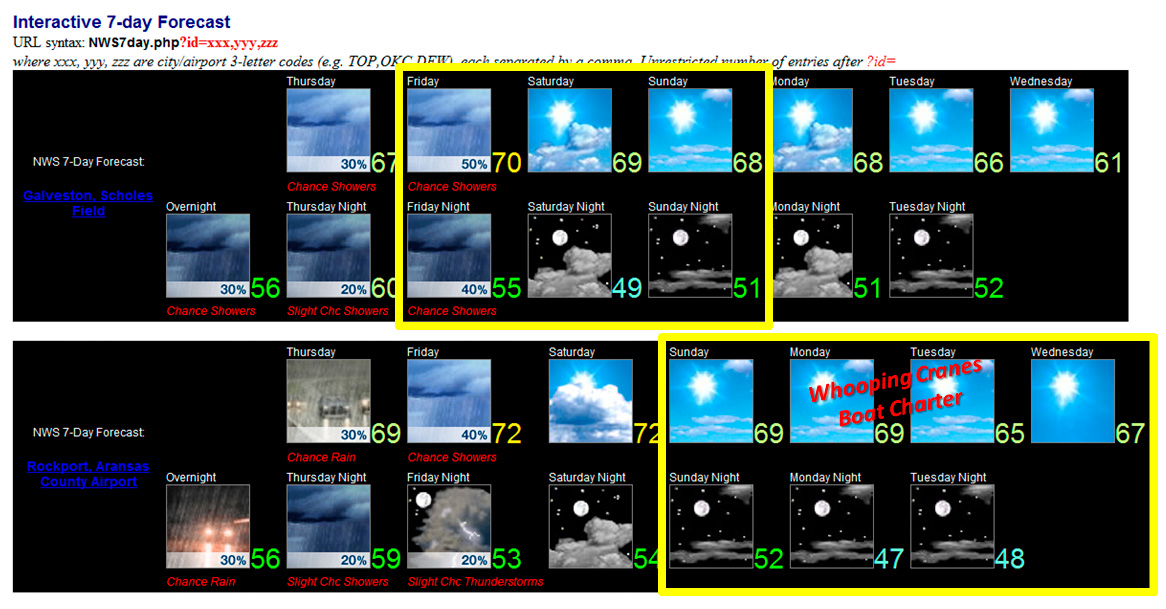
(click on thumbnail for pop-up of larger image) |
Sat, 11 Jan 2014 01:02:59 -0600
Day 1, Jan 10 -- Houston Arrival | I started the day in Corsicana, TX and made the roughly 3 hour drive to
Houston in the morning. I met up with my friends Mitch and Candice for
lunch -- great mexican restaurant close to where the live called Lupe
Tortilla for some fantastic fajitas and margaritas. After parting ways with
them, I got a hold of a local photographer Chris Elliot whom I met on the
Naturescape.Net forum a couple months back. Since it was already
mid-afternoon, I did not have time to go down to Bolivar Flats for a late
afternoon shoot. Instead, on the suggestion of Chris since it was late and
close, I went to the Kemah boardwalk to check out the Laughing Gulls and
Brown Pelicans. This would be a great place to get some good in-flights of
Brown Pelicans, but the weather was really poor with flat, uninteresting
light due to the clouds and drizzle. I knew ahead of time that this day
was not going to be good for photography, so I did not make any real plans
for this afternoon anyway. I spent maybe 45 minutes there at the Kemah
Boardwalk before heading to Alvin where I will be staying while up here for
a couple days. I posted three images here from the Kemah Boardwalk
| (click on thumbnails for pop-up of larger images) |
Sat, 11 Jan 2014 23:14:26 -0600
Day 2, Jan 11 -- Brazos Bend SP and Bolivar Flats | This was an extremely productive day of shooting -- just a
s I was hoping for. The day started off with a sunrise/morning shoot at
Brazos Bend SP. Local wildlife photographer Chris Elliot met me in Alvin at
530am, and we set out for the park before sunrise. It started off foggy an
d kind of slow, but once the sun finally broke through, we started firing a
way on the shutters. Among the birds were many alligators, a couple as l
ong as 12 feet! First time I have seen an alligator let alone photograph on
e! Numerous herons/egrets, ibis, teal, and occasionally other ducks woul
d occupy much of our time. For me, the White Ibis was the best bird I go
t real good images of along with the Tri-colored Heron as these birds consi
dered quite rare in Kansas. We concluded this shoot around 11am, and Chris
dropped me off at my motel in Alvin. I then took off for the Bolivar Flats.
I arrived there at 230pm and photographed there until sunset. I was tho
roughly impressed with Bolivar Flats. The sky was clean of clouds so I h
ad excellent light to work with. Among the birds was a huge raft of Amer
ican White Pelican and gobs of plovers and sandpipers. I got some great
shots of Snowy Plover using the new ground pod I bought which gets you down
to darn near ground level. The best images were probably of the Reddish Eg
ret. I saw and photographed both the dark morph and the white morph variety
of this species. Both of these birds behaved in nearly identical fashio
n while foraging. They tend to dance around aimlessly going after a fish.
Whatever works, I guess, as I did manage to get a few frames of the dark
morph with a very nice-sized meal All in all, I was very pleased with the
shoot! I will upload images later.
|
Fri, 24 Jan 2014 11:35:14 -0600
Great Blue Heron with a sizable snake for dinner, Lamar, TX. 12 January 2014 | I was photographing from a ground blind in the late afternoon/early evening hours of Jan. 12th in Lamar, TX hoping to photograph some Sandhill or Whooping Cranes at fairly close distance. (Cranes, both Sandhill and Whooping, have been drawn to several deer feeders in Lamar, TX over the past couple years given the poor food availability during the drought of 2011-2012). Unfortunately, no cranes landed in the yard in front of my this afternoon, but not all was lost. The resident Great Blue Heron that hangs around a draw there along the property line put on a nice little feeding show. The heron caught a nice sized snake along the draw, and I managed to capture a nice series of images as the heron downed this snake. Quite a treat, both for the heron and myself to photograph!
CORRECTION: I was informed that this was not even a snake at all, but a legless lizard -- Slender Glass Lizard | 
(1) | 
(2) | 
(3) | 
(4) | 
(5) | 
(6) | 
(7) | 
(8) | 
(9) | 
(10) | 
(11) | 
(12) | 
(13)
|
(click on thumbnails for pop-up of larger images) |
Sun, 18 May 2014 03:15:11 -0500
Testing | Testing this thing.
| 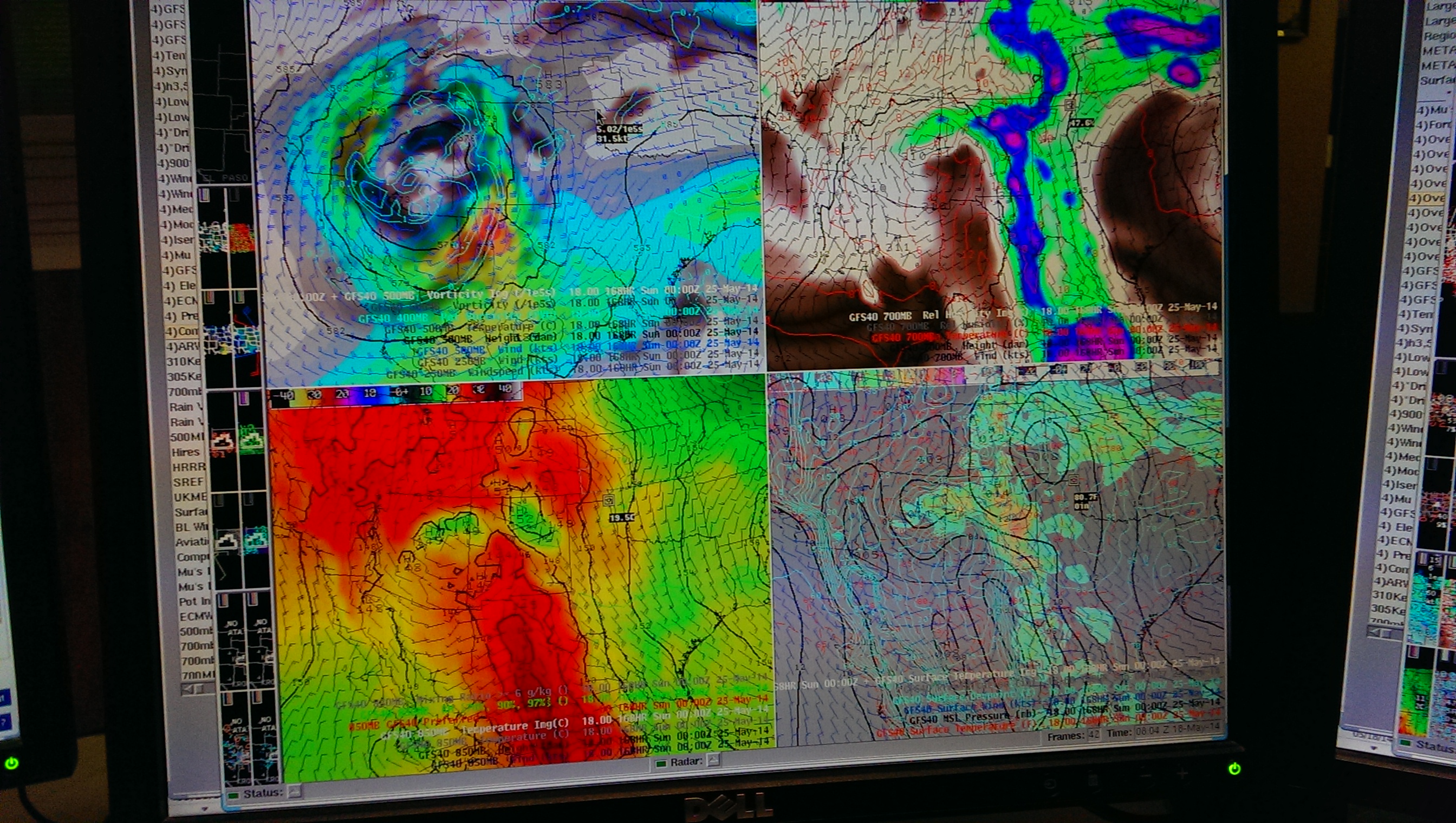
(click on thumbnail for pop-up of larger image) |
Wed, 21 May 2014 14:44:46 -0500
Screenshot (01 | Rapid Storm development over Denver. Positioning in Watkins waiting for it
to exit the metro
| 
(click on thumbnail for pop-up of larger image) |
Wed, 06 Aug 2014 22:12:31 -0500
Great Egrets at Quivira NWR. 2 August 2014 | | Great Egret series of images from Quivira National Wildlife Refuge during the early morning hours of Saturday morning, August 2nd | (click on thumbnails for pop-up of larger images) |
Fri, 14 Nov 2014 15:11:56 -0600
Awesome yard bird: Roadrunner!! 14 November 2014 | I was checking the bird feeders frequently this afternoon to gauge the activity of nuisance House Sparrows and Starlings (I just set the feeders back up on Monday before arctic airmass hit). Lo and behold, I check out the window and see a freaking Roadrunner just across my property. The Roadrunner was walking toward my backyard, as if wanting to check out the activity at my bird feeder. I quickly grabbed the camera with 600mm and snuck outside. By the time I got outside, it was still roaming around the perimeter of my garden near my young Arborvitae and pine trees. This bird has been hanging around the neighborhood all fall, but it is the first time it has actually set foot in my yard (that I can confirm, at least). Awesome!!
| 
(click on thumbnail for pop-up of larger image) |
Sat, 22 Nov 2014 21:37:52 -0600
Greater Roadrunner image series from the afternoon of 22 November 2014 | | The Greater Roadrunner (GRRO) which has been around my neighborhood for the past couple of months paid another visit to my backyard this afternoon. I first spotted him when I was looking out my bedroom window at the brush pile where my bird feeding station is. I believe the GRRO may be attracted to the brush pile since this is where all the feeder birds (comprised mostly of House Sparrows for now) like to hang out. GRRO does, at times, prey on songbirds when it cant find any other small rodents, snakes, lizards, etc. Anyway, I quickly grabbed my D7000 + 600mm and went outside way to the back part of my backyard so I could get the sun at my back. Fortunately, the GRRO was still there on the brush pile when I got into position, and I started shooting away (see image #1). He then proceeded to walk out of the brush pile and across my lawn, which began a nearly 30 minute shoot as he wandered slowly and methodically without much angst to get anywhere in any hurry. This was a very tame bird. I was shooting sitting up, resting the 600mm on my knees, so staying low helped not to spook the GRRO. I was able to approach within 15 or so yards with relative ease. In fact, there were a few moments when he would actually approach me to around 8 to 10 yards, without a care in the world that I was even there taking pictures! What a real treat. I never get this lucky photographing birds without a hide or in a ghillie suit. The images below are my best ones from the shoot of around 550 frames over the span of 30 minutes. | 
(1) | 
(2) | 
(3) | 
(4) | 
(5) | 
(6) | 
(7) | 
(8)
|
(click on thumbnails for pop-up of larger images) |
Tue, 09 Dec 2014 09:04:53 -0600
Roadrunner and Sharp-shinned Hawk in the backyard. 8 December 2014 | | A couple of images from the afternoon of December 8th, including a little story on the Sharp-shinned Hawk... | 
The roadrunner is becoming more and more habitualized as it is becoming more comfortable with my presence, since I offer him the occasional handout. He comes to expect it now! He allowed me some up-close portrait photography and many times would come inside the minimum focus distance of my 600mm lens! I will have to start shooting him now with the 70-200mm lens! | 
I finally had my first Sharp-shinned Hawk show up! A juvenile, he was patiently waiting right next to the trap. I went out there to get one of the two remaining trapped male HOSPs, and the sharpie had his eyes set on me, from a perch about 25 yards away, and what I was doing. I clipped the HOSP's wings and approached the sharpie, who was now perched atop one of the neighbor's pines about 70 yards away. I released the HOSP, but I apparently clipped so much of its primaries that it could not get off the ground. It quickly found a clump of tall grass for cover, so I went over there to find him. In the meantime, Sharpie moved perches and I didn't know it. I assumed he was in the same place, so I re-released the HOSP toward the tree where I thought he was. I was like "oh crap, where did Sharpie go?" So I went after the HOSP again (poor thing was making distress calls), to capture it and put it back in the holding area of the trap. Well, seconds later I hear this "WHOOSH!" and sure as shit, it was Sharpie. It flew past me on my left like maybe 7 or 8 feet away and snatched the HOSP. It didn't even know it was coming, and neither did I! Amazing. Anyway, I didn't feel so bad for the HOSP, because it didn't suffer long, I'm sure, and I fed a hungry juvenile accipiter. I'm hoping the Sharpie hangs around now, although I'm not sure how the roadrunner would feel about that. So much drama in the back yard now!
|
(click on thumbnails for pop-up of larger images) |
Sat, 03 Jan 2015 22:24:31 -0600
More of Rowdy. It has been a couple weeks! 3 January 2015 | | I saw Rowdy again for the first time in a couple weeks since I have not been around the house during his waking hours. Rowdy is a late riser and early closer, so I usually have to be home at some point between about, say 930am and 330pm if I am going to see him. Today was the first day in a couple weeks that I have been around the house long enough during those hours. During my time off around Christmas, I was out of town, so I didnt catch him then. At about 930am or so, I whistled him in and first spotted him on my roof after about 15 minutes or so. I photographed him at various points through the day, but my favorite was when the snow was starting to fall around 1pm or so as I got some cool portraits of him with some snowflakes collecting on his head, tail, beak, etc. | 
(1) | 
(2)
|
(click on thumbnails for pop-up of larger images) |
Sun, 02 Aug 2015 09:26:46 -0500
Gray County, KS Playa Bird Photography. 1 August 2015 | | Jeff Calhoun and I investigated several of the playas in the Haggard-Montezuma playa region of southeastern Gray County. I came away with some pretty good images of Avocets at a couple of the playas, including this cute Avocet chick that was strolling along one of the county roads between Haggard and Montezuma. | 
An Avocet chick taking a late afternoon stroll down a Gray County farm road near one of the playas | 
A view east overlooking one of the playas adjacent a north-south farm road a few miles west of Montezuma.
|
(click on thumbnails for pop-up of larger images) |
Fri, 18 Nov 2016 19:52:35 -0600
Thirteen Whooping Cranes photographed at Quivira NWR in one shooting session! 17 November 2016 | | I spent the entire day (well, except for lunch in Great Bend) at Quivira NWR photographing birds. The morning shoot was very productive, including 11 Whooping Cranes in one spot! The large group was comprised of 9 adults and 2 juveniles from this summer hatch. Included in this post are two images of the entire group shot. They only congregated close in like this for a brief moment in time before scattering out again and then eventually lifting off and flying out to the south. | (click on thumbnails for pop-up of larger images) |
Sat, 3 Dec 2016 20:38:58 -0600
Male House Finch in my backyard on a cloudy afternoon | Photographed from inside my Doghouse popup blind. The background for this setup shot was one of my three Dogwood 'Arctic Fire' shrubs in my wildlife garden. The bird was about 8 feet away, allowing me to shoot with my 70-200mm lens at 200mm. f/2.8 at 1/1000s and ISO 2200 with my Nikon D500 camera.
| 
(click on thumbnail for pop-up of larger image) |
Sun, 4 Dec 2016 20:35:09 -0600
Lewis's Woodpecker at Pottawatomie SFL in afternoon light shortly after clouds parted. 4 December 2016 | A rare bird created a buzz in the Kansas birding community in late November this early winter. The bird is a Lewis's Woodpecker, which is typically found in higher elevation areas of the western United States. The bird is not quite as rare across far southwest Kansas, which is closer to the eastern edge of its native range, but this bird was well east of there, east of Manhattan. I took a chance to photograph this bird, a 4 hour drive from Dodge City. Low clouds covered the area where the bird was residing through early afternoon, but I felt confident enough that the low clouds would clear out quickly based on some short-term weather models I looked at. Sure enough, during the 1pm hour, the clouds broke up fairly quickly. The bird was in its previously observed location in the campground at the Pottawatomie state fishing lake on the southwest side of the lake, in the trees nearest the shore and fairly close to the dam. The bird was quite active, flying from tree to tree at times and was also noted preening quite a bit. A fun and successful chase!
| 
(click on thumbnail for pop-up of larger image) |
Fri, 23 Dec 2016 19:12:11 -0600
Reprocessed image of the Amarillo Tornado of 13 June 2016 | | There was one thing about all my Amarillo 13 June tornado images that bugged me. The foreground with the ranch in it was insufficiently out of focus for my critical taste on every single frame during the tornado. All my shots were at 62mm focal length at 1/5s and were very slightly out of focus given motion blur... even on a tripod. As you can imagine, the shooting conditions were extremely poor with inflow of 40+ mph. I did, however, get a few frames at 48mm and 1/15s before the tornado started, which shows the ranch in very good focus. I've decided to reprocess all my tornado images using the sharp foreground in Photoshop. Here is the first frame I've done so far. There are 5 or 6 frames I am going to do this to as the tornado showed varying shapes and back-lighting conditions from lightning. | 
(click on thumbnail for pop-up of larger image) |
Mon, 16 Oct 2017 22:43:49 -0500
Two photography lifer sparrows: Swamp Sparrow and Le Conte's Sparrow. Douglas County, KS. 15 October 2017 | | Although I managed to photograph two sparrow species I've never photographed before, it was a pretty crummy day. My 600mm lens began to have serious auto-focusing images right after I took the image of the Swamp Sparrow. I felt quite dejected after this happened, and decided to cancel the rest of my shooting day and head back to Dodge City. The northwest wind behind the front in the morning was also a bit stronger than I was hoping for, so the combined events left me in a pretty sour mood. Nevertheless, it was good to at least partially get what I was after, even if the quality of the images were less then stellar. Onward! | 
Le Conte's Sparrow | 
Swamp Sparrow
|
(click on thumbnails for pop-up of larger images) |
Sun, 12 Nov 2017 16:08:03 -0600
New Yard Bird! ROCK WREN. Morning of 12 November 2017 | I found this bird flitting around the small brush pile in my back yard. It would favor the brush pile and adjacent well pit cover, flying back and forth for about a half hour. I managed to get great shots of this bird from a distance of about 15 yards with my 600mm lens (on the Nikon D500)
| (click on thumbnails for pop-up of larger images) |
Wed, 18 Apr 2018 13:38:27 -0500
Red Crossbills making a temporary home around the Umscheid Estate! Images from 9 April 2018 | Red Crossbills, with as many as 19 individual birds, have been regularly
visiting my feeding station 5 miles north of Dodge City. On the morning
of April 9th, I photographed these birds along with other regulars such
as Red-winged Blackbird, Common Grackle, and even some Pine Siskin.
| (click on thumbnails for pop-up of larger images) |
>> Next Page
|